


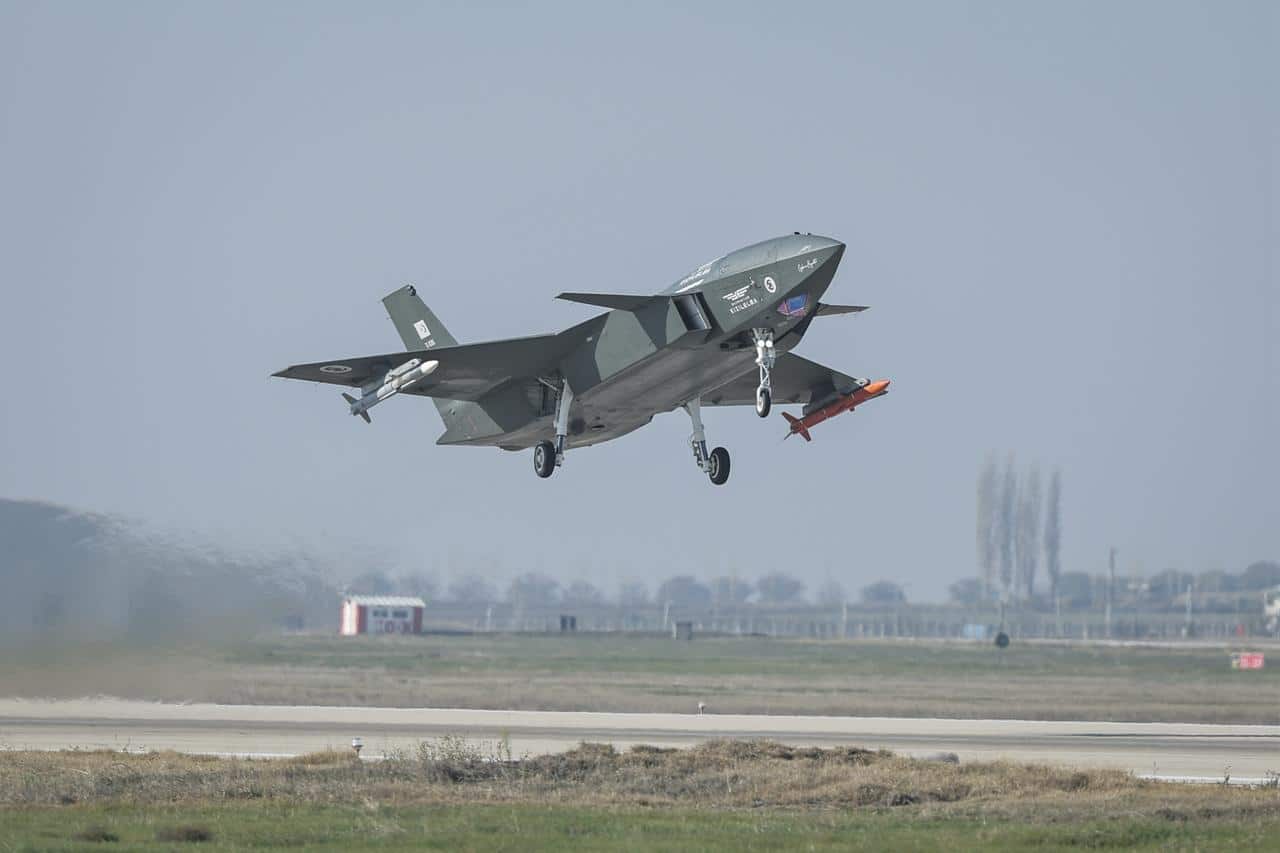
Türkiye has achieved a major milestone in aviation technology after its unmanned fighter jet, Bayraktar Kizilelma, completed a historic test over the Black Sea.
For the first time in the world, an unmanned aircraft successfully hit a jet-powered target using a beyond-visual-range air-to-air missile, marking a breakthrough in autonomous air combat.
The test took place near Sinop, where Kizilelma fired the locally developed Gökdoğan missile. The missile was supported by Aselsan’s Murad AESA radar, which provided precise tracking and guidance.
The operation was part of a larger demonstration that also included Turkish F-16 fighter jets and the Bayraktar Akinci UAV, showing how manned and unmanned aircraft can work together during complex missions.
Kizilelma has been designed with features usually found in advanced fighter jets. It includes stealth shaping, a modern sensor fusion system, and the ability to perform multiple roles from air defense to offensive missions.
Engineers say the aircraft can react quickly, fly aggressively, and operate in dangerous environments without risking a human pilot.
Defense experts describe this achievement as a major step for Türkiye’s aviation industry. It proves the country can design, develop, and test advanced air-combat systems using its own technology. This success also reflects Türkiye’s push toward a self-reliant defense ecosystem, reducing dependency on foreign suppliers.
The record-setting test has been widely praised as a preview of future warfare, where autonomous aircraft will take on more complex roles. With Kizilelma’s performance, Türkiye has positioned itself among the global leaders developing next-generation unmanned fighter platforms.

