


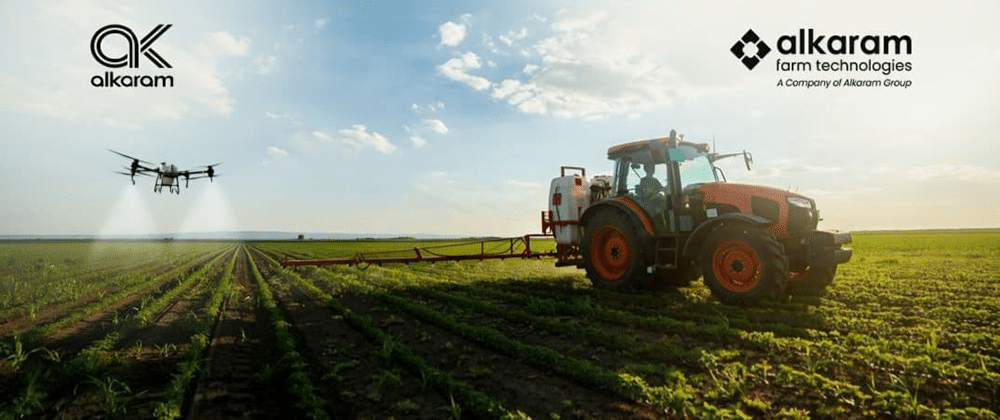
In a business climate defined by consolidation and caution, Alkaram Group’s recent expansion into the agricultural machinery sector stands out as a case study in strategic resilience. The launch of Alkaram Farm Technologies (AKFT) is not merely a diversification play; it is a calculated intervention into the upstream supply chain of Pakistan’s most critical economic engine.
While the textile giant is known for its downstream dominance in fashion and home textiles, this move signals a shift toward vertical integration that addresses the root cause of the sector’s stagnation: the “Mechanization Gap.”
The Data Behind the Decision: The “Mechanization Gap”
To understand why a textile group is selling drones and tractors, one must look at the data. Pakistan’s agriculture sector contributes approximately 24% to the national GDP and employs nearly 37.4% of the workforce, yet it suffers from a chronic productivity crisis.
The most telling statistic is the available farm power. The FAO recommends a standard of 1.4 horsepower (HP) per acre for optimal yield. In Pakistan, the available farm power hovers at a dismal 0.09 HP per acre.
This massive deficit explains why, despite being the world’s 5th largest cotton producer, Pakistan’s yields lag behind regional competitors. The domestic industry currently meets only 15% of the country’s agricultural machinery requirements, creating a vacuum that Alkaram is stepping in to fill.
Beyond Tractors: Entering the Era of Precision Agriculture
Alkaram’s entry is distinct because it focuses on precision rather than just mechanization. By introducing high-end agricultural drones—specifically the DJI Agras T50 and T25 series—AKFT is leapfrogging traditional development stages.
These technologies address critical inefficiencies:
Precision Spraying: Manual spraying is labor-intensive and hazardous. Drone technology ensures uniform coverage, reducing chemical waste and environmental impact.
Data-Driven Farming: The inclusion of the Mavic 3M for surveying allows farmers to use multispectral data to identify crop health issues before they become visible to the naked eye.
Water Conservation: In a water-stressed nation, precision machinery allows for targeted water and fertilizer application, a cornerstone of sustainable farming.
Strategic Implications: Securing the Supply Chain
For Alkaram, this is a strategic backward integration. As a textile major, their core raw material is cotton. By empowering farmers with technology to increase crop yields and quality, they are effectively securing a more reliable, high-quality supply chain for their primary business.
This creates a “shared value” ecosystem: farmers get the tech to boost profitability (potentially increasing yields by up to 30%), and the textile industry gets better raw materials.
A Signal to the Market
At a time when many industries are pausing investment due to high interest rates and energy costs, Alkaram’s move sends a strong signal of confidence in the long-term fundamentals of Pakistan’s economy. It suggests that market leadership in the next decade will belong to those who can solve structural inefficiencies rather than just navigate them.
By bridging the technological divide, Alkaram isn’t just selling machinery; they are investing in the future productivity of the nation.

