


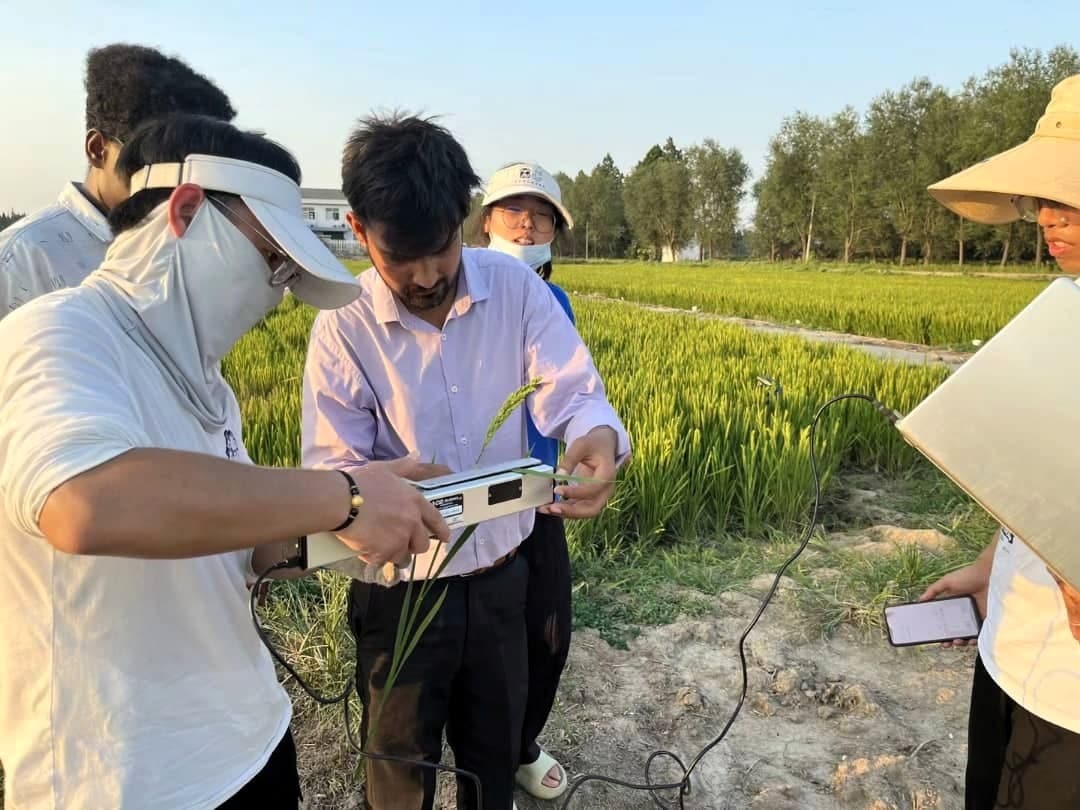
Dr. Imran Ali Lakhiar (center) examines leaf area using portable leaf area meter during a field experiment with Chinese colleagues.
Pakistani and Chinese agricultural researchers have developed a temperature-responsive irrigation approach that could help protect crops from rising heat while improving water efficiency, according to a peer-reviewed study published in the international journal Irrigation Science on January 6.
The research was conducted by a joint team from China and Pakistan, including Pakistani researcher Dr. Imran Ali Lakhiar, alongside Chinese Scientists Professor Chuan Zhang and Professor Haofang Yan, and other experts from agricultural engineering institutions in China.
The study examines how precision irrigation systems, combining drip irrigation, micro-sprinklers and temperature-based control, can reduce heat stress on crops while conserving water, an issue becoming more urgent as climate change drives higher temperatures and frequent heatwaves.
“Water is considered one of the vital natural resources and factors for performing short- and long-term agricultural practices on Earth,” the authors wrote, warning that the agriculture sector utilizes around 70% of available freshwater annually to irrigate only 25% of the arable land.
According to the researchers, traditional irrigation practices are increasingly unable to cope with climate variability. In contrast, precision irrigation systems adjust water application based on real-time temperature, soil moisture and plant needs, helping crops maintain healthier physiological activity during periods of extreme heat.
The study found that properly regulated micro-sprinkler irrigation improves the cooling environment around plants by lowering air and leaf temperatures, which supports photosynthesis that is often suppressed when temperatures exceed optimal levels.
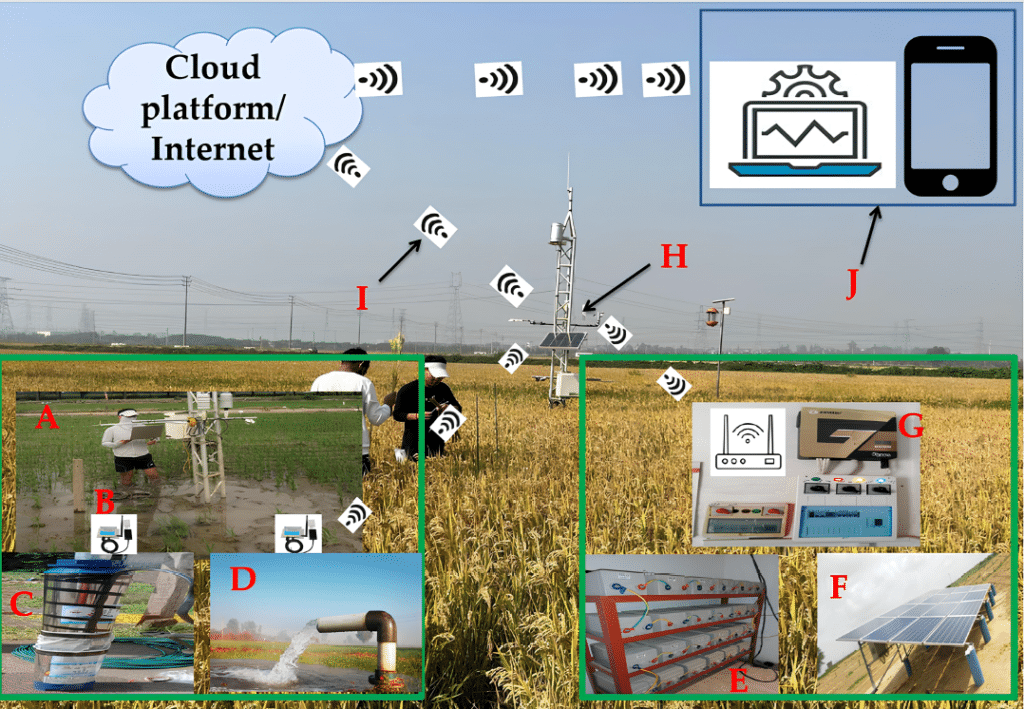
The diagram shows how field sensors send real-time data to a cloud platform, enabling remote monitoring and control of smart irrigation systems.
“Precision irrigation methods have appeared as game-changers in the traditional agriculture sector for efficient water utilization and management,” the authors said, adding that such systems can significantly enhance water-use efficiency while reducing environmental footprints.
Dr. Imran Ali Lakhiar said the findings are particularly relevant for Pakistan, where heat stress and water scarcity are increasingly affecting both open-field and greenhouse farming.
“In Pakistan, rising temperatures and inefficient water use are major challenges for farmers,” Lakhiar said. “If precision irrigation systems like these are adapted to local conditions, they can help farmers cool crops during heatwaves, reduce water losses and protect yields.”
Lakhiar said modern pressure-driven irrigation systems are far more efficient than conventional methods. He said the study reported water application efficiencies of 50–70% for furrow irrigation, 40–60% for border irrigation and about 40% for basin irrigation, compared with 65–95% for drip irrigation and 50–90% for sprinkler systems.
According to him, the pilot projects and field-scale trials would be an important next step before wider adoption in Pakistan, particularly in arid and semi-arid regions.
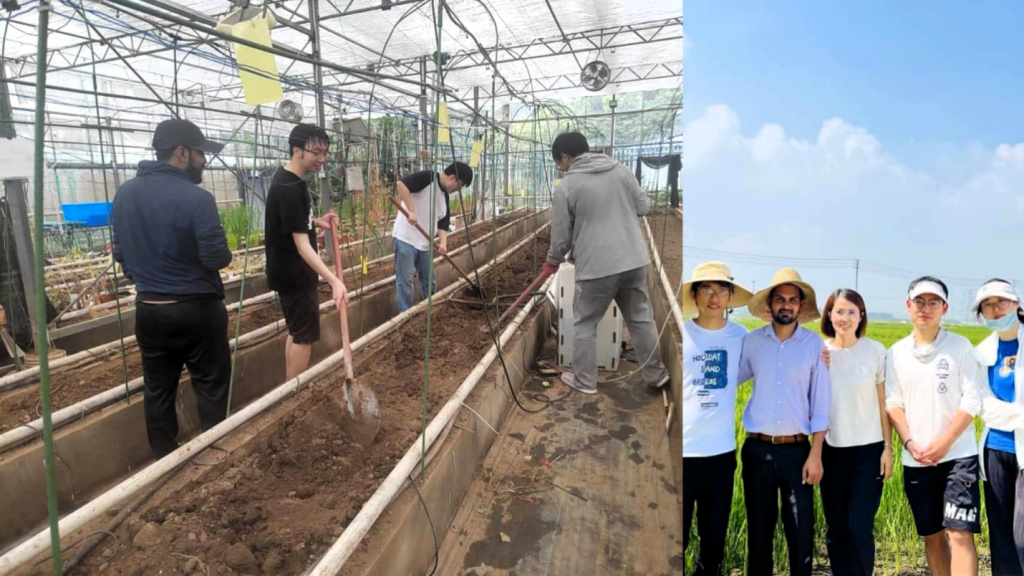
Pakistani and Chinese researchers conduct joint greenhouse experiments, highlighting Sino-Pak collaboration in agricultural research.
“These systems are flexible and scalable,” he said. “They can be applied in greenhouses, small farms or larger commercial operations, depending on local needs and resources.”
“As the water scarcity problem intensifies due to climate change and population growth, precision irrigation is poised to play a critical role in optimizing and modernizing water usage,” the researcher said while quoting their study’s conclusion. He added that the climate-responsive irrigation technologies could support sustainable agricultural development, improve food security and help farmers adapt to long-term climate impacts.

