


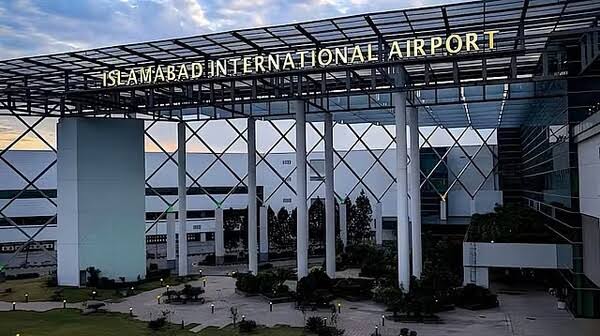
The Government of Pakistan has clarified that recent reports suggesting the cancellation of an agreement with the United Arab Emirates to operate Islamabad International Airport are misleading and risk creating unnecessary diplomatic misunderstandings. Officials stress that Pakistan has not reversed its airport outsourcing policy, but has instead refined the process to ensure greater transparency, competition, and national benefit.
According to informed sources, the decision to move away from a government-to-government (G2G) model toward an open and competitive bidding framework was finalized at the institutional level in November 2025. However, as details of the decision have only recently surfaced in media reporting, it has incorrectly been portrayed as a fresh controversy or a sudden policy shift.
Authorities emphasize that the core policy of outsourcing major airports remains intact. What has changed is the method of selecting operators. Rather than relying solely on a G2G arrangement, Pakistan has opted for an open, transparent, and competitive bidding process that allows both local and international stakeholders to participate on equal footing.
Earlier, operating Islamabad International Airport through a foreign state-owned entity was considered as an initial option, not as a final or exclusive arrangement. As interest grew from multiple domestic and international parties for long-term concessions at Pakistan’s three major airports, policymakers concluded that an open market approach would deliver better financial value, improved service quality, and stronger performance benchmarks.
Officials have rejected narratives framing the decision as a geopolitical contest, including claims that one country has “won” while another has “lost.” They underline that the move is purely administrative and procurement-driven, based on transparency, merit, and Pakistan’s national interest, rather than favoring or disadvantaging any specific partner country.
Regarding relations with the UAE, sources note that discussions were conducted with maturity and mutual respect. The shift away from a G2G framework was driven by administrative and regulatory considerations, not by disagreement or diplomatic strain. Pakistan continues to value its partnerships with friendly countries and remains committed to maintaining trust and cooperation.
The government has also clarified that outsourcing will be limited in scope. Only landside operations, such as passenger services and commercial management, will be outsourced. Airside operations and all sensitive security functions will remain under full government control, ensuring that national security and aviation safety are not compromised.
Officials caution that speculative and politicized interpretations of the decision could create avoidable misunderstandings among friendly nations. They reiterate that Pakistan’s procurement decisions are institutional, rule-based, and aligned with international best practices, aimed at protecting the national interest while fostering investor confidence.

