


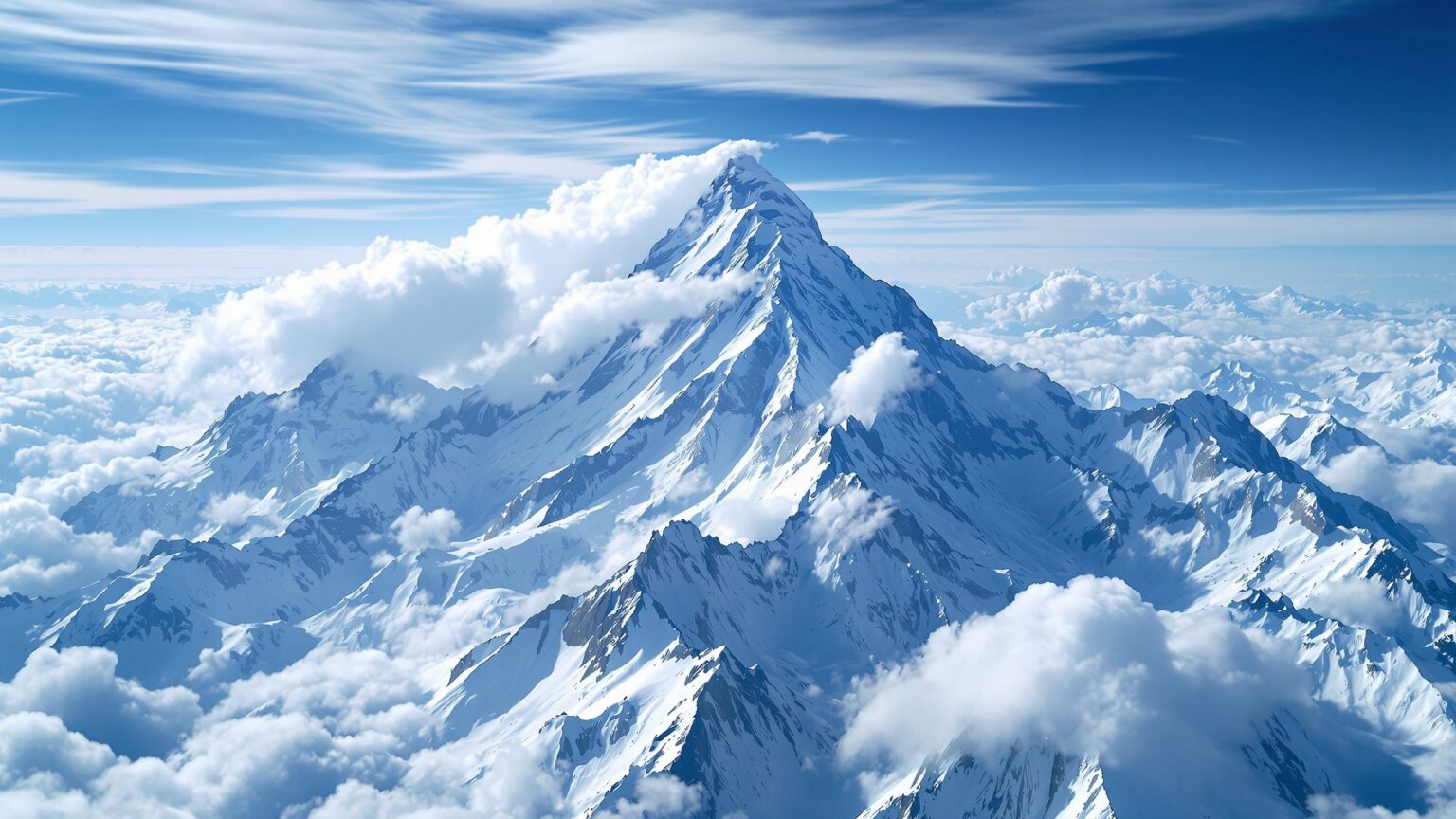
Scientists have discovered marine fossils at the top of Mount Everest, showing that the highest mountain on Earth was once part of an ancient ocean. The fossils belong to tiny sea creatures that lived millions of years ago, preserved in rock layers at extreme heights.
Geologists explain that this happened because of plate tectonics. The Indian Plate slowly moved north and collided with the Asian Plate, pushing up the ocean floor to form the Himalayas. Over millions of years, these enormous forces lifted what was once the seabed to create the peaks we see today.
The discovery of marine fossils so high above sea level reminds scientists and explorers that Earth is constantly changing. Even the tallest mountains were not always above water, and the planet’s surface is shaped by slow but powerful natural forces.
These fossils also help researchers study the ancient environment, climate, and life forms that existed before the Himalayas formed.
Mount Everest, which now reaches more than 8,800 meters into the sky, quietly preserves this evidence of a lost ocean. The findings illustrate how the world we see today is built on layers of deep history, connecting the oceans of the past with the mountains of the present.
This discovery deepens our understanding of Earth’s evolution and the dynamic processes that shape our planet.

