


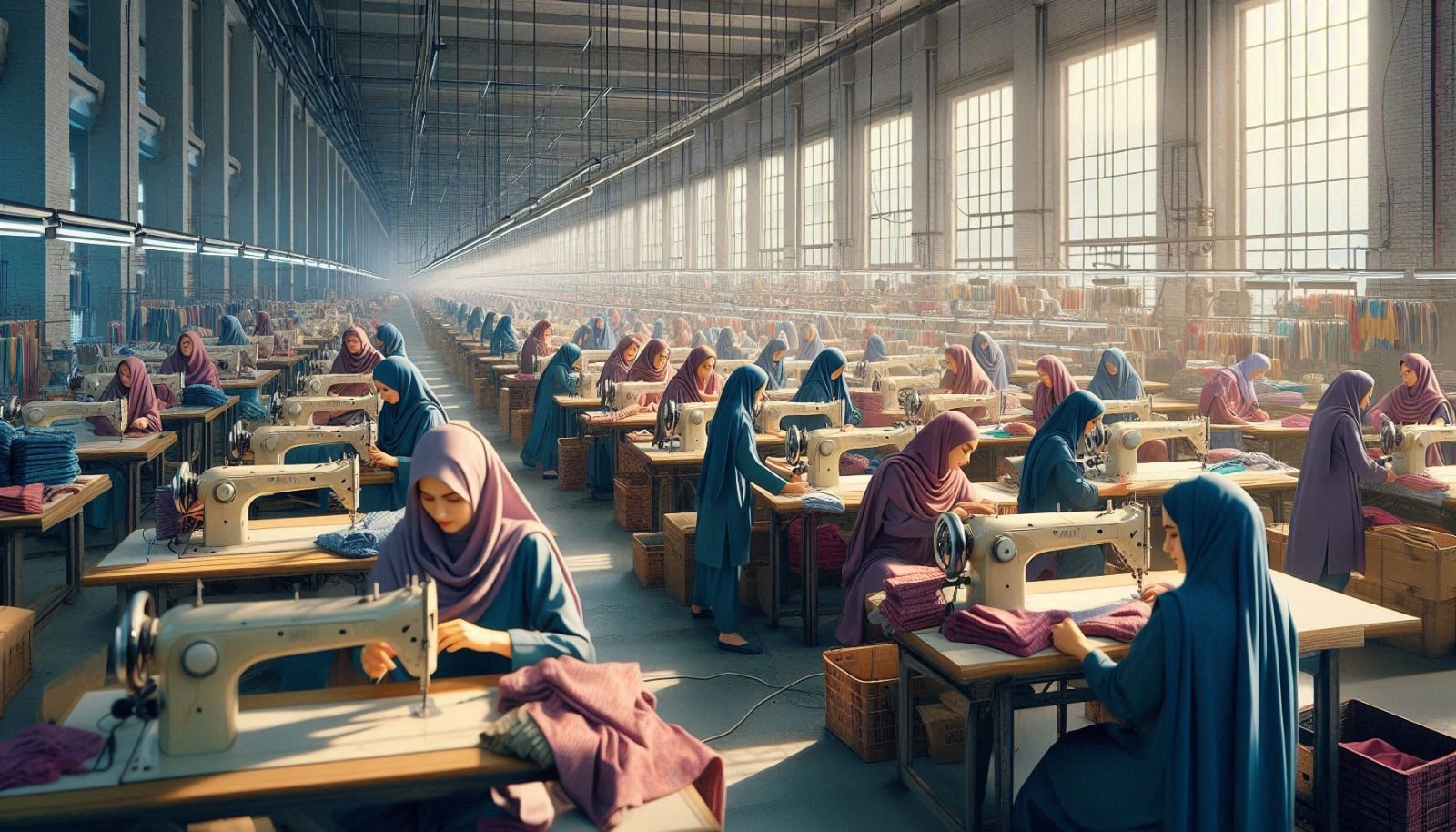
In Pakistan, labour rights do exist but they do not necessarily extend beyond the law itself.
There are provisions in statutes providing rights to workers, but these rights do not follow workers into factories, fields or homes. Thus, for many workers (especially women) the law itself can be seen on paper, but is nowhere to be seen in the actual place where the work is done. This is where trade unions come into play. Trade unions have often been cast as being simply about striking, chanting slogans and making disruptions, but there are other purposes they serve. A union can be the difference between a complaint whispered during a lunch break and a concern placed formally before an employer. It can make wages, hours and safety part of a conversation that would be heard.
The legal framework of Pakistan does recognize the significance of such arrangements based on both statutory labor laws and also upon the recognized constitutional guarantees of freedom of association under Article 17 of the Constitution, equality under Article 25 of the Constitution and a person’s right to life and dignity as contained in Articles 9 and 14 of the Constitution. In addition, Pakistan has signed onto international obligations with respect to collective bargaining. And at least in principle, the law recognizes that a worker is not required to stand alone. The workplace often reveals a considerably different reality.
Only a very small proportion of the entire workforce in Pakistan is collectively represented within organized labour unions (most estimates place this at around 2-3%). The majority of all union activity is limited to the formal sector, but the vast majority of the economy is made up of workers engaged in the informal economy. These include activities from sewing, packing, cleaning, cooking, farming, carrying, sorting to manufacturing. The vast majority of these workers typically lack written contracts, lack social benefits or security, and even more importantly lack a voice or means to advocate for themselves.
All in all, there is a gap between formal recognition and practical access to labour protections for a significant number of workers (primarily women) due to a lack of formal registration of the place of work and the existence of informal employment agreements. This has resulted in an inability of many workers to fulfil their constitutional right to equality and dignity in their workplaces.
The extent of this gap is significantly greater for women than for men. A woman’s work exists everywhere in Pakistan, whether it be in the fields, at home, in factories or in small workshops, but is too often recognized only as help, family obligation, or temporary employment. According to the report on the status of women in Pakistan 2023, women make up approximately 20% of the workforce; 67% of working women are involved in agriculture; and almost 55% of working women are employed as unpaid or contributing family members (as compared to approximately 10% of working men).
Not only do these figures show participation, but they also reveal how easily women’s work is erased from any form of formal recognition. When women perform informal or unpaid work, the economy profits from their contributions and labour, but the legal system often overlooks it. A woman would work long hours, contribute to production, be exposed to unsafe conditions, but still be outside official records and formal protections.
Women are classified as workers under a number of labour statutes including the Factories Act of 1934 and (to varying extents) have been provided protections concerning their rights with respect to working hours, workplace facilities and maternity leaves. In practice however, many of these protections are dependent upon employees having a formal employment relationship or contract with their employer. As a result, most women who do not have a formal employee-employer relationship remain unprotected by these statutes. This leads to a significant gap between the protections women are legally afforded and the working conditions most women find themselves actually working in.
Across Pakistan, multiple industrial fire incidents over the years have exposed serious gaps in workplace safety and regulatory enforcement. In many cases, factories have operated without proper registration, fire safety measures, or functional emergency exits—often with devastating consequences for workers. These tragedies are not merely accidents, but the result of systemic neglect, where safety standards are overlooked and warnings go unaddressed.
Such incidents highlight a deeper issue: when labour laws are not enforced, they remain ineffective in practice. Workers, particularly those in informal or undocumented roles, often have little to no avenue to raise concerns or demand safer conditions. The absence of effective union representation and collective bargaining further limits their ability to advocate for basic workplace protections.
Industrial relations should not only be remembered during times of strike, court proceedings or disasters but as part of your everyday working life. They set the tone as to whether a worker is able to raise an issue without being fearful of retaliation. They set the precedent on whether the employer views safety as an expense or an obligation/duty. They set the standard of how and when the government will come to the workplace; will they come before the tragedy or after they have counted the bodies?
Labour Day must not become another yearly tradition of only speeches regarding dignity as the word has been used in abundance. However, can the worker that has no contract, no union, no social security number and with nobody to record her name have a right to dignity enforced for her? Although the Constitution and the Statutes protect workers, it really depends upon how visible the workers are in the legal system and whether the institutions are operating effectively.
Strengthening industrial relations in Pakistan therefore needs to look not only at expanding representation but also ensuring that legal protections are, in particular those with regard to safety and dignity, are effectively realised by all workers, especially those in informal and marginalised situations.
The law must not arrive only after the fire. It must be there before the door is locked.
Authors
Dr. Faiza Ismail and Anas Khalid
Dr. Ismail is an Assistant Professor at the Shaikh Ahmad Hassan School of Law (SAHSOL) at LUMS.
Anas Khalid is a Research Assistant at SAHSOL, LUMS.

