


Pakistan’s transportation sector stands at a defining moment. Rising fuel prices, increasing pressure on foreign exchange reserves, and geopolitical uncertainties in the Middle East have highlighted the urgent need to reduce the country’s dependence on imported petroleum products. Every increase in global oil prices directly impacts Pakistan by inflating import costs, driving inflation, and raising transportation expenses across industries. The transition to electric vehicles (EVs), supported by a reliable and widespread charging infrastructure, offers a practical, sustainable, and economically beneficial path toward greater energy independence.
Recognizing this opportunity, the Government of Pakistan has introduced the National Electric Vehicle (NEV) Policy 2025–2030, with an ambitious target of making 30% of all new vehicle sales electric by 2030. According to government estimates, achieving this objective could save approximately 2.07 billion litres of fuel annually, reduce the national fuel import bill by nearly US$1 billion every year, and lower carbon emissions by 4.5 million tonnes. Beyond its environmental impact, this transition would strengthen Pakistan’s economy by conserving valuable foreign exchange, improving energy security, and reducing long-term dependence on imported fossil fuels.
However, the success of Pakistan’s EV ambitions depends on one fundamental requirement: the availability of reliable, accessible, and scalable charging infrastructure. Regardless of how many electric vehicle models enter the market, widespread adoption will remain limited unless drivers have confidence that charging facilities are readily available wherever they live, work, or travel. Developing a nationwide charging ecosystem is therefore essential to unlocking the country’s electric mobility future.
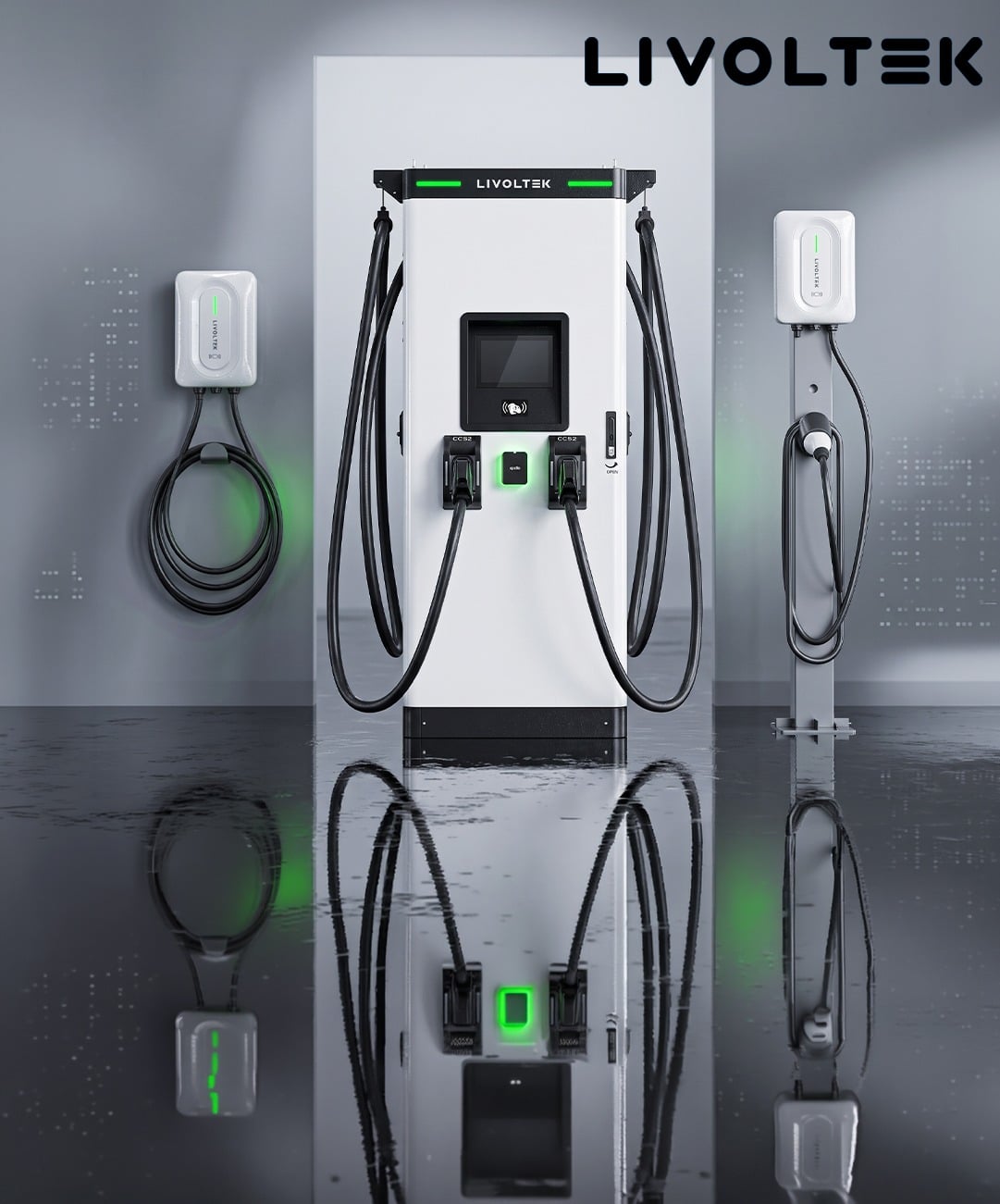
This is where LIVOLTEK brings a complete, future-ready solution. For residential users, the LIVOLTEK ATOM Home AC Charger, available in 7.3kW, 11kW, and 22kW variants, offers safe, intelligent, and convenient charging for homes, apartments, offices, and commercial buildings. Featuring smart mobile application control, scheduled charging, Type-2 compatibility, and durable IP55 weather protection, the charger enables EV owners to recharge their vehicles efficiently, particularly during overnight hours. When integrated with rooftop solar systems, homeowners can charge their electric vehicles using clean, self-generated solar energy instead of expensive imported fuel, significantly reducing operating costs while contributing to a cleaner environment.
For commercial applications and public infrastructure, the LIVOLTEK MF DC Fast Charging Station, available from 60kW to 240kW, delivers high-performance charging solutions for fuel stations, shopping malls, commercial plazas, fleet operators, motorway service areas, airports, hotels, logistics hubs, and other high-traffic locations. Its modular architecture, CCS2 compatibility, OCPP communication protocol, and intelligent energy management capabilities enable operators to expand charging capacity as EV adoption continues to accelerate, ensuring long-term scalability and operational efficiency.
What truly differentiates LIVOLTEK is its ability to deliver a complete renewable energy ecosystem rather than standalone charging equipment. The company’s comprehensive portfolio includes solar inverters, hybrid inverters, Battery Energy Storage Systems (BESS), lithium battery solutions, smart energy management platforms, residential AC EV chargers, and commercial DC fast charging stations. Designed to operate seamlessly together, these technologies enable homes, businesses, and industries to generate electricity through solar power, store surplus energy for later use, and charge electric vehicles using clean, locally produced electricity. This integrated approach not only lowers electricity and transportation costs but also strengthens Pakistan’s energy resilience by reducing dependence on imported fossil fuels and making renewable energy more practical for everyday use.
LIVOLTEK’s expertise has already been demonstrated through successful international deployments. In Fortaleza, Brazil, the company successfully installed its 120kW MF DC Fast Charging Station, providing reliable public charging with simultaneous multi-vehicle charging capability and supporting the country’s growing clean mobility initiatives. Similarly, in Uzbekistan, LIVOLTEK has implemented integrated renewable energy projects that combine solar power generation with EV charging infrastructure, demonstrating how renewable energy and electric transportation can work together efficiently to create sustainable mobility ecosystems. These successful projects provide valuable experience and proven technology that can now support Pakistan’s rapidly evolving EV market.
Commenting on Pakistan’s electric mobility future, Mr. Max Ma, Sales Director, LIVOLTEK, said: “Pakistan has all the ingredients to become one of South Asia’s leading EV markets. With supportive government policies, increasing consumer awareness, and rapid growth in solar energy adoption, the country is well positioned to accelerate the transition to electric mobility. LIVOLTEK is fully prepared to support this transformation through our complete renewable energy ecosystem—from intelligent home chargers and commercial DC fast charging stations to advanced solar inverters and battery energy storage systems. We have the technology, products, and deployment expertise needed to build an efficient, reliable, and scalable charging infrastructure for Pakistan’s growing EV market.”
Pakistan does not have to choose between economic growth and environmental sustainability. By investing in intelligent EV charging infrastructure powered by renewable energy, the country can reduce fuel imports, conserve valuable foreign exchange, strengthen energy security, create new business opportunities, and accelerate the transition toward a cleaner transportation ecosystem. With globally proven technology, an integrated renewable energy portfolio, and an unwavering commitment to innovation, LIVOLTEK is ready to partner with Pakistan in building the charging infrastructure that will power the nation’s electric future.

