


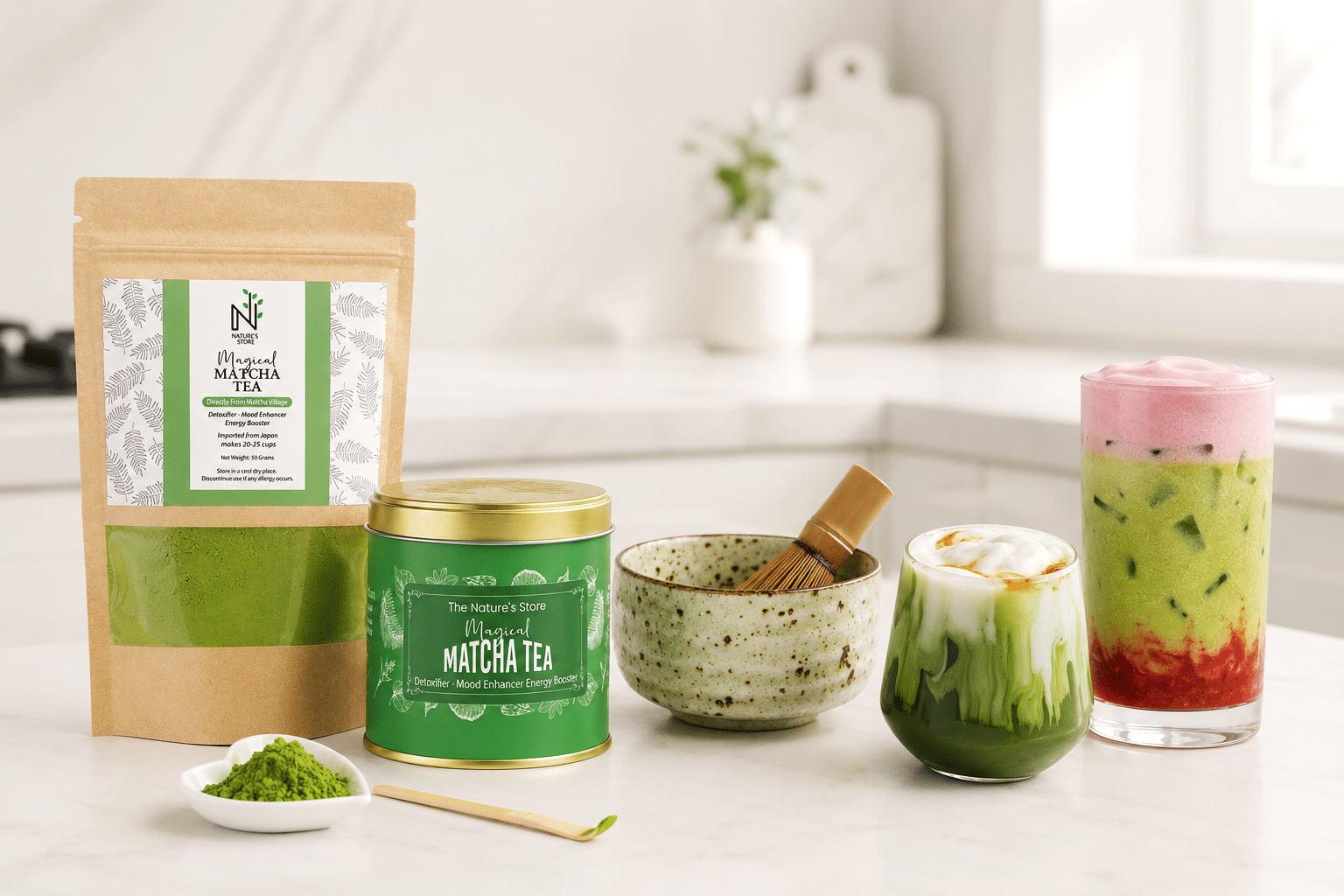
The Rise of Matcha Globally & Locally
The popularity of matcha is no longer limited to Japan. The global matcha market, valued at over USD 4 billion in 2025, is forecast to grow steadily over the next decade, reaching an estimated USD 8.72 billion by 2034. With an expected annual growth rate of 8.9%, the figures underscore matcha’s transition from a niche product to a mainstream wellness beverage worldwide.
According to sales trends observed by Pakistani specialty tea retailers, matcha demand has accelerated rapidly over the past two years.
The Nature’s Store witnessed this shift firsthand. Six years ago, they sold in small quantities to a handful of curious customers. Today it moves faster than most of their herbal teas, and the orders are no longer just from Karachi, Lahore and Islamabad: they come from Faisalabad, Multan, Peshawar and dozens of smaller cities. Many popular Cafés and dessert shops have added their Matcha in their Menus. Something has clearly shifted.
Google Trends shows search interest for Matcha in Pakistan has risen roughly 180% over the past five years.

Google Trends: matcha search interest in Pakistan, past five years.
Recognizing the Opportunity Early
In 2021, when Matcha was still relatively unknown in Pakistan, The Nature’s Store saw its potential and decided to offer authentic Japanese matcha all across Pakistan at an affordable price. This early decision was driven by more than just a global trend. Introducing matcha in Pakistan wasn’t easy. Since most consumers had never tasted it before, many were unfamiliar with its flavor and how to prepare it. Rather than simply selling the product, Nature’s Store focused on educating their audience through social media, blog articles, and Calls. Their content revolved around brewing methods, health benefits, recipes, and everything that was needed for a customer to confidently enjoy matcha.
By focusing on quality, authenticity, and consumer education from the outset, The Nature’s Store positioned itself to meet this growing demand long before matcha entered the mainstream. Today, as matcha continues to gain popularity across cafes, retailers, and households, that early belief has proven to be well-founded.

Why Matcha recently became so popular?
Three forces converged. Social media came first: matcha is photogenic in a way few beverages are, and Instagram and TikTok turned that green swirl into a visual shorthand for a certain kind of lifestyle. Local café culture followed, with specialty coffee shops in every major Pakistani city adding matcha lattes to menus and introducing the flavour to people who would never have bought a tin of powder on their own.


The third force is the influence of Gen Z and young professionals. This demographic is more willing to experiment with global food trends and premium beverages than previous generations. They are increasingly choosing products that combine taste, aesthetics and perceived health benefits, making matcha an ideal fit.
Internet is full of searches like “Matcha vs Coffee”, where young generation wants to switch to a better option than Coffee.
Matcha naturally contains L-theanine, an amino acid that works alongside caffeine to promote calm alertness and may help reduce the sudden energy crash often experienced after consuming other caffeinated drinks like Coffee.
Research suggests that drinking green tea, which shares many of matcha’s beneficial compounds, may contribute to better heart health and could help lower the risk of cardiovascular disease.
Information Source: Healthline
Disclaimer: The information provided on this website and associated materials, including but not limited to product descriptions, testimonials, and articles, is for informational purposes only. It is not intended to be a substitute for professional medical advice, diagnosis, or treatment.

Why Matcha Costs More Than Green Tea
Although both come from the same tea plant, matcha undergoes a far more specialized production process than regular green tea. The plants are shade-grown for several weeks before harvest, only the youngest leaves are carefully selected, and the leaves are then stone-ground into an ultra-fine powder. These labor-intensive steps require more time and expertise, making authentic matcha significantly more expensive than conventional green tea. High-quality ceremonial-grade matcha, in particular, commands a premium due to its superior flavour, colour and texture.

Expanding Beyond Matcha
The Nature’s Store has also built a diverse portfolio of other wellness herbal teas in Pakistan, offering products that are free from artificial flavours, colours, and fragrances. While herbal teas have traditionally been associated with the winter season, the brand has successfully repositioned them as beverages that can be enjoyed year-round through their content. To reinforce this perception, they adopted one simple message across all their marketing channels:
“Drink it warm or cold”.
Apart from Matcha, some of the brand’s most popular offerings include:
- Spearmint Tea
- Chamomile Tea
- Lavender Tea
- Butterfly Blue Pea Tea
- Hibiscus Tea
- PCOS Tea
The collection continues to grow, reflecting the company’s vision of making premium wellness teas from around the world accessible to Pakistani consumers, allowing them to experience globally loved teas from the comfort of their homes.

Future of Herbal Tea / Green Teas
(Founder’s Message)
In the Global market, Herbal Tea is expected to reach USD 4.2 Billion in 2026 and USD 5.8 Billion by 2036. Demand is rising and consumers choose herbal teas for sleep, digestion, and daily wellness routine.
We’ve noticed a clear shift in Pakistan as well. Consumers are moving beyond traditional green tea (kahwa) and becoming more curious about premium herbal teas. Some are looking for beautiful, cafe-style drinks they can enjoy and share on social media, while others want beverages that support a healthier lifestyle.
Our goal at The Nature’s Store is to change the perception of herbal teas to prove that they’re not just healthy, but also exciting, flavorful, and enjoyable to drink.

