


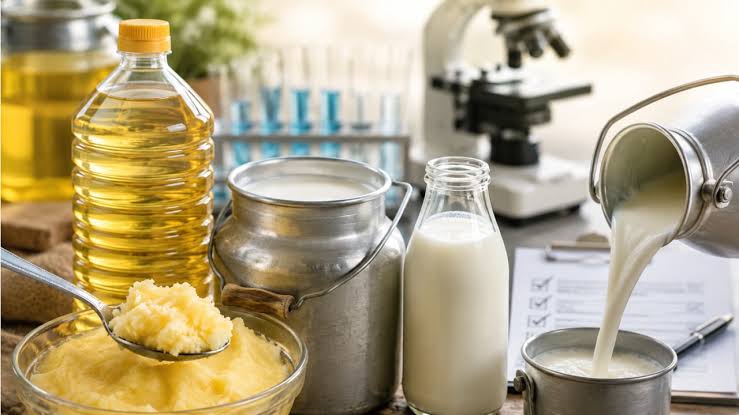
Around 36% of packaged ghee, cooking oil, and milk samples tested across Pakistan have failed to meet the country’s national quality standards, raising fresh concerns about food safety, product quality, and potential risks to public health.
According to findings presented by the Ministry of Planning, the Pakistan Council of Scientific and Industrial Research (PCSIR) examined a total of 491 samples collected from different parts of the country. Of these, 176 samples were declared non-compliant with the required quality standards, highlighting significant gaps in the quality of commonly consumed food products.
Vanaspati ghee recorded the highest rate of non-compliance, with around 48% of the tested samples failing to meet the prescribed standards. Blended cooking oil followed, with 27% of samples found to be substandard, while 25% of packaged liquid milk samples were also declared non-compliant.
The findings have intensified concerns over the safety and quality of essential kitchen products used by millions of households every day. Poor-quality edible oils, ghee, and milk can raise serious food safety concerns, particularly when consumers have limited information about the products they purchase.
In response to the findings, authorities have ordered a nationwide survey of loose and unpackaged ghee, cooking oil, and milk. The survey will aim to determine the quality of these widely consumed products and identify areas where quality-control issues may be more prevalent.
The nationwide assessment is expected to provide authorities with a clearer picture of food-quality challenges across different regions and help strengthen monitoring and enforcement mechanisms. The findings could also lead to greater scrutiny of producers, suppliers, and retailers to ensure that food products available in the market comply with established national standards.

