


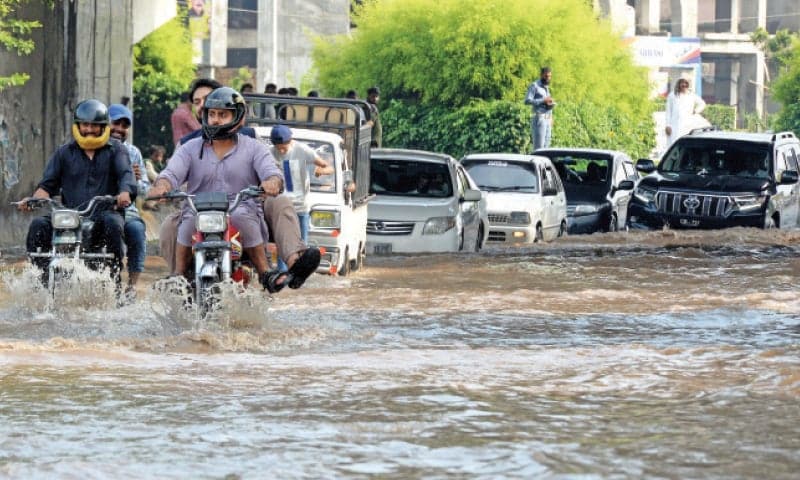
Intense rainfall has caused widespread urban flooding in Islamabad and Rawalpindi, affecting roads, streets and residential areas across the twin cities.
The continuous downpours have led to water collecting in several low-lying locations, making movement difficult for residents. Major roads and streets have also been affected, with traffic facing delays and disruptions as motorists navigate through flooded areas.
The heavy rain has created challenging conditions for people travelling across the cities, while residents in vulnerable areas remain at risk as water levels continue to rise. Underpasses and other areas where rainwater commonly accumulates have become particularly difficult to cross.
Emergency and response teams are keeping a close watch on the situation and remain prepared to assist residents if conditions worsen. Authorities are also monitoring areas that are more vulnerable to urban flooding as further rainfall could increase the pressure on drainage systems.
Residents have been urged to avoid unnecessary travel during periods of heavy rain and to stay away from flooded roads, underpasses and other dangerous areas. Motorists are also advised to take extra care and follow safety instructions issued by authorities.
The latest rainfall has once again raised concerns about the ability of existing drainage infrastructure to handle increasingly intense weather events. Effective drainage systems, timely warnings and better emergency planning can help reduce the impact of flooding on communities.
As rain continues to affect the twin cities, residents are advised to remain cautious, monitor official weather updates and follow emergency guidance to stay safe.

