


For millions of women across Pakistan, the ambition to start a business, earn an independent income or contribute more meaningfully to household finances is often constrained by far more than a lack of capital. Limited financial literacy, restrictive social norms, inadequate business skills and a lack of family support can make economic independence difficult to achieve and even harder to sustain.
Over ten years of partnership, Kashf Foundation and Global Affairs Canada (GAC) have worked together to address these interconnected challenges, demonstrating that meaningful women’s economic empowerment requires more than simply providing access to finance.
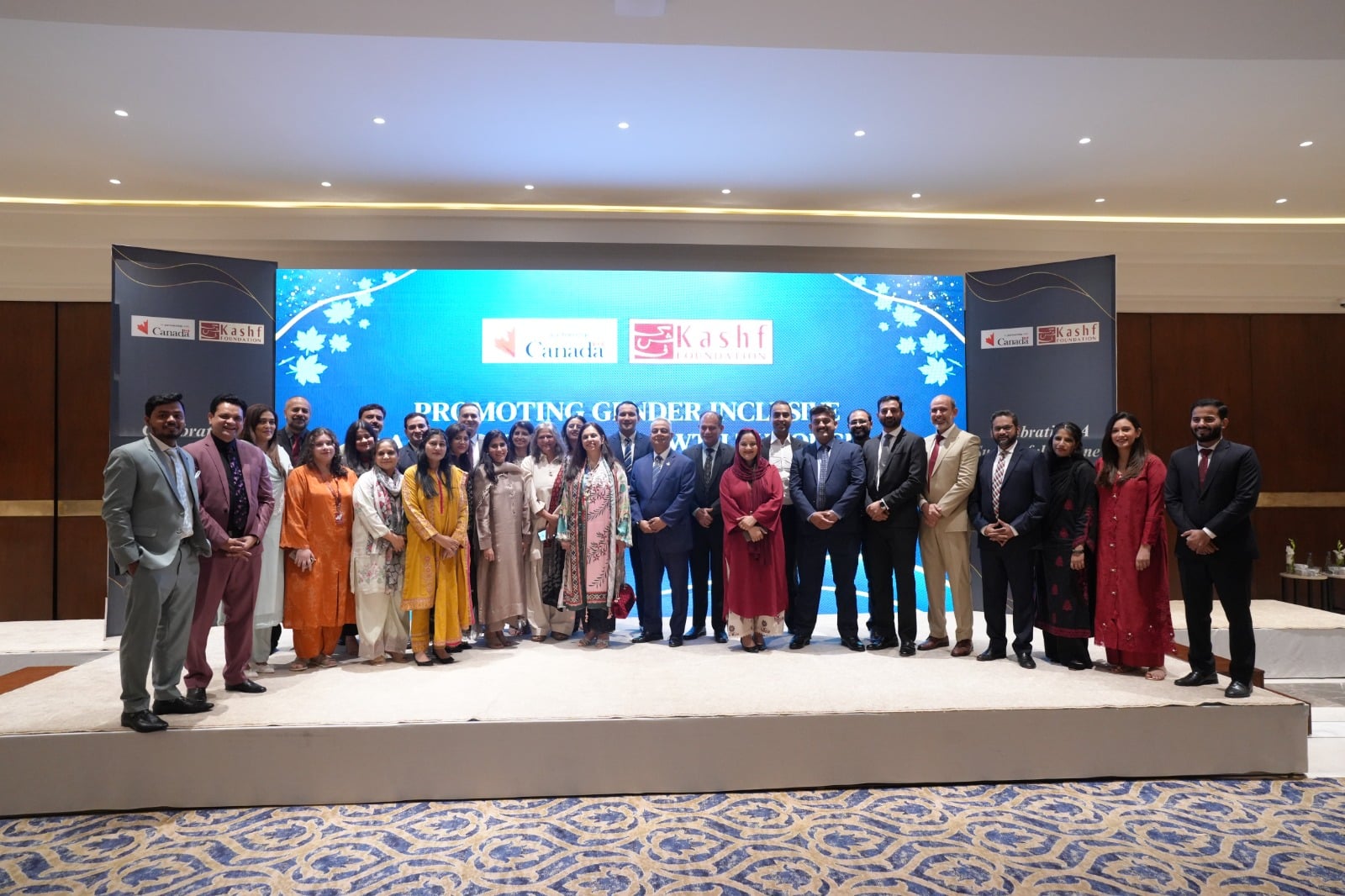
As the two organisations mark ten years of a successful partnership, the results offer valuable insights into what it takes to create lasting economic opportunities for women in Pakistan. Reaching more than 1.6 million people across 63 districts in all four provinces, the initiative has combined financial inclusion with business education, health awareness, community engagement and efforts to challenge deeply entrenched gender norms.
Beyond Microfinance: Building the Foundations for Economic Independence
At the heart of the partnership was a recognition that access to credit, while essential, is only one part of the equation.
Women entrepreneurs, particularly those from low-income communities, frequently operate businesses without formal financial training, adequate knowledge of business management or the ability to make independent financial decisions. Addressing these barriers became a central focus of the programme.
Over the course of the partnership, approximately 1.4 million women received financial literacy, financial education and business development support, equipping them with practical skills to manage their finances, strengthen their enterprises and make more informed economic decisions.
But the programme also recognised that a woman’s ability to succeed economically is often influenced by the attitudes and circumstances of those around her.
Alongside financial and business training, the initiative incorporated maternal and reproductive health education, gender awareness programmes and community engagement activities involving women, men and other family members, including mothers-in-law.
This wider approach sought to create environments in which women could not only establish businesses but also exercise greater control over their earnings and participate more actively in household decisions.
The Numbers Behind the Impact
The effectiveness of this approach was examined through an independent third-party impact assessment covering 2,596 households across 14 districts.
The findings provide compelling evidence of the additional value that financial and business education can bring to microfinance.
Women who received microloans alongside financial management training recorded 17% higher incomes and 34% greater savings compared with borrowers who had not received the training.
The results were even more pronounced among women who participated in business acceleration training. These entrepreneurs earned 26% more than women who had accessed loans without additional training.
Importantly, the benefits extended beyond financial performance.
Following business acceleration training, more than one-third of participants reported making their own decisions about where and how to save, while 33% were independently managing their businesses.
The assessment also found that 94.5% of surveyed clients reported greater inclusion of women in household decision-making, while 83.4% said their families were supportive of their businesses.
Together, these findings suggest that strengthening women’s economic capabilities can have implications well beyond individual businesses, influencing household relationships, financial security and women’s ability to make decisions about their own lives.
Changing Mindsets Beyond the Household
One of the partnership’s distinguishing features was its investment in changing the wider social attitudes that can limit women’s economic participation.
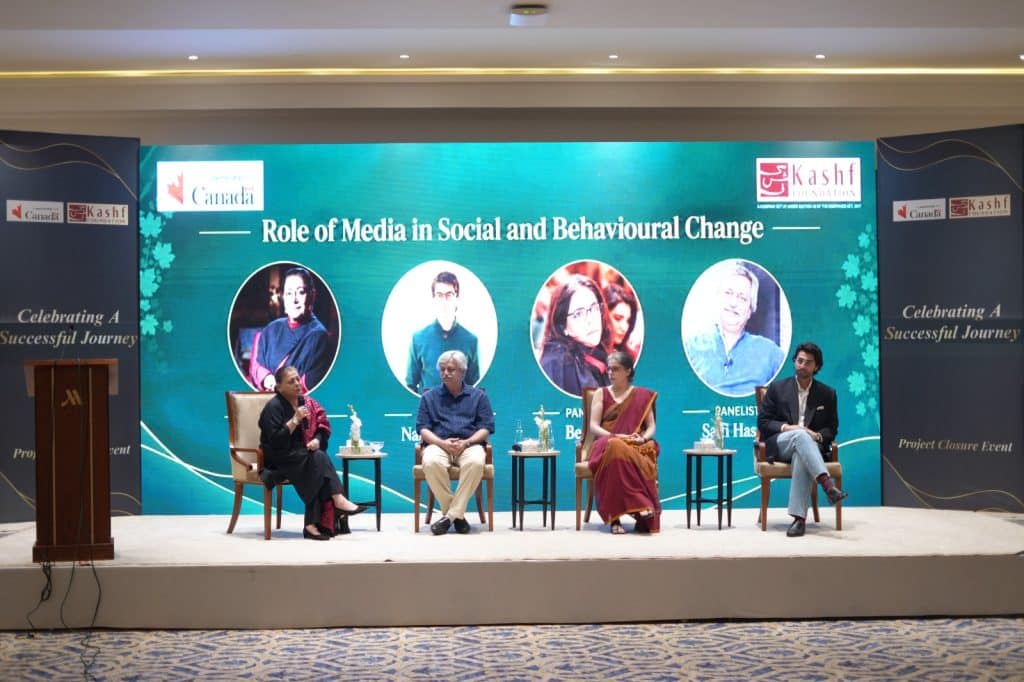
Recognising that economic empowerment cannot be separated from prevailing gender norms, Kashf Foundation and GAC extended their efforts into communities and popular culture.
Social theatre, gender awareness sessions and public service campaigns were used to encourage conversations around women’s roles, opportunities and rights.
Television also became an important vehicle for reaching audiences at scale. Dramas addressing issues including family planning, girls’ education and cybercrime brought important social conversations into Pakistani homes, with each production reaching an average audience of more than 120 million viewers.
The impact of community engagement was reflected in the assessment findings, with 88% of men participating in social theatre activities reporting a change in their views on gender roles.
These interventions reflected an understanding that improving women’s economic opportunities requires changes not only in the resources available to them, but also in the expectations and attitudes that shape their everyday lives.
A Partnership Built Around Sustainable Change
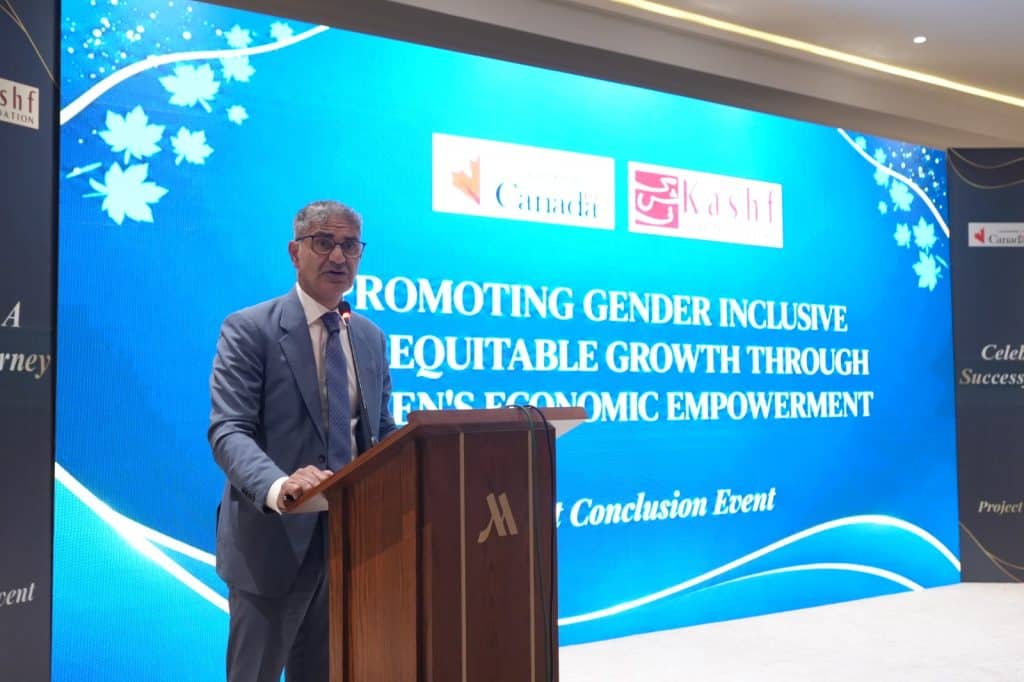
Reflecting on the partnership, H.E. Tarik Ali Khan, High Commissioner of Canada to Pakistan, highlighted the importance of addressing women’s economic empowerment within the broader household context.
“Kashf Foundation has always treated women’s economic empowerment as an entire household question. GAC is proud to have supported that approach and to have seen how economic opportunity, skills and changes in social norms can work together.”
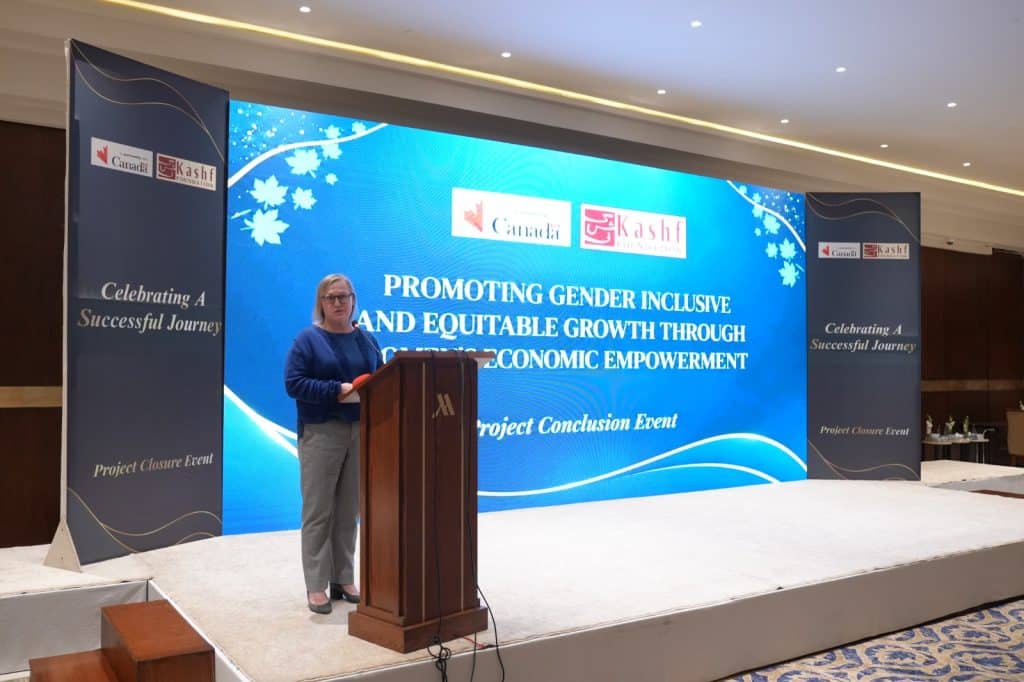
Harriet Roos, Head of Cooperation at the High Commission of Canada, similarly emphasised the importance of sustained investment in the wider systems that support women’s progress.
“Lasting change for women takes sustained partnership. The evidence from this partnership shows the value of investing not only in women’s access to finance, but also in the skills, relationships and support systems that enable them to use those opportunities.”
For Kashf Foundation, which began in 1996 with just five clients and today serves approximately 1.2 million active clients across Pakistan, the partnership represents an important part of its broader mission to advance women’s financial inclusion and economic independence.
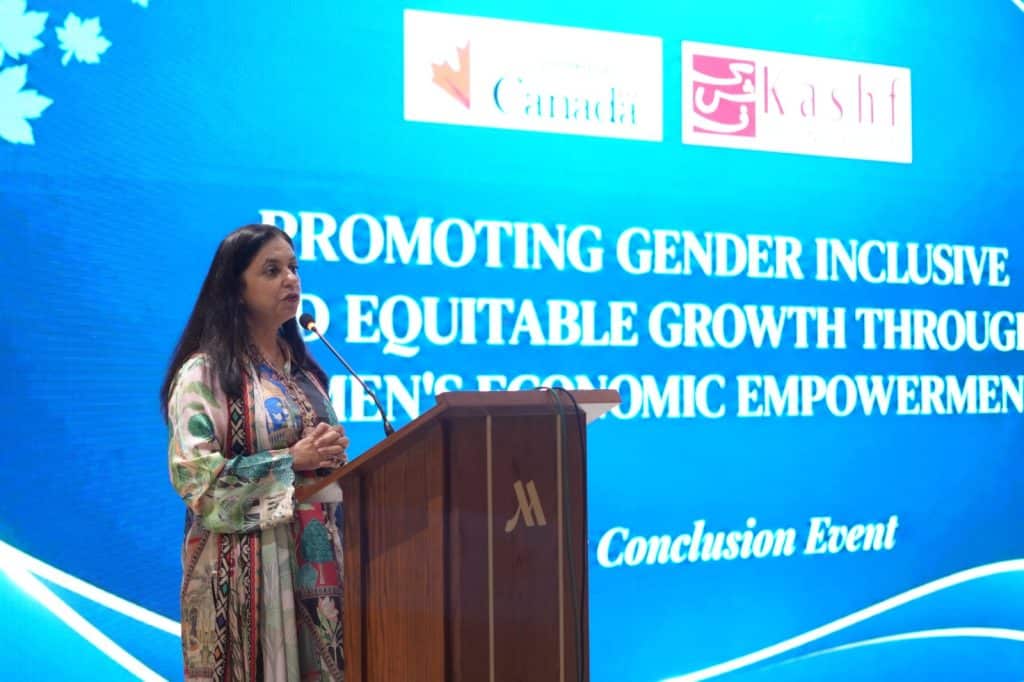
“Ten years ago, with the support of Global Affairs Canada, we set out to prove that when women move forward, families prosper, communities strengthen and economies grow,” said Roshaneh Zafar, Founder and Managing Director of Kashf Foundation. “We’ve seen and made the impact. Now it’s time for policymakers and businesses to take these lessons to scale.”
What the Partnership Means for Women’s Economic Empowerment
As Pakistan continues to confront the challenge of expanding women’s participation in the economy, the experience of Kashf Foundation and Global Affairs Canada offers an important lesson for policymakers, development organisations and the private sector.
Financial inclusion remains essential, but access to capital alone cannot overcome the structural and social barriers that prevent women from fully participating in economic life.
The partnership’s findings demonstrate the value of investing simultaneously in financial literacy, entrepreneurial capabilities, household support and changes in social attitudes.
They also point to the potential for such interventions to be replicated and expanded, particularly in communities where women continue to face significant obstacles to economic independence.
After ten years and more than 1.6 million people reached, the partnership represents more than a record of programme delivery. It offers a tested approach to advancing women’s economic empowerment in Pakistan, and a compelling case for taking its lessons to scale.

