


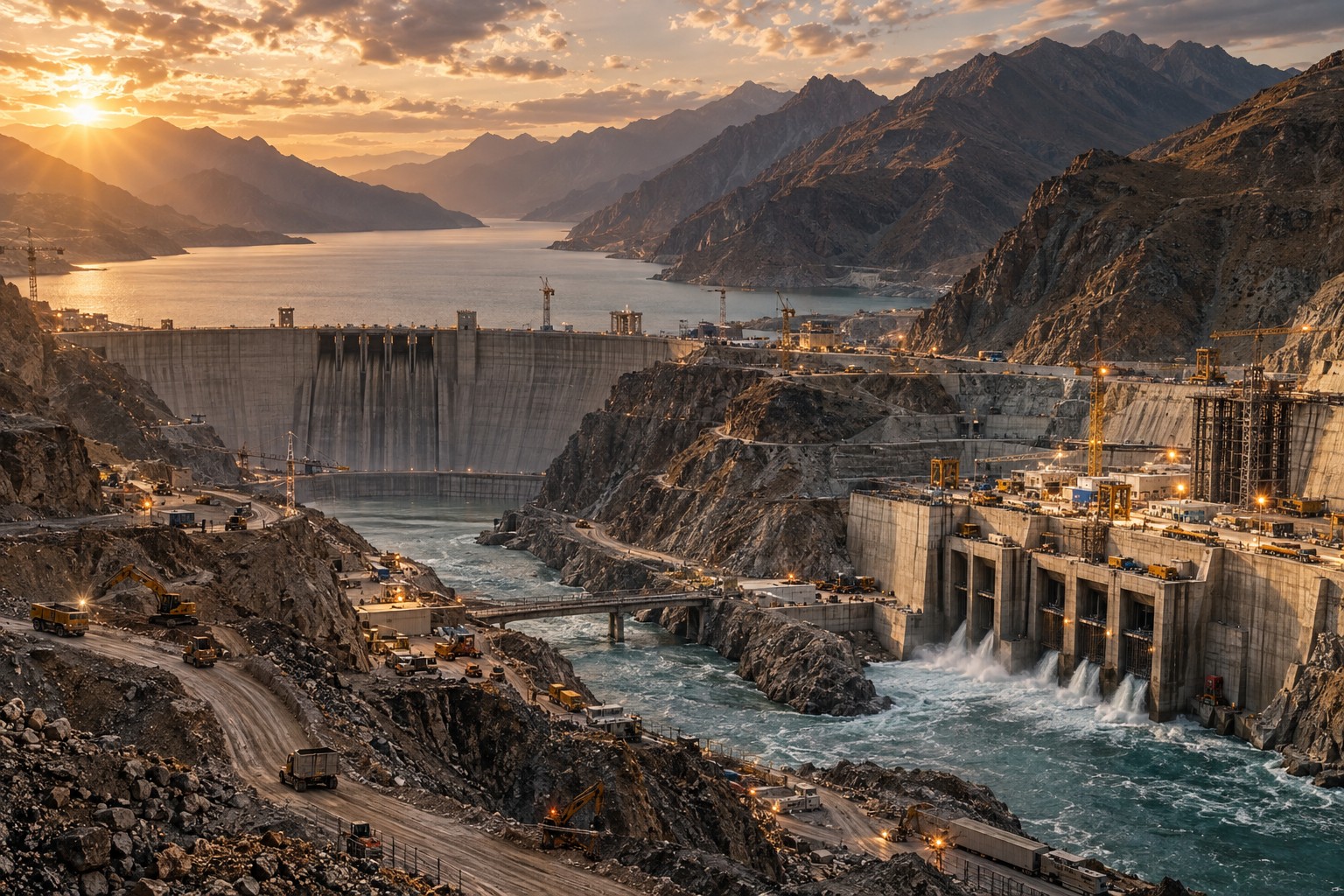
The estimated costs of the Diamer-Bhasha Dam and Dasu Hydropower Project have increased by a combined Rs1.896 trillion as the Pakistani rupee weakened against the US dollar, the Ministry of Water Resources informed the National Assembly.
Dasu accounts for the larger increase
Figures presented to lawmakers put the revised estimate for Diamer-Bhasha Dam at Rs1.121 trillion, compared with Rs479 billion previously. The Rs642 billion increase was attributed to exchange-rate changes, and the ministry said a revised PC-I had been submitted to it.
Dasu’s estimated cost climbed from Rs486 billion to Rs1.740 trillion. That represents an additional Rs1.254 trillion, or roughly 260%, making it the larger contributor to the combined increase.
Fuel and building materials add to the burden
The government also reported steep increases in petroleum and construction material prices, adding to the financial pressure on infrastructure projects. The figures shared with the assembly included:
- Cement: a bag increased from Rs530 to Rs1,610, a rise of 204%.
- High-speed diesel: the per-litre price rose from Rs72 to Rs414, an increase of 472%.
- Steel and iron bars: prices climbed from Rs72,000 to Rs265,000 per metric tonne, up 268%.
Wheat distribution after PASSCO’s dissolution
In separate Question Hour proceedings, Parliamentary Secretary for National Food Security and Research Shaista Khan briefed lawmakers on wheat supplies following the dissolution of the Pakistan Agricultural Storage and Services Corporation, known as PASSCO. She was responding to questions from Shahida Rehmani and Aliya Kamran.
Khan said relevant institutions and provinces had been contacted about distributing available wheat stocks. Supplies were also being sent to Balochistan, Azad Kashmir and other areas concerned, while imported wheat had reached warehouses to meet requirements.
A digital system now tracks wheat transportation and provincial deliveries through a dashboard showing movement and delivery details. Khan attributed PASSCO’s decline to financial and administrative problems, including delayed payment of dues and bills by some provinces.
She said the government planned to involve private companies by linking them with the Ministry of National Food Security and Research. A monitoring and accountability system for those companies was also being developed to improve wheat distribution.

