


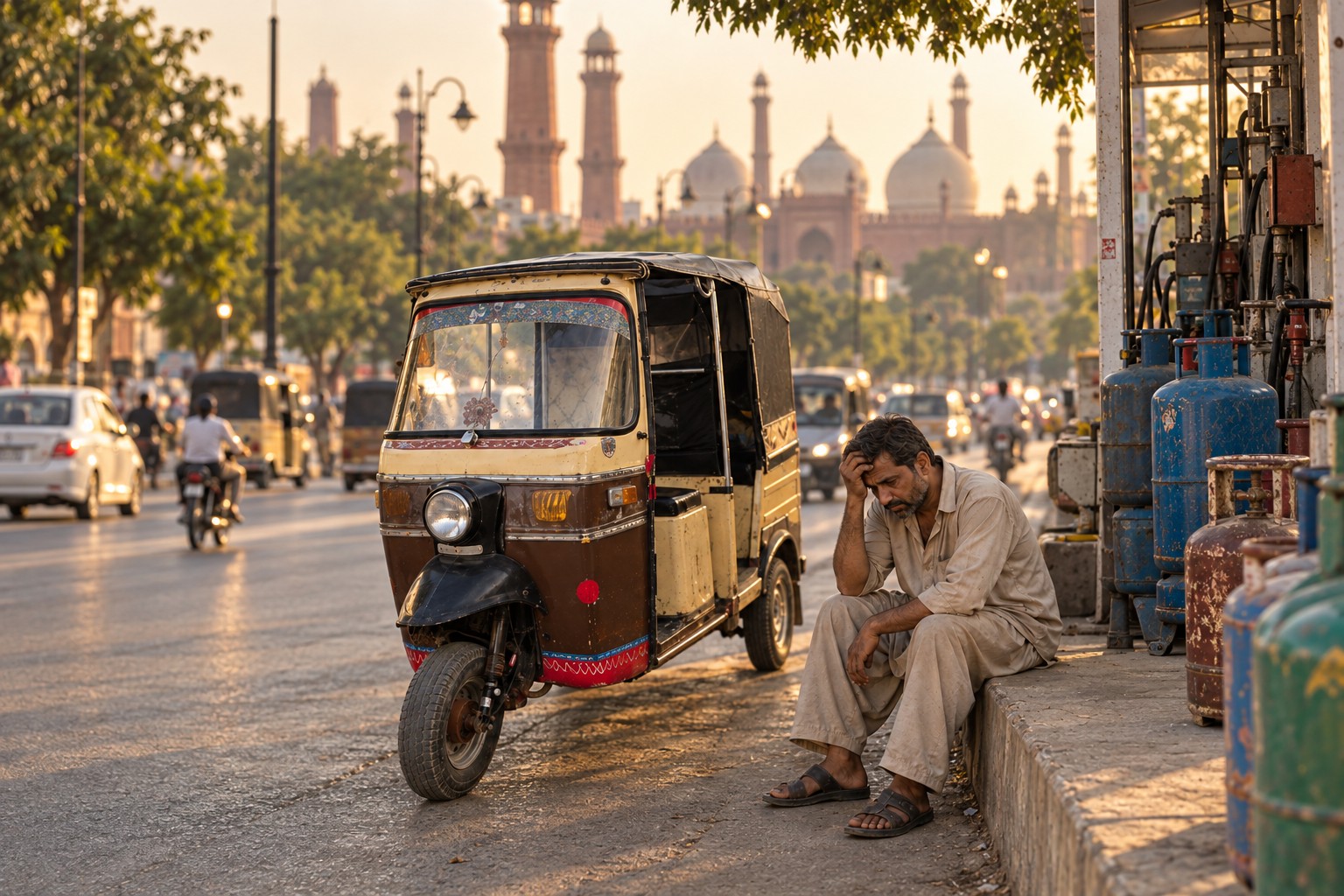
A 56% rise in LPG prices following the closure of two Iranian border crossings on October 17 has left thousands of Lahore rickshaw drivers struggling with earnings that have more than halved. For 33-year-old Rashid Ali, the squeeze means his family now eats just twice a day.
A day's earnings fall to about $3
Ali has spent 13 years driving a motorised three-wheeler through Lahore. His working day begins at 6 a.m. and can stretch to midnight, but the roughly $6.50 he previously earned each day has fallen to about $3.
That income must support two young children as well as cover household costs. He pays Rs 11,000 a month for housing, while renting the rickshaw costs another Rs 600 each day.
Previously, when LPG was cheap, we could earn a decent income
Rashid Ali
Border closures disrupt fuel supplies
According to traders, the crossing closures stopped LPG imports and pushed the open-market price of a 12-kg cylinder to Rs 7,000 within days, equivalent to about Rs 583 per kg. The Pakistan LPG Association said Pakistan had been importing around 7,000 metric tons daily from Iran before the disruption.
Authorities have offered different explanations for the closures:
- The Balochistan government pointed to security concerns and smuggling.
- Iran's foreign ministry attributed the disruption to technical problems.
- Iran's ambassador subsequently said his country had placed no restrictions on exports, including LPG, and attributed the problem to changes in Pakistani import documentation.
Sold in cylinders, LPG serves both household cooking and heating needs and powers many passenger vehicles. Awami Rickshaw Union chairman Majeed Ghauri said roughly 70% of the union members' 43,000 auto-rickshaws and almost 8,000 Qingqis use it. Qingqis are motorcycle-based passenger three-wheelers operating along fixed routes.
Higher costs meet resistance over fares
Ali buys fuel four or five times during a working day, spending Rs 300 to Rs 400 on each refill. Yet he says passengers resist fare increases, sometimes offering only Rs 80, Rs 100 or Rs 150 for journeys he values at Rs 200 to Rs 250.
Passenger Mohammad Ramzan described offering Rs 250 when a driver requested Rs 500 for a city trip. He walked away after the driver rejected the offer.
The pressure comes amid wider price increases. Pakistan's inflation rate reached 9.6% in October, and the central bank raised interest rates to 12% last week, pointing to energy and wheat costs. Petrol, which reached a record Rs 458 per litre on April 3, remains around 40% above its pre-war price.
Returning home at midday, Ali still had lunch to provide for his two boys. He planned to resume driving until late, hoping the additional hours would earn enough to bring them food for the evening.

