


In Pakistan, you’ll see women working everywhere, whether it is managing homes, supporting family businesses, harvesting crops, teaching children, stitching clothes, or keeping households and communities running. Their labour is visible, constant, and essential.
Yet when it comes to recognition, protection, and leadership, much of this work remains unseen. This gap between effort and opportunity is a personal struggle for women, and it quietly shapes the country’s economic future.
Women’s inclusion in Pakistan’s workforce remains a pressing challenge. The country ranks among the lowest in the World Economic Forum’s Global Gender Gap Report 2025, with just 56.7 percent gender parity, its highest score since 2006.
A key factor behind this imbalance is the nature of women’s work itself. Many are employed in informal, undocumented, and unprotected roles such as agriculture and domestic labour. Women make up nearly 74 percent of the informal workforce, which contributes roughly 37 percent of Pakistan’s GDP. Despite this substantial economic contribution, women remain underrepresented in formal employment structures, decision-making spaces, and leadership roles, leaving a large portion of national potential unrealised.
Bridging this gap requires moving beyond participation alone and focusing on influence. Increasing women’s presence in formal leadership roles strengthens businesses and the wider economy, bringing diverse perspectives that improve decision-making and long-term performance. This shift depends on clear policies, structured career pathways, fair promotion practices, and accountability systems that ensure women are not just working but leading, shaping, and driving Pakistan’s economic progress.
Unilever Pakistan: Embedding Inclusion into Leadership
Unilever Pakistan has integrated equity, diversity, and inclusion into its DNA and has been actively advancing on the agenda through accessible policies for its own employees and continuous advocacy for the community at large. It has strengthened parental support by introducing a 6-month maternity leave for women and paternity leave for men. It partners with organizations to provide mentorship opportunities for not only women employees but other female professionals working outside of Unilever as well. ULP also supports rural women through multiple healthcare, capability-building and livelihood projects.
Unilever’s Guddi Baji Livelihoods Program is known to extend inclusion beyond corporate walls. Launched in 2012 in partnership with the Rural Support Program Network, it trained and empowered women in villages as entrepreneurs and route-to-market agents for Unilever products. From salon-based operations to retail and digital partnerships with JazzCash, more than 8,000 women have been trained, gaining income opportunities and business skills. The latest collaboration with Jazz expands financial inclusion for low-income women across Pakistan.
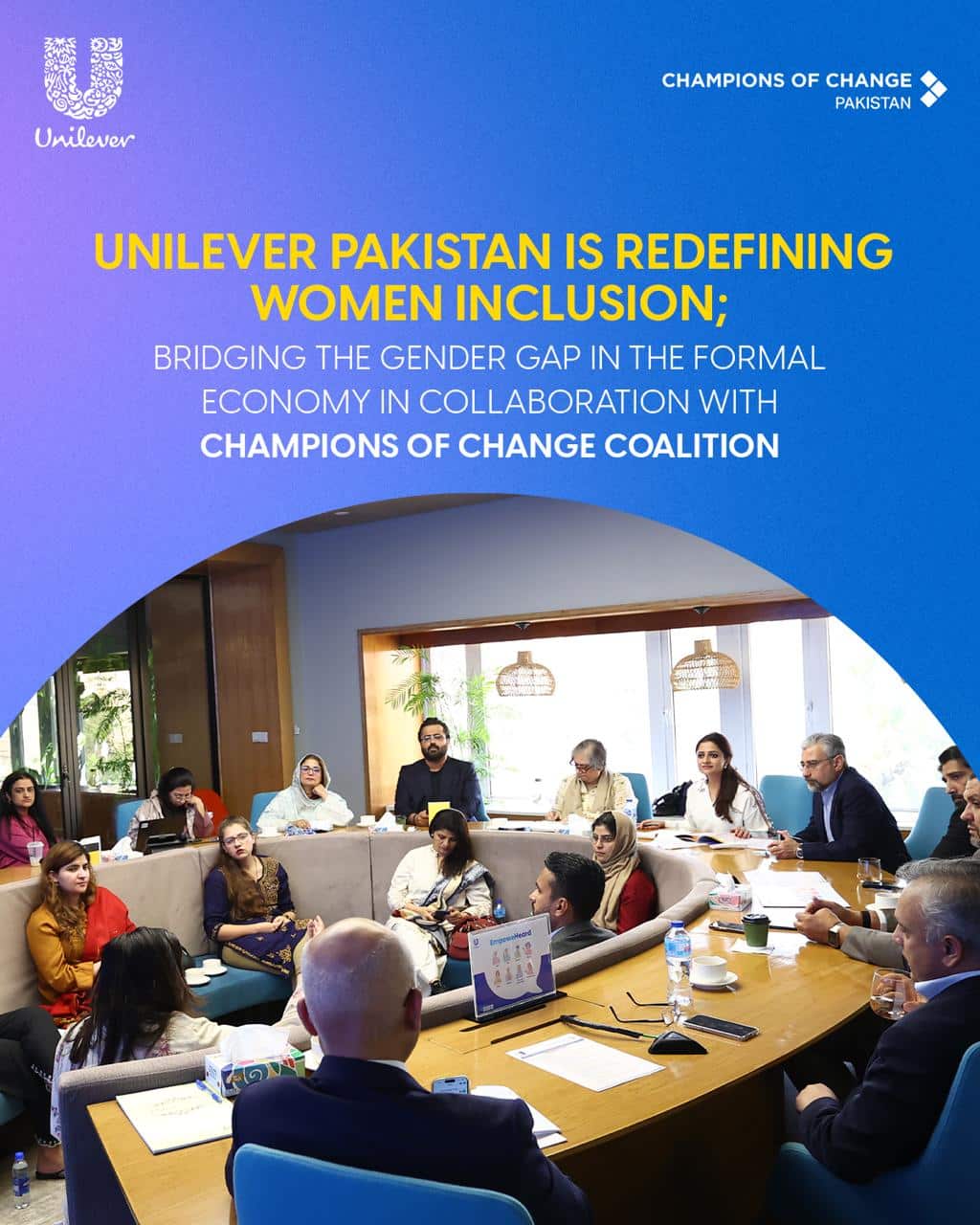
Unilever’s efforts gain further reach through partnerships with entities like Champions for Change Coalition. Recently, through this collaboration Unilever hosted a roundtable conference engaging CEOs from across industries, emphasizing that gender inclusion is a leadership responsibility. This collaboration reinforces that structural change depends on people in circles of influence championing the EDI agenda and sponsoring women in their organizations, families, and larger public spheres.
There is a need for more collaboration and dialogue around this agenda since there is clearly a lot of work that is yet to be done. Women’s contribution to Pakistan’s economy is substantial to unlock the full economic growth potential of the country, and while some good work is being done in pockets, there is still a need to come together to advocate for bringing in women in the formal workforce, documenting their numbers, protecting them through policies and frameworks, and helping them contribute meaningfully.
In the era of digitalization, this is an easy solution to uplift almost half of our population!

