


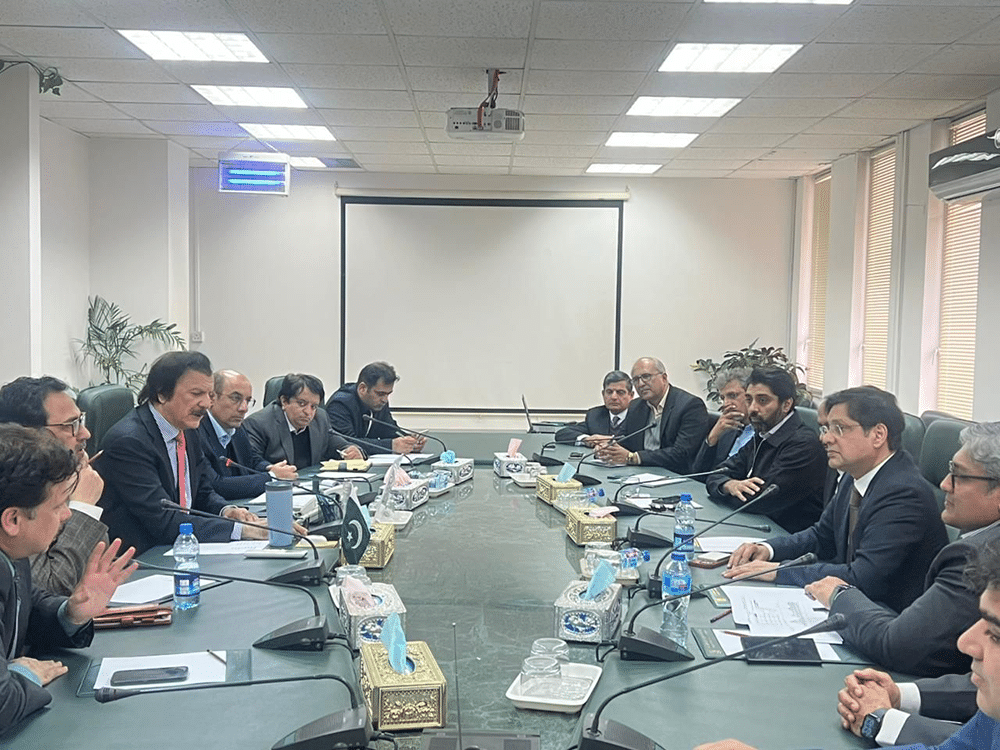
A delegation of leading automotive manufacturers met today with Special Assistant to the Prime Minister (Industries), Mr. Haroon Akhtar, and Secretary Industries, Mr. Saif Anjum, to share growing concerns over the rising used vehicle imports and the pressure it is placing on Pakistan’s local auto sector.
Industry representatives noted that nearly 22,000 used vehicles entered the country under baggage scheme between July and November—capturing almost 25% share of the market. If this trend continues, they warned, total imports could surpass 50,000 units this year, posing a serious threat to local investment, production, and employment.
“Because of outdated and significantly lower fixed customs valuations, used vehicles brought in under the baggage scheme pay far less in duties and taxes than locally manufactured cars. This imbalance is deeply concerning,” said Nadeem Malik, Chairman, Master Changan Motors.
The delegation emphasized that these imports do not comply with UN safety regulations, which all local manufacturers must meet. “No Government agency is currently checking whether these imported vehicles meet basic safety regulations. This puts both consumers and the public at risk,” said Babar S. Khan, Director, Lucky Motor Corporation.
The industry also highlighted the strain on local operations, which are running at only ~35% capacity. “It is unfortunate that despite such low capacity utilization, used vehicle imports under the baggage scheme continue at this scale,” said Sohail Nawaz, COO, Hyundai Nishat Motors.
Underscoring the industry’s broader economic role, Aqib Zulfiqar, Director NexGen Auto (Omoda & Jaecoo), noted: “Local manufacturing creates jobs, supports value addition, drives technology transfer, and strengthens large-scale manufacturing – the backbone of our economy. In contrast, uncontrolled used car imports burden the economy while putting lives and long-term investments at risk.”
Reflecting on the changing market dynamics, Mian Ali Hameed, COO of Sazgar Haval added: “The original justification for allowing used imports no longer exists. Consumers today have so much choices – 16 new players offering modern vehicles with full safety and advance driver assistance features, zero-interest financing options, and immediate availability with no waiting periods.”
In response, SAPM Haroon Akhtar assured the delegation that the government remains committed to ensuring a fair and competitive playing field. He confirmed that all imported vehicles will be brought under the same safety and quality regulations applicable to local manufacturers, and that issues of undervalued customs assessments will be taken up with FBR and Customs Valuation.
“Fixed valuations and ITPs for used vehicles must be updated and reviewed annually. The Ministry of Industries will continue prioritizing local manufacturing, job creation, and a progressive auto policy—one that encourages competitive pricing which ultimately benefits Pakistani consumers,” the SAPM stated.

