


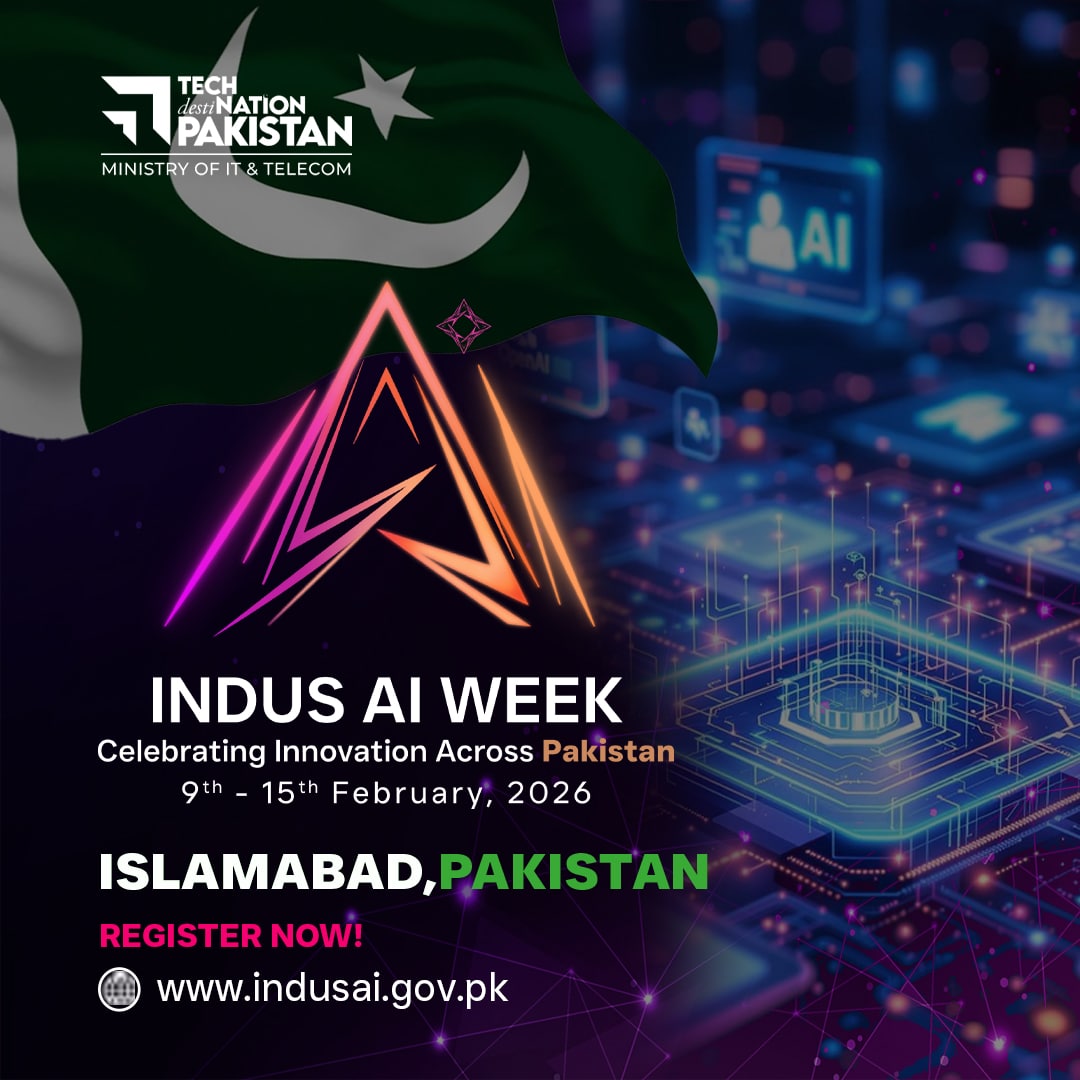
The long standing story of the Pakistani tech sector has been defined by the departure of its most capable minds. For decades, the graduation ceremonies at the country’s elite engineering universities have served as unofficial send-off parties for talent bound for Silicon Valley, London, or Berlin. This persistent exodus has often been viewed as an unavoidable tax on the nation’s potential, but as Indus AI Week 2026 prepares to take over the nation from February 9 to 15, that narrative is being fundamentally challenged. The focus has shifted from the tragedy of who is leaving to the strategic necessity of building machine intelligence locally. Pakistan no longer needs to export its intelligence to participate in the global economy; it needs to anchor that intelligence at home to secure its own future.
The upcoming gathering in Islamabad serves as the primary stage for this reversal, grounded in a cold business calculation rather than mere sentiment. In a global market where artificial intelligence is the new currency, the traditional advantage of being physically present in a Western tech hub is rapidly being outweighed by the benefits of operating from a high-talent, low-cost base. Indus AI Week is designed to prove that the tools for global scaling are already present within the country. Through the Innovation, Learning and Engagement Arena, the event will provide live demonstrations of local tech deployments, showing that a founder in Islamabad can command the same digital infrastructure as a peer in San Francisco, but with a significantly longer financial runway.
This operational efficiency is perhaps the most immediate argument for building at home. The cost of maintaining an engineering team in Europe has reached a point of diminishing returns, often draining a startup’s seed funding before a product can even reach the market. In contrast, building in Pakistan offers an arbitrage that allows founders to survive the difficult early stages of development. During the practical sessions in February, visitors will see how this extended runway has allowed local teams to move beyond prototypes. They will witness AI agents managing complex logistics and fintech applications processing real-time data, all built by developers who chose to stay. These are not just lines of code; they are evidence that the country is a functional hub for founding and scaling world-class products.
The borderless nature of AI development has effectively leveled the playing field for the first time in history. A well-trained model built locally can serve an international client just as effectively as one built in a foreign capital. Indus AI Week highlights the rise of these Global-First startups that are headquartered in Pakistan but designed for the world. By removing the geographical penalty that once forced people to emigrate, AI has turned the nation’s young workforce into its most valuable economic asset. The Arena will feature companies that have already scaled to thousands of international users, proving that a foreign visa is no longer a prerequisite for global impact.
The physical showcases during the week also address the traditional weak points of the local ecosystem, such as infrastructure and regulatory clarity. By moving toward specialized AI hubs and data clusters that provide local compute power, the incentive to leave is being systematically dismantled. The event will also feature Secure AI Ecosystem showcases, where walkthroughs will demonstrate that the country is maturing into a safe destination for international investment. When the legal and physical environment supports innovation in such a visible way, the brain drain naturally begins to slow as the brightest minds find the support they need right where they are.
Perhaps the most significant theme of this shift is the return of the diaspora. Professionals who spent years at major global tech firms are now looking at Pakistan’s AI sector as a ground-floor opportunity. Indus AI Week serves as a homecoming for these leaders, who are bringing their capital and global networks back to the local soil. The Founder sessions will pair these veterans with fresh graduates, creating a multiplier effect that turns a history of loss into a future of gain. This transfer of knowledge is essential for building a resilient ecosystem that no longer relies on external validation.
As the start date of February 9 approaches, the mood in the community is one of quiet confidence. Indus AI Week is not just a showcase of what has been built; it is a declaration that the era of the brain drain is ending. It marks the transition to a scale-home reality where the most innovative products of the next decade carry a Made in Pakistan tag.
For the student just starting out and the veteran returning from abroad, the message is clear. The future is being coded in Islamabad, and for the first time in a generation, the smartest people in the room are staying exactly where they are to build it.

