



Around the world, governments are recognizing that effective policymaking begins with reliable data. Countries that have invested in integrated socio-economic registries have seen measurable improvements in targeting, efficiency, and public trust. The Punjab Socio-Economic Registry aligns Pakistan with these global best practices and, in many respects, places it ahead of much of South Asia in institutional reform.
International experience shows that fragmented data systems lead to inefficiencies and exclusion. In contrast, countries that maintain unified household registries are better able to coordinate social protection, health, education, and economic programs. These systems serve as a single source of truth, allowing governments to respond quickly to changing socio-economic conditions. PSER follows this same philosophy by creating a comprehensive registry that can support multiple policy objectives simultaneously.

Several countries have demonstrated how integrated registries can transform governance. Brazil’s Cadastro Único serves as the backbone for more than twenty federal and local social programs, allowing the government to align welfare, education, and employment initiatives using a single dataset. Similarly, Chile’s Social Registry of Households enables dynamic targeting by continuously updating household data, ensuring that assistance reaches families as their circumstances change rather than relying on static classifications.
Indonesia has also adopted a unified socio-economic database to guide health insurance coverage, food subsidies, and disaster response programs. By consolidating household information, the government reduced duplication, minimized exclusion errors, and significantly improved fiscal efficiency. These international examples show that when data systems are designed as shared infrastructure rather than isolated tools, governments can deliver services more equitably and respond faster to emerging needs.
What makes PSER particularly significant is its scale and ambition. In many developing countries, socio-economic registries remain confined to specific welfare schemes. PSER, however, is designed as a cross-sectoral platform that supports planning across health, education, urban development, labor markets, and social protection. This reflects a mature understanding of governance, where data is treated as a public asset that serves the entire state apparatus rather than individual departments.

In the South Asian context, this approach is especially rare. Most countries in the region continue to rely on program-specific databases and periodic surveys that quickly become outdated. PSER breaks this cycle by establishing a dynamic system that can evolve over time. As household conditions change, the registry can be updated, ensuring that policies remain relevant and responsive rather than reactive.
Another important aspect of PSER is its emphasis on transparency and accountability. By grounding decisions in verified data, the system reduces opportunities for leakages, duplication, and favoritism. It also strengthens monitoring and evaluation, enabling policymakers to assess outcomes and refine interventions based on evidence rather than assumptions.
Beyond social welfare, PSER has implications for long-term economic reform. Accurate socio-economic data can inform skills development strategies, labor market planning, urban infrastructure investment, and climate resilience initiatives. It allows governments to anticipate challenges such as unemployment trends, service gaps, or urban pressure points before they escalate into crises.
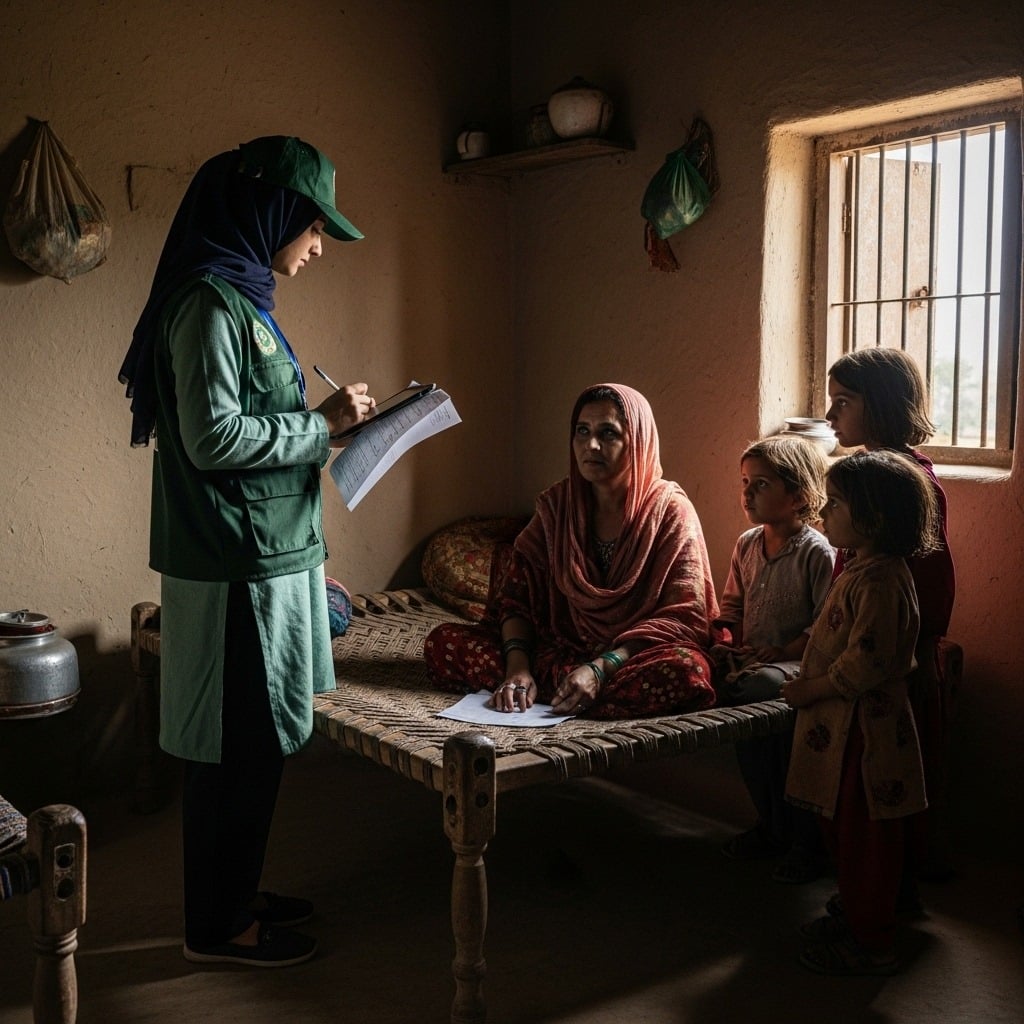
PSER is not merely a technological upgrade; it represents a governance reform rooted in global learning. By adapting internationally proven principles to local realities, Punjab has taken a decisive step toward modern, data-driven administration. As the system matures, it has the potential to serve as a benchmark not only for other provinces but for countries across South Asia.
In an era where data underpins competitiveness, resilience, and equity, PSER signals a clear commitment to smarter governance. It demonstrates that when public policy is informed by evidence, development becomes more efficient, more inclusive, and more just

