


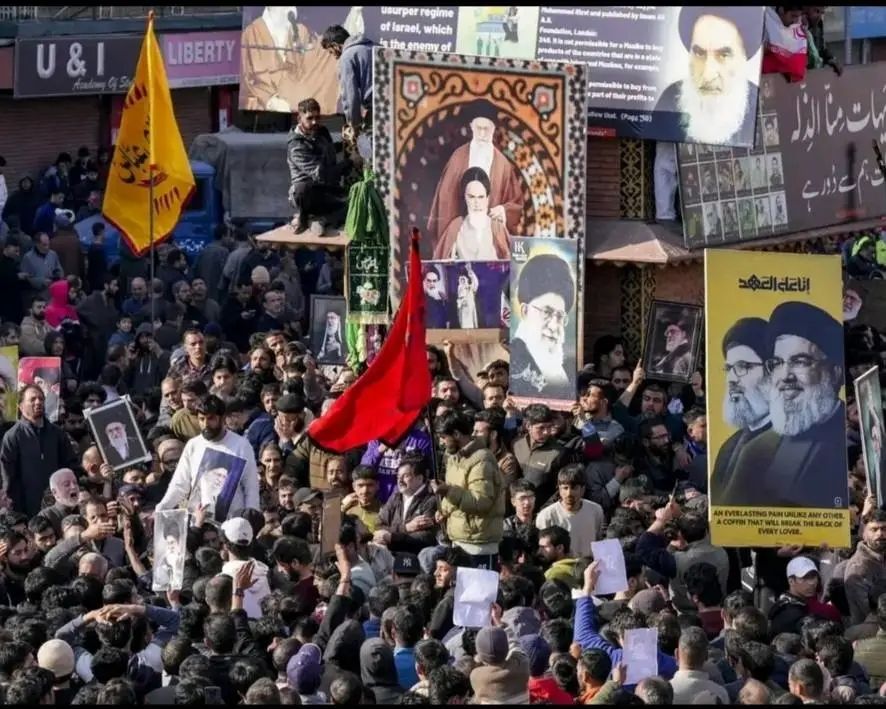
Massive protests took place across Indian‑administered Kashmir on Sunday as thousands of people poured into the streets to mourn the reported death of Iran’s Supreme Leader, Ayatollah Ali Khamenei, following strikes by U.S. and Israeli forces.
People gathered in several towns and cities, including Srinagar, Budgam, Bandipore, and Ramban, expressing deep grief and strong political feelings over the news.
In the main city of Srinagar, large crowds formed near the city centre and in front of the United Nations Military Observer Group (UNMOGIP) headquarters, carrying portraits of Khamenei, black flags and banners. Many chanted slogans condemning the strikes and calling out the United States and Israel for their role in the killing.
The protests were driven largely by the Shia Muslim community, which holds spiritual and religious ties with Iran, but included other residents as well.
Authorities in Kashmir responded to the demonstrations by limiting mobile internet services in Srinagar and nearby areas to help maintain public order. The regional government also announced that schools and colleges would remain closed for two days as a precaution amid the large gatherings.
Jammu and Kashmir Chief Minister Omar Abdullah appealed for calm, urging people to express their views peacefully and avoid actions that could lead to unrest.
Despite tensions, most protests remained peaceful, with mourners beating their chests and reciting traditional mourning chants as a sign of sorrow.
In some areas, the crowds also raised anti‑U.S. and anti‑Israel slogans, reflecting broader anger over international military involvement in the region.

