


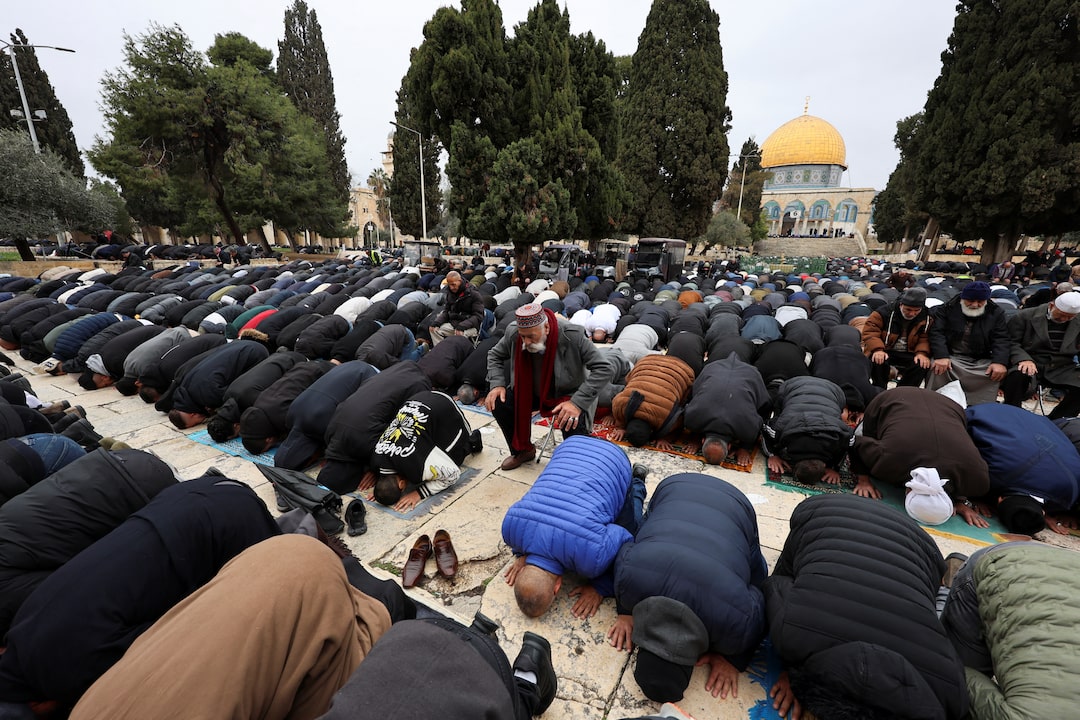
Muslim worshippers gathered in the streets near Jerusalem’s Al-Aqsa compound to perform their prayers after Israeli authorities closed the holy site and several other places of worship.
The restrictions were imposed due to security concerns linked to the ongoing conflict between Israel and Iran.
Because of these measures, many people were unable to enter the Al-Aqsa Mosque complex, which is usually open to thousands of worshippers, especially during the holy month of Ramadan.
As a result, groups of Muslims prayed in nearby streets and open areas, hoping to continue their religious practices despite the limitations.
The closure of the mosque during Ramadan is considered unusual. Normally, the site is filled with large numbers of worshippers who gather for daily prayers and special night prayers during the holy month. However, the current situation has left the compound largely empty compared to previous years.
Israeli officials say the restrictions were introduced as a safety precaution due to the tense regional situation. Authorities claim the measures are necessary to prevent potential security risks during a period of heightened tensions in the Middle East.
Despite these explanations, the decision has been strongly criticized by several Arab and Islamic countries. Many leaders and organizations argue that closing the mosque during Ramadan affects the religious rights of Muslims and limits their ability to observe important prayers.
They have expressed concern that such restrictions interfere with freedom of worship, particularly at one of Islam’s most sacred sites.
The situation has sparked widespread discussion across the Muslim world, with calls for respect for religious practices and access to holy places. As the conflict continues, the future of worship access at the site remains uncertain.

