


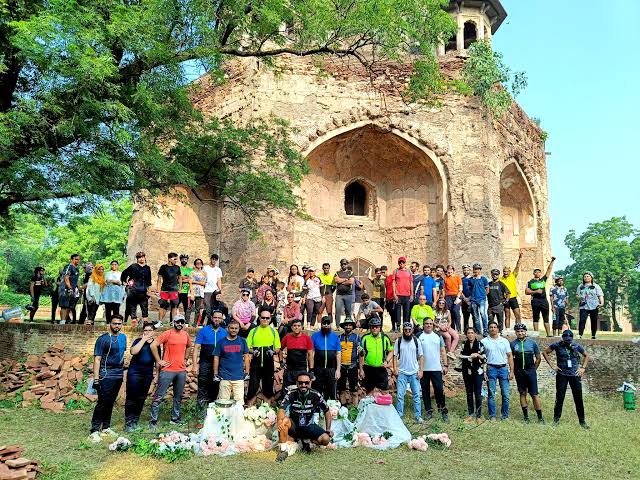
There are places in Lahore where history refuses to remain confined behind glass cases or within textbook pages. It lingers in the air, settles into the walls, and waits quietly—until, in moments like these, it begins to breathe again.
Today, I walked through the ongoing conservation work at the tomb of Ali Mardan Khan, overseen by the Punjab Archaeology Department. What unfolded before me was far more than a routine restoration project. It felt like a deeply thoughtful dialogue with the past—an effort not to overwrite history, but to understand it, respect it, and carefully bring it forward.
Every inch of the structure is being approached as if it were a historical manuscript. The stucco surfaces are not being hastily redone or modernized; instead, they are being studied, mapped, and revived with remarkable restraint. Each crack, each fragment, is treated as evidence—something to be read rather than erased. The faint frescoes, though weathered by time, are slowly emerging again through meticulous, layer-by-layer conservation. The artisans working on them are not merely restoring color; they are recovering stories embedded in pigment and plaster.
The tile mosaic work is equally striking in its complexity. Intricate patterns that once defined the aesthetic identity of the tomb are being reconstructed with extraordinary precision. This is not guesswork or creative liberty—it is a disciplined process grounded in research, historical references, and technical mastery. Every tile placed carries the weight of authenticity.
What stands out most is the level of discipline guiding the entire effort. A dedicated team of master craftsmen—specialists in fresco techniques, tile mosaic, and stucco tracing—are working in close coordination with conservation architects and senior experts, including the Chief Conservationist. There is no sense of urgency that compromises quality. Instead, the pace is intentional, measured, and guided by evidence at every step. Each decision undergoes careful consideration, ensuring that nothing disrupts the integrity of the original structure.
Beyond the physical restoration, there is a broader and more ambitious vision taking shape. The tomb is not intended to remain a standalone monument, isolated from the life of the city. Plans for a connecting tunnel passage and gateway aim to transform the area into a vibrant heritage corridor. This will create a seamless journey—one that begins in the movement of a heritage street and gradually leads visitors into the serene presence of a Mughal-era tomb.
As evening sets in, the experience is envisioned to evolve even further. Subtle illumination, guided storytelling, and the gentle resonance of live Sufi music could transform the space into something immersive and deeply cultural. This is not about conventional tourism or surface-level engagement; it is about reconnecting people with their history in a way that feels alive and relevant.
Under the leadership of Maryam Nawaz Sharif, the project appears to extend well beyond preservation. It reflects an effort to reintegrate heritage into the everyday life of the city—to make it a place people revisit, engage with, and form a connection to, rather than simply observe once and move on.
True conservation does not demand attention or announce itself loudly. It works quietly, revealing layers of meaning over time. It requires patience, humility, and a deep respect for what has come before.
And here, at this site, that philosophy is beginning to take form. The monument is no longer silent. Slowly, carefully, and with integrity, it is finding its voice again.

