


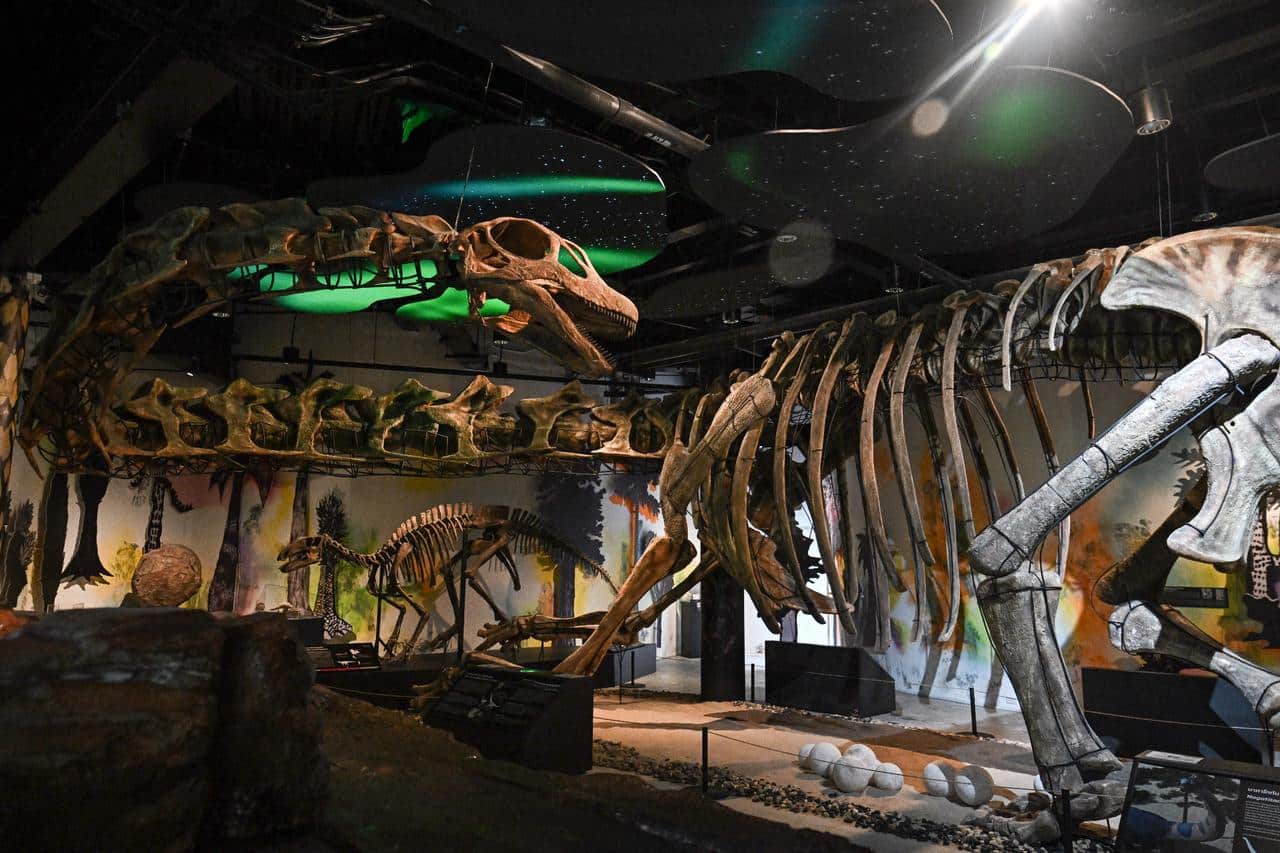
Scientists have discovered the largest dinosaur ever found in Southeast Asia. The new species, named Nagatitan chaiyaphumensis, was a giant long-necked sauropod that lived around 100 to 120 million years ago during the Early Cretaceous period.
Researchers estimate that this massive dinosaur measured nearly 27 metres in length and weighed about 27 tonnes, roughly the same as nine adult Asian elephants or as long as a blue whale.
The fossils, including spine, rib, pelvis, and leg bones, were first found in 2016 by a local villager near a pond in Chaiyaphum Province, northeastern Thailand. Proper excavations and studies were completed recently by an international team of palaeontologists.
Nagatitan belonged to a group of plant-eating dinosaurs known for their extremely long necks and tails. It is not only the largest dinosaur found in Southeast Asia but also the geologically youngest sauropod discovered in the region so far.
Experts believe this discovery is very important because not many sauropod fossils have been found in Southeast Asia. It provides valuable information about dinosaur diversity and evolution in the region.
The finding has brought global attention to Thailand’s prehistoric past and is expected to boost dinosaur research and tourism in the country. Replicas of the dinosaur are now displayed at Bangkok’s Thainosaur Museum.

