


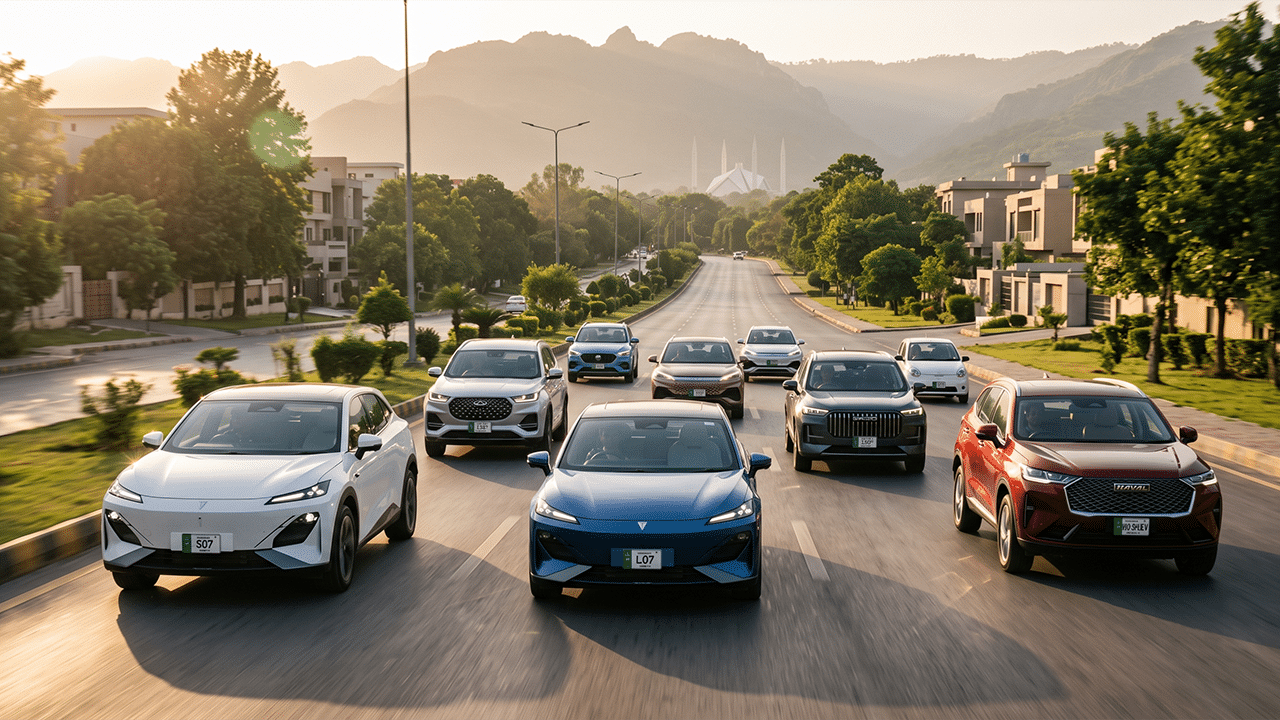
Pakistan is deep into one of the toughest IMF programmes in its history. Citizens are being asked to absorb higher taxes, shrinking subsidies, and relentless inflation. Yet, in the middle of this national belt‑tightening, an unexpected policy twist has emerged: the government is reportedly considering reducing the sales tax on hybrid electric vehicles (HEVs) & PHEVS from 25% to 18%.
It’s a move that raises a simple but uncomfortable question: who exactly is this relief meant for?
The lapse of the concessional tax rate on June 30 placed hybrids & plug in hybrid vehicles under the standard 25% bracket for high‑value automobiles. That decision aligned with the IMF’s core principles — broaden the tax base, end preferential treatments, and maintain fiscal discipline. But now, barely weeks later, the government appears ready to reverse course.
And let’s be honest: this is not a concession for the middle class. The hybrid and plug‑in hybrid vehicles entering Pakistan’s market today are overwhelmingly luxury SUVs and sedans, almost all priced above PKR 10 million. These are not fuel‑saving commuter cars; they are premium lifestyle purchases.
Meanwhile, ordinary Pakistanis are carrying the weight of adjustment. They are paying more indirect taxes, facing higher electricity and fuel prices, and coping with inflation that has eroded purchasing power across every income bracket. Asking this same population to effectively subsidize a tax cut for buyers of PKR 10 million vehicles is not just tone‑deaf — it is economically regressive.
And the math is unforgiving. Every rupee forgone on luxury imports must be recovered somewhere else, usually through taxes on everyday goods or higher petroleum levies. FBR estimates show that letting the reduced hybrid tax expire brings in over PKR 31 billion. Rolling back the rate directly eats into that fiscal buffer.
Supporters of the concession argue that cheaper hybrids promote cleaner transportation. It’s a compelling slogan, but the policy reality doesn’t match. Real green mobility requires mass adoption, not subsidizing high‑end SUVs. Pakistan still lacks affordable electric or hybrid options under PKR 5 million, and public transport remains chronically underfunded. Offering tax relief on heavy, high‑cc hybrid imports — many arriving as CBUs or low‑localization CKD kits — does little for the climate and even less for the economy. It drains foreign exchange and does not build domestic engineering or parts manufacturing capacity.
Governments are judged not only by how much revenue they collect, but by how fairly they distribute relief. If Pakistan truly has fiscal space for concessions, that relief should go toward essential commodities, agriculture inputs, or public transit — areas that directly ease the cost of living for millions.
Reducing taxes on luxury vehicles while under an active IMF programme sends a troubling signal about policy priorities. Policymakers must ask themselves: Should the first beneficiaries of tax relief in an austerity‑driven reform era really be buyers of PKR 10 million automobiles?

