


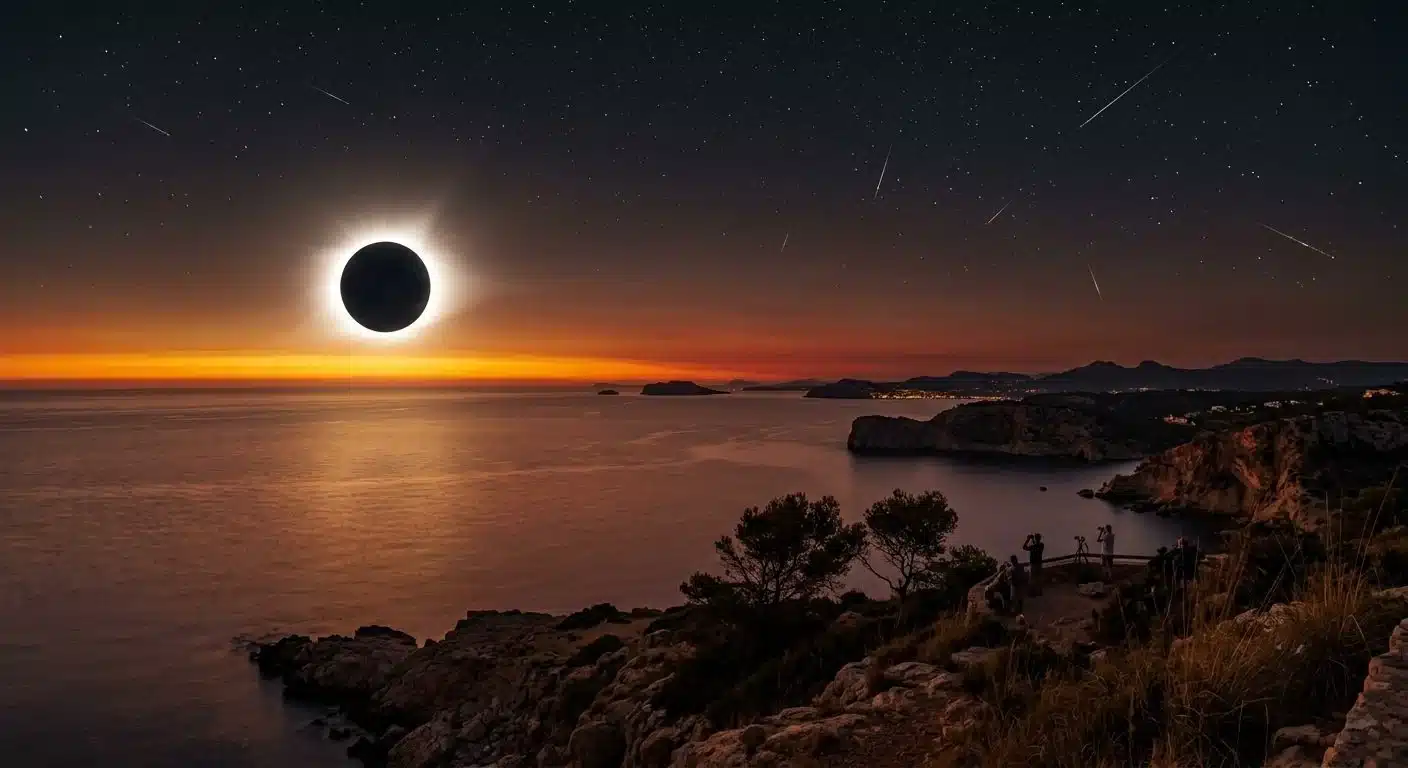
On August 12, 2026, a rare total solar eclipse briefly turned day into night across parts of Europe and the North Atlantic. The Moon passed directly in front of the Sun, casting a dark shadow that swept over Greenland, western Iceland, northern Spain, and a tiny corner of Portugal.
In the path of totality, the Sun was completely blocked for up to about two minutes and 18 seconds. The sky grew dark, temperatures dropped, and the Sun’s glowing outer atmosphere, the corona, became visible. Crowds gathered on hills and coasts in northern Spain and Iceland to watch the dramatic change.
Most of Europe saw a deep partial eclipse instead. In places like the UK, France, and Germany, the Moon covered 80 to 95% of the Sun, dimming the daylight noticeably near sunset. This was the first total solar eclipse visible from mainland Europe since 1999, making it a special event for millions.
People used special eclipse glasses for safety. The rare alignment of Sun, Moon, and Earth created a memorable natural show that left many people in awe of the night-like darkness that arrived in the middle of the afternoon.

