


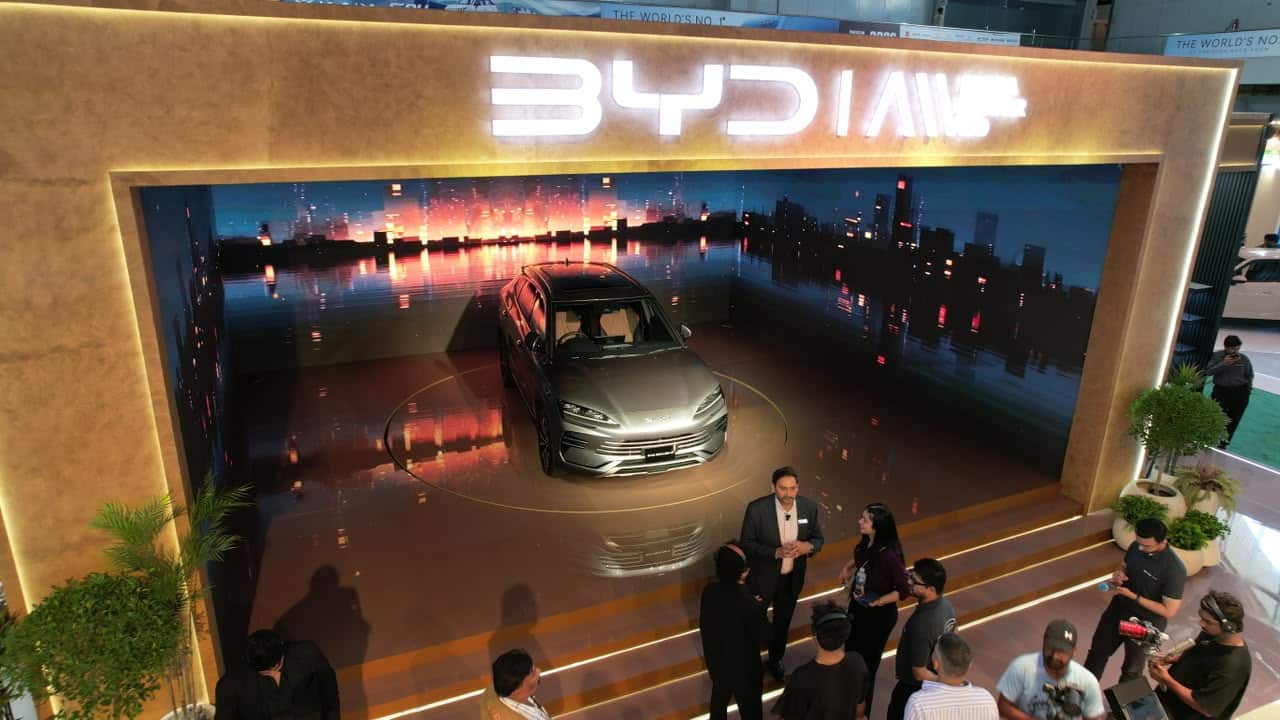
When New Energy Vehicles (NEVs) first entered the local market, they were about bringing the latest globally available technologies to local consumers. However, in a short span of nearly two years, these vehicles have become a leading story in how Pakistan’s automotive industry is changing.


This notion came into sharper focus at Pakistan Auto Show 2026, where the introduction of the Sealion 6 marked a significant step in writing a new chapter in the country’s local automotive manufacturing story. The model was presented as the first BYD vehicle planned for local assembly in Pakistan, with production targeted for the fourth quarter of 2026.
The development was notable because it represented a shift in the role NEVs could and are playing in Pakistan. The market has moved beyond simply introducing electric vehicles to consumers and is beginning to see a wider range of technologies, including plug-in hybrids, alongside plans for local production.


The Sealion 6 is central to that transition. Powered by BYD’s Super DM-i technology, it combined electric driving with a petrol engine and offered a total range of up to 1,100 kilometres. The approach is designed to make electrified driving more practical for different types of journeys, while retaining the flexibility of a conventional powertrain when required.

That flexibility is particularly relevant for Pakistani consumers, for whom everyday usability remains an important part of the decision to adopt NEV technology. The technology behind the Sealion 6 also comes with considerable global experience. BYD’s Super DM technology has already been used in more than 8.5 million vehicles worldwide, providing an established technological base as the company prepares to introduce the model into Pakistan.

What makes this development more significant, however, is what comes after the product itself. Local assembly means that the industry will move from simply using NEVs on the road to a physical production presence in Pakistan. It represents a longer-term commitment to the market and adds another dimension to the country’s evolving automotive industry.


The wider display at PAPS reflected how that evolution was taking place across several segments. The Atto 2 represented fully electric mobility, while the Shark 6 Anniversary Edition showed how plug-in hybrid technology had expanded into premium utility vehicles. The Denza B8 brought a luxury-focused technology proposition to the lineup.
The breadth of the portfolio also reflected how quickly NEVs have moved into different parts of the market. What had initially been a relatively new category is now increasingly available across different price points, vehicle types and customer requirements.


This expansion has been accompanied by a growing customer base. More than 10,000 BYD vehicles were already on Pakistani roads, providing an indication of how quickly NEVs have gained visibility in the market.
The planned assembly of the Sealion 6 therefore represents more than the addition of another model. It marks another stage in the development of Pakistan’s new energy ecosystem, from introducing global technology, to building consumer acceptance, and now towards establishing local production.


That progression may ultimately prove to be one of the more important developments emerging from Pakistan’s NEV story. The question is no longer simply whether Pakistani consumers would adopt new-energy vehicles. Increasingly, it was about how those vehicles could become part of the country’s broader automotive and industrial future.

