


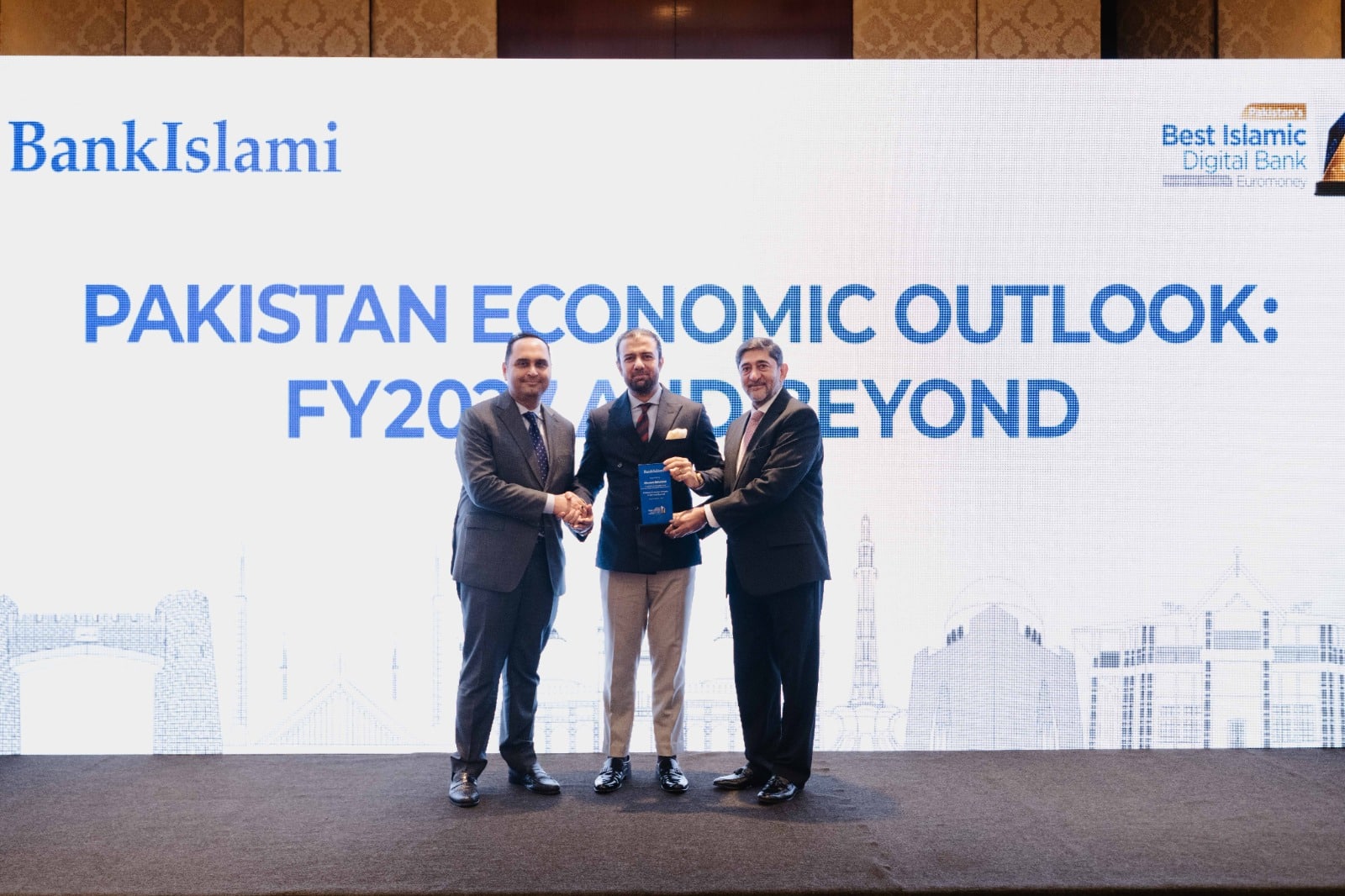
Sessions held in Karachi and Lahore examined Pakistan’s macroeconomic direction, fiscal priorities, monetary policy trends and the country’s long-term financial resilience.
Karachi, August 3, 2026: BankIslami, one of Pakistan’s fastest-growing Islamic banks, hosted strategic economic outlook sessions in Karachi and Lahore aimed at facilitating informed dialogue on Pakistan’s evolving financial landscape and its implications for corporate and middle market clients, financial institutions and the wider economy.
Titled “Pakistan Economic Outlook: FY2027 and Beyond,” the sessions brought together policymakers, economists, business leaders, and financial journalists to examine Pakistan’s macroeconomic trajectory, fiscal reform priorities, and monetary policy trends as the country prepares for FY2027 and the years ahead.
Participants included Amin Khan Lodhi, Deputy Governor, State Bank of Pakistan; Khurram Schehzad, Advisor to the Federal Minister for Finance and Revenue; Dr. Ali Hasanain, Associate Professor of Economics at Lahore University of Management Sciences; Khurram Husain, a renowned Economic Analyst; and Ali Khizar, Director Research at Business Recorder, along with others.
BankIslami’s senior leadership, including Rizwan Ata, President and CEO, Imran H Shaikh, Dy Chief Executive Officer, and Rizwan Malik, Group Head, Treasury & Financial Institutions, along with other senior executives, also attended the sessions.
“Pakistan’s long-term economic progress requires informed dialogue and meaningful engagement among policymakers, businesses, economists and financial institutions,” said Rizwan Ata, President and CEO of BankIslami. “At BankIslami, our role goes beyond being just a financial institution. Our mission is to make Riba-free, Shariah-compliant banking accessible to everyone and serve the economy for long-term progress and prosperity.”
The dialogue reflects BankIslami’s growing role in Pakistan’s economic and financial landscape, creating greater alignment among policy direction, economic insights and business priorities. It also advances the Bank’s mission of building a more resilient and inclusive financial ecosystem rooted in Riba-free banking.

