


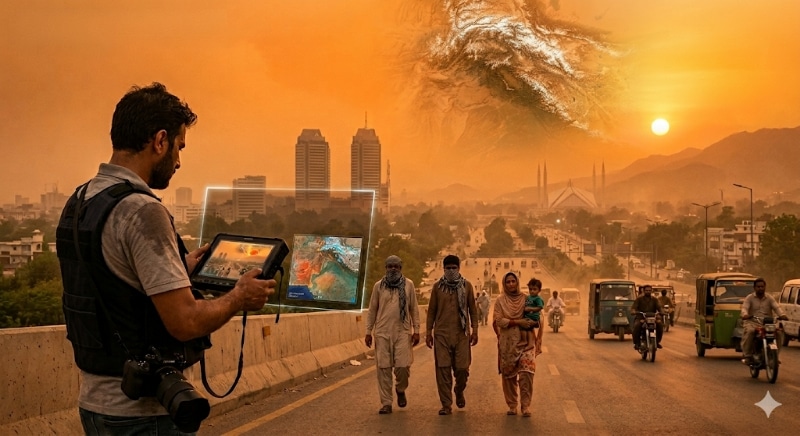
Pakistan is heading into what could be one of its most dangerous summers in recent years.
Authorities have already warned of extreme heatwaves, while rapidly melting glaciers in the north are raising the risk of sudden floods capable of wiping out entire villages within minutes.
For Pakistan, climate disasters are no longer seasonal events — they are becoming a constant reality.
And in the middle of that crisis, an unexpected tool is gaining attention: a Chinese-developed weather warning platform called MAZU.
Built with satellite monitoring, radar networks, and forecasting models, the system has been customized specifically for Pakistan’s climate threats, including heatwaves, floods, heavy rainfall, and agricultural disasters.
The platform combines data from China’s Fengyun meteorological satellites with local forecasting systems in Pakistan, allowing meteorologists to track storms, monitor glaciers, map floods, and issue earlier warnings in vulnerable regions.
During the 2025 flood season, Pakistan’s Meteorological Department issued 15–16 alerts through the system. In several valleys where the warning tools were installed, officials say no casualties were reported.
But the cooperation is expanding far beyond emergency alerts.
The same system is now being used for drought monitoring, crop forecasting, and food security planning — helping farmers make decisions from planting to harvest.
Chinese experts say Pakistan’s extreme geography, from glaciers and mountains to deserts and coastlines, has also helped improve disaster forecasting technologies.
For both countries, this is becoming more than a technology partnership.
As climate change pushes extreme weather across borders, China and Pakistan are trying to build something larger: a shared climate resilience system for the Global South.

