


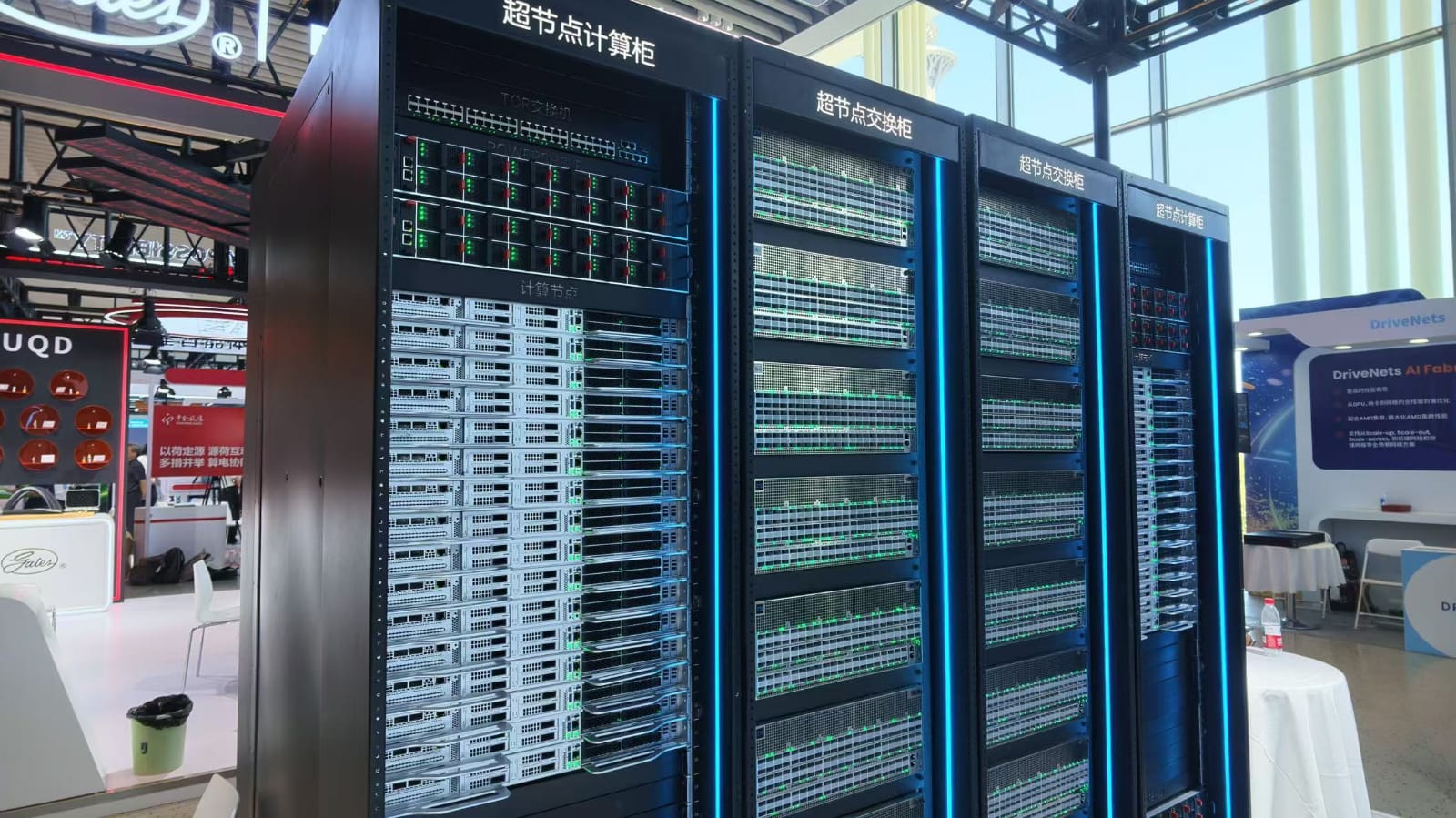
Imagine putting 128 AI chips into one rack and getting them to work almost like one giant computer.
That is the idea behind ZTE’s AI “supernode”, now on display at China’s ODX computing expo.
The concept sounds simple: instead of letting dozens of powerful AI chips work separately, connect them closely enough that they can share data and take on much bigger AI workloads together. In practice, this is one of the toughest engineering challenges in today’s AI industry. The more chips you add, the harder it becomes to keep them all working efficiently at the same time.
That is where “supernodes” come in. They combine computing chips, high-speed connections, power systems and cooling into one tightly integrated setup. In China, some 128-chip supernode systems have already moved beyond prototypes and into commercial computing centres.
For Pakistan, this is worth watching. As the country develops more data centres and AI computing capacity, the question will not simply be which GPU to buy. It will also be about how those chips are connected, how much electricity they consume, how they are cooled, and how efficiently the whole system can run.
That matters because building serious AI infrastructure is not just about stacking up more chips. It is about making sure those chips can actually work together without wasting expensive computing power.
So while the rack itself may just look like a wall of servers, the idea behind it is much bigger: the next generation of AI infrastructure is increasingly about turning hundreds of chips into one coordinated computing system.

