


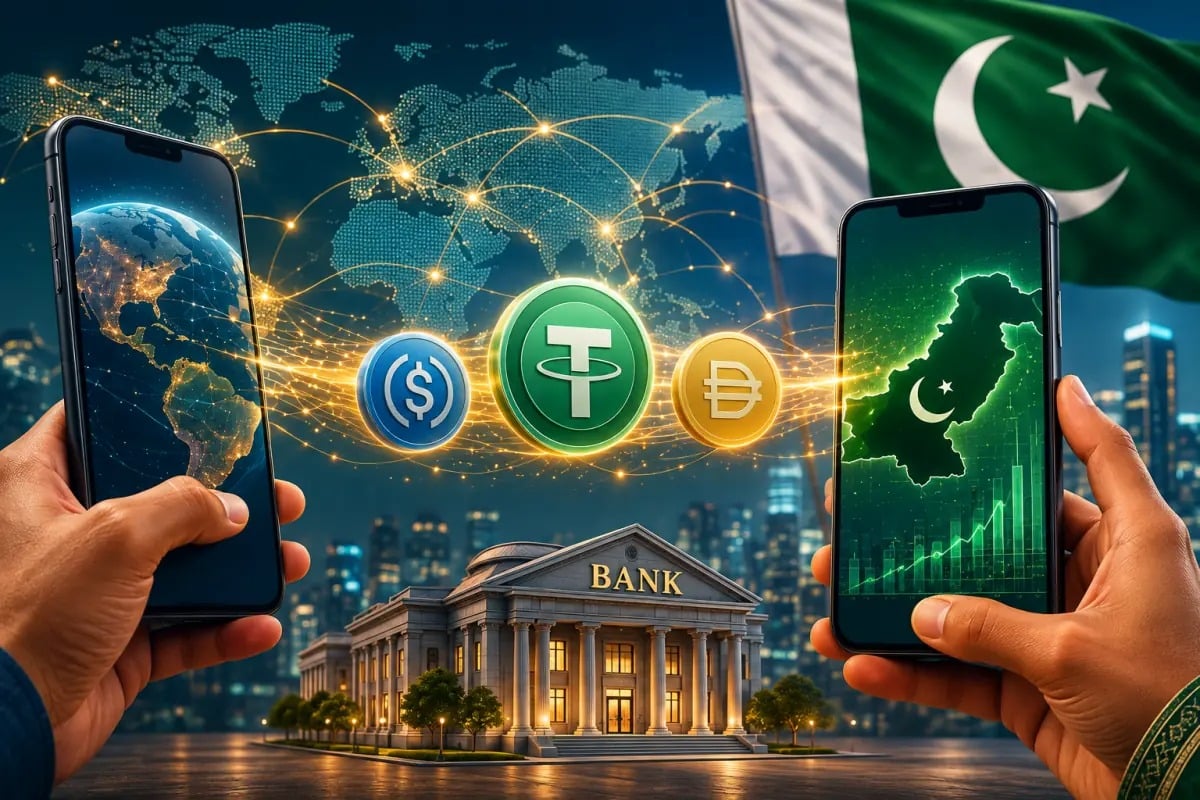
The real success story of Pakistan’s remittance economy isn’t the amount of money entering the country anymore. It’s how expectations around that money have changed. For decades, remittances have been viewed through a familiar lens that it is money sent home by overseas Pakistanis to support their families. They have been measured in monthly inflows, celebrated when records are broken and discussed primarily as a source of foreign exchange. Yet the remittance economy has quietly undergone a far more profound transformation.
Whether living in Dubai, Riyadh, London, Toronto, New York or Sydney, today’s overseas Pakistanis expect the same experience when sending money home as they do when booking a ride, paying a bill or transferring money within their own country. In a world where almost every digital interaction happens in real time, waiting no longer feels like part of the process. It feels like friction.
This shift matters because remittances are no longer occasional transfers. They have become an integral part of how families manage their finances, how entrepreneurs fund their ambitions and how communities remain connected across borders. The conversation, therefore, can no longer be limited to how much money reaches Pakistan. It must also consider how seamlessly it gets here.
Pakistan has quietly built much of the foundation for this transformation. The shift is also taking place against a broader global backdrop as countries modernize payment infrastructure to support faster and more efficient cross-border transfers. According to the World Bank, people and businesses in 137 countries had access to instant payment services by June 2026, reflecting the rapid global adoption of real-time payment infrastructure. Pakistan is moving in the same direction as digital payment infrastructure continues to evolve. The State Bank of Pakistan’s Payment Systems Quarterly Review for January-March 2026 shows that digital payment channels processed 3.4 billion transactions during the quarter, accounting for 92 percent of all retail payment transactions across the country. Mobile banking apps and e-money wallets alone processed 2.89 billion transactions worth PKR 41.67 trillion, reflecting the scale at which consumers and businesses are embracing digital financial services. Against this backdrop, digital banking has become part of everyday life for millions of Pakistanis. Mobile banking, QR payments and digital wallets are steadily replacing cash for many everyday transactions. Small businesses increasingly accept digital payments, while customers have become more confident using banking apps. Failed transactions that once caused anxiety are now trusted to reverse automatically. Digital banking is steadily becoming the default experience rather than the alternative.
Perhaps most importantly, these expectations are no longer being shaped by banks alone. They are being shaped by every digital experience people have throughout the day. Consumers no longer compare one banking app with another. They compare it with the fastest, simplest digital experience they encounter anywhere. That shift is redefining what success looks like for the remittance economy. It is no longer enough for money to arrive safely. Increasingly, it must also arrive instantly, transparently and predictably.
Pakistan’s remittance story has long been measured in billions of dollars. The next chapter will be measured in seconds. The country remains one of the world’s largest remittance recipients, with overseas Pakistanis sending home more than US$41.6 billion during FY2026. While the Gulf remains Pakistan’s largest remittance corridor, significant inflows also originate from Europe, North America and other international markets, reflecting the increasingly global footprint of the Pakistani diaspora. Saudi Arabia and the United Arab Emirates continue to account for the largest share of remittances, underscoring the strategic importance of the GCC within Pakistan’s broader global remittance network. These transfers strengthen Pakistan’s foreign exchange reserves, support millions of households and increasingly provide the capital that fuels entrepreneurship and small businesses across the country.
Yet the true value of a remittance has never been the transaction itself. It is everything the transaction makes possible. Every transfer sets something in motion. It strengthens household financial resilience, provides working capital for small businesses, supports investment in education and healthcare, and enables decisions that might otherwise have been postponed. The faster those funds become available, the sooner families, entrepreneurs and businesses can act on opportunity. In that sense, reducing friction in the remittance journey is not simply about improving payments. It is about accelerating economic participation.
Pakistan has made significant progress in modernizing the receiving side of this equation. The next opportunity lies in transforming the journey itself. The question is no longer whether money can cross borders. It already does, at an unprecedented scale. The real question is why crossing a border should still feel like crossing a barrier.
For decades, international transfers have relied on multiple intermediaries, fragmented settlement systems and infrastructure built for a very different era of banking. While these systems have served global finance well, today’s digital economy demands something more connected, more transparent and significantly faster.
This is where digital remittance corridors have the potential to reshape the conversation. Real-time, secure and interoperable payment rails do more than reduce transfer times. They lower costs, improve transparency, strengthen trust in formal financial systems and make it easier for individuals and businesses to participate in the digital economy. More importantly, they unlock economic activity. For many small businesses in Pakistan, the first investment does not come from institutional financing. It comes from a family member working abroad. Faster access to those funds can mean inventory purchased sooner, salaries paid on time and opportunities pursued without unnecessary delay.
The strongest financial corridors are not just built simply by connecting payment systems. They are built by connecting markets, institutions and people who understand both sides of the journey. They require technology, certainly, but they also require trust, regulatory alignment and a deep understanding of customer expectations across both markets.
Every generation inherits a different definition of distance. For previous generations, it was measured by the time it took to travel. Today, it is increasingly measured by the time it takes the opportunity to move.
The next chapter of Pakistan’s remittance economy will be shaped by infrastructure that keeps pace with the expectations of a digital-first world. Every improvement in speed, transparency and connectivity strengthens far more than a payment journey. It strengthens economic relationships between people, businesses and markets across borders. Globally, the future of remittances will belong to financial institutions that can make international money movement as seamless as domestic payments. At Mashreq, our immediate focus is strengthening secure, real-time financial corridors between the GCC and Pakistan while contributing to the broader global evolution of cross-border payments. Because when money moves more intelligently, opportunity moves with it.

