


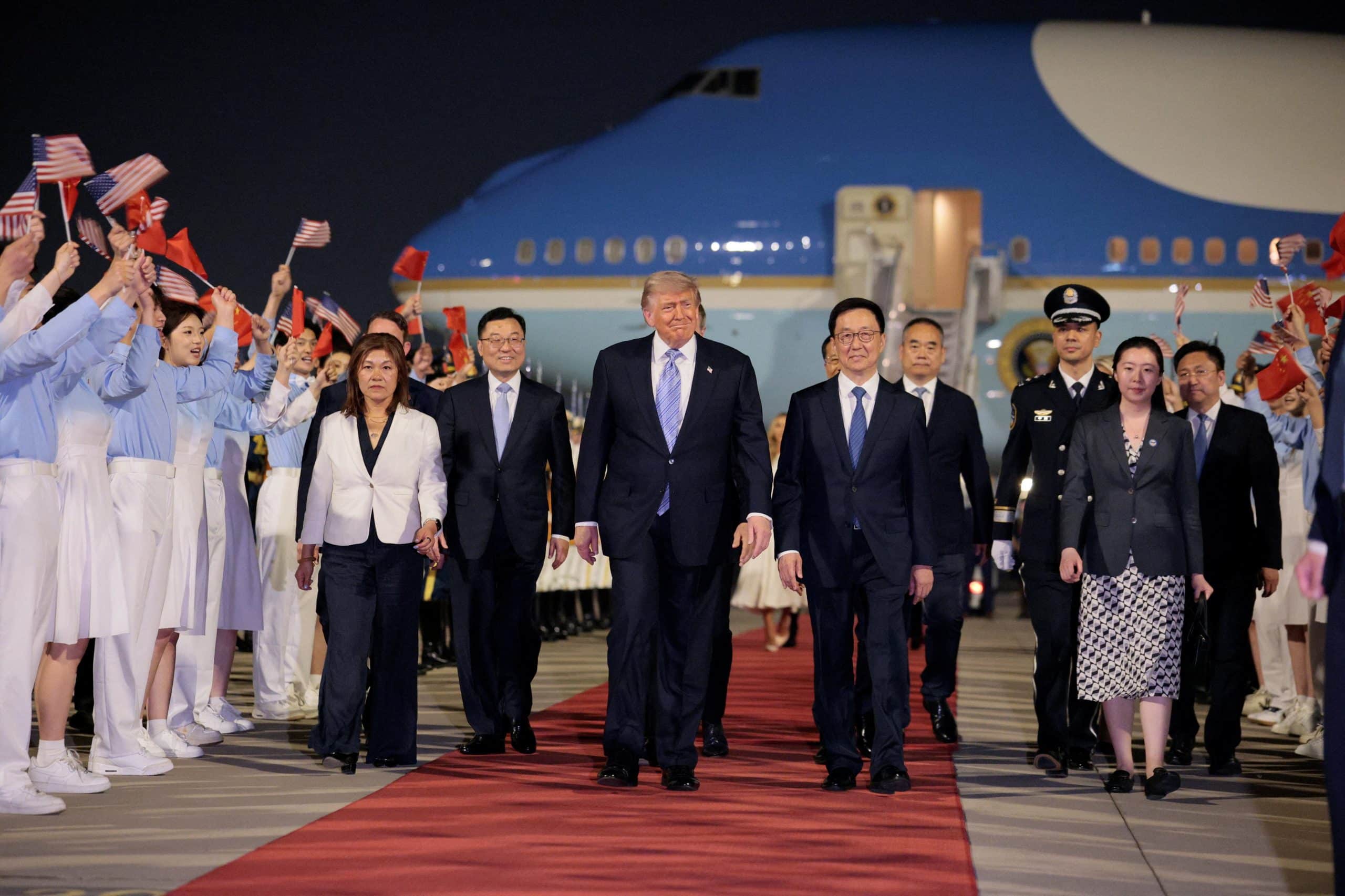
US President Donald Trump arrived in Beijing on Wednesday for a high-profile diplomatic visit, but the absence of Chinese President Xi Jinping at the airport immediately became a major point of international discussion. The arrival ceremony, closely watched by political analysts and global media, highlighted the importance of diplomatic protocol and the subtle messages often conveyed through official gestures.
Instead of being personally welcomed by Xi Jinping, Trump was received by Chinese Vice President Han Zheng, accompanied by senior foreign affairs officials as well as the ambassadors of both countries. While such arrangements are not unusual in state diplomacy, observers believe the decision was carefully planned and reflects Beijing’s measured approach toward the visit.
The optics of presidential receptions often carry symbolic meaning in international relations, especially between two global powers like the United States and China. Analysts say the move appears less like a diplomatic oversight and more like a deliberate protocol choice designed to maintain a formal and balanced tone during the visit.
Despite the airport reception drawing attention, officials from both sides continue to emphasize the broader goals of the trip, including discussions on trade, regional security, technology cooperation, and strategic communication between Washington and Beijing. The visit comes at a time when relations between the two nations remain under intense global scrutiny.

