


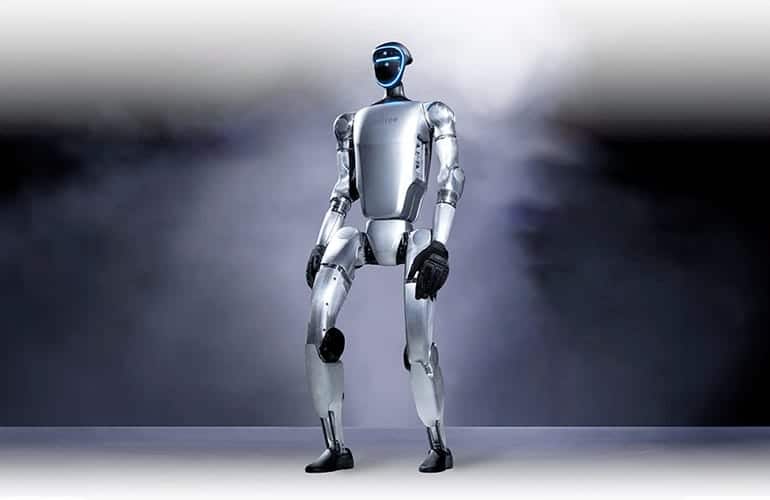
For six decades, every impressive robot ever filmed — from Boston Dynamics’ Atlas to Tesla’s Optimus to the viral dancing humanoids of the last two years — has performed inside a controlled environment. Same floor, same lighting, same objects in the same places. The home is the opposite: nothing stays where you left it. That’s why, after four decades of promises, the only household robot most people own is a Roomba.
On May 25, a Chinese startup called X Square Robot will try something no one else has. It will place a humanoid robot inside an ordinary family’s apartment as a live-in resident — not a staged demo, but a household member learning housework on the job.
The robot runs on a model X Square calls WALL-B, announced at the same April 21 event and pitched as the first “world unified model” for embodied AI — one network handling vision, language, and action together instead of three modules passing information between each other. WALL-B is the first X Square model explicitly designed to keep learning after deployment, which is what makes the May 25 experiment possible in the first place.
The company is openly calling the robot an “intern.” It will make mistakes. It will freeze mid-task. A human operator will stay on standby to assist remotely when it gets stuck. Users are being asked to host it because it is imperfect. Every error and correction feeds back into the model. The bet is that household robots can’t be perfected in labs — homes have too many edge cases. The only way forward is to ship early and let the robot graduate in public.
The real test will come in month three. If the robot is measurably better on day 90 than on day 1, household robotics has a credible path forward for the first time in its history.

