


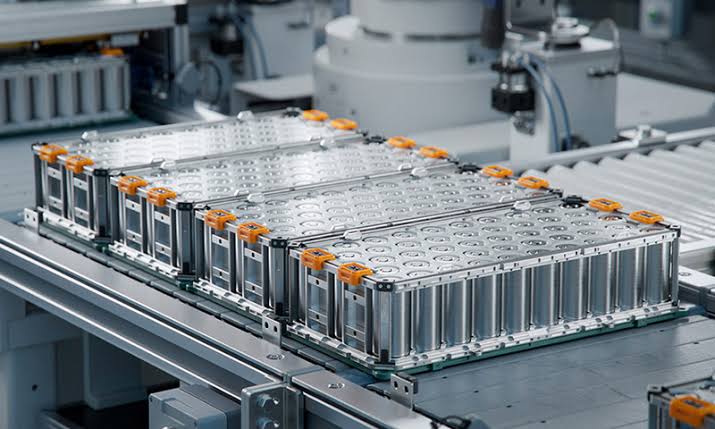
Margalla Heavy Industries Limited, a military-owned Pakistani company, has reportedly signed a $2.25 billion agreement with Chinese partners and local investors to establish a lithium-ion battery manufacturing plant in Rawalpindi.
The proposed facility is expected to become a major addition to Pakistan’s growing electric mobility and energy storage sector. The project will focus on producing lithium-ion batteries, which are widely used in electric vehicles, energy storage systems and other modern technologies.
According to reports, the planned plant could begin production within six to eight months after the government approves a national battery manufacturing policy. The timing of the project will therefore depend on the completion of the policy framework and required government approvals.
The facility is planned to have an annual production capacity of more than 1,000 megawatts. During its initial phase, production is expected to range between 200 MW and 300 MW before the plant moves towards its larger planned capacity.
The agreement involves Chinese partners as well as investors from Pakistan, bringing together international and domestic participation in the proposed manufacturing project. The investment could support the development of local battery production and reduce reliance on imported battery products.
The project also comes as Pakistan works on expanding its electric vehicle ecosystem and encouraging new energy technologies. A domestic battery manufacturing base could support the growing demand for batteries from electric vehicles and other applications.
However, the start of commercial production remains linked to government approval of the proposed battery manufacturing policy.
If implemented as planned, the Rawalpindi facility could become an important part of Pakistan’s emerging battery industry, with its large projected capacity allowing production to expand significantly beyond the initial phase.

