


Aga Khan University Independent Evaluation Shows Up to 22% Reduction in Stunting Among Beneficiary Children
Pakistan has achieved a significant breakthrough in the fight against child malnutrition, as the Endline Impact Evaluation of BNP conducted by Aga Khan University ( AKU) revealed substantial reductions in child stunting and improvements in maternal and newborn health outcomes.
The evaluation found that stunting rates among beneficiary children were 22 percent lower at six months of age and 18 percent lower at one year of age. The study also reported a 6 percent reduction in low birth weight cases, an 11 percent decline in premature births, and a 7 percent decrease in weak and vulnerable newborns.
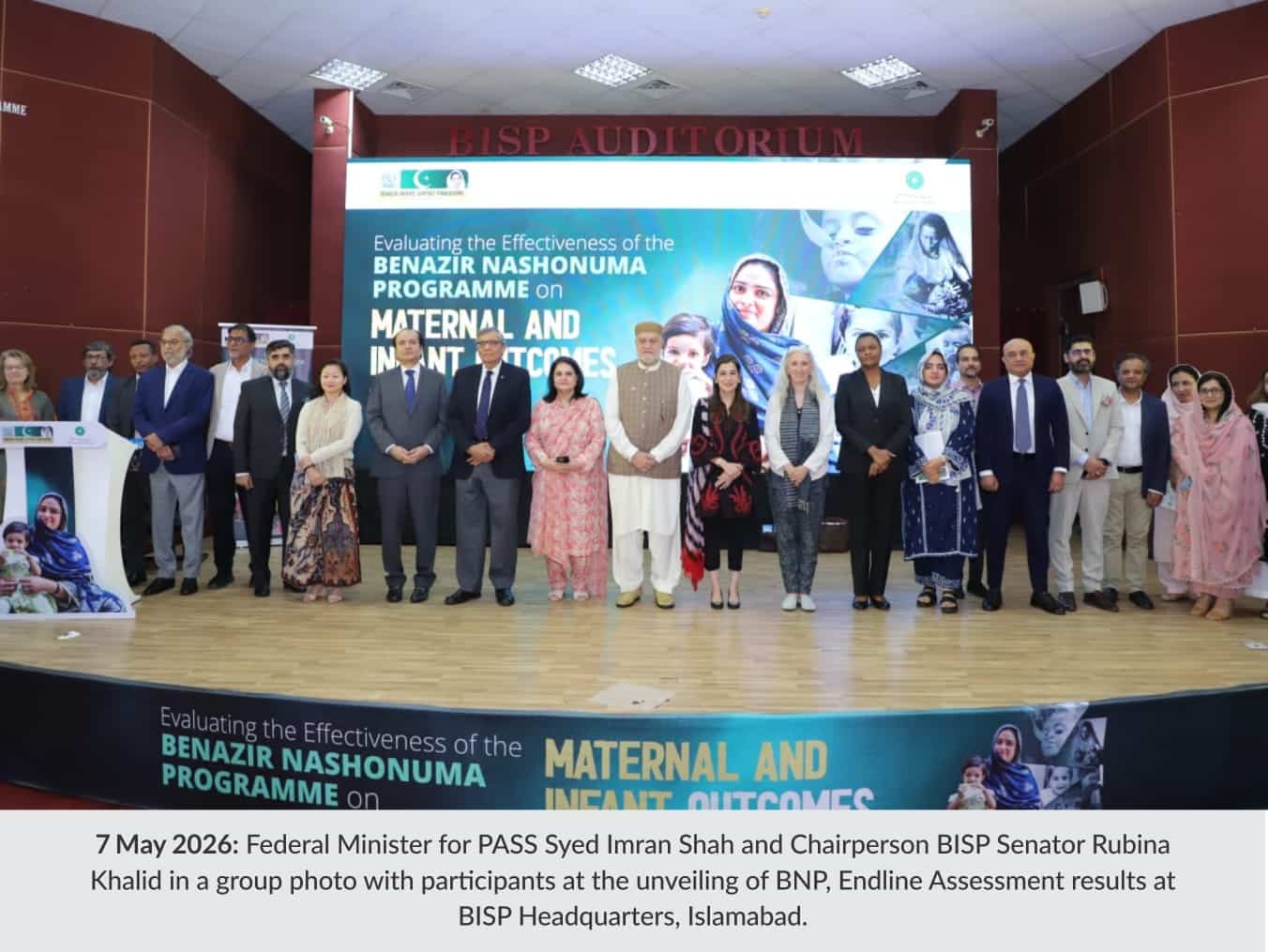
The findings were unveiled by AKU during a session on the Endline Impact Evaluation of the BNP held today at BISP Headquarters in Islamabad.
Speaking at the event, Federal Minister for Poverty Alleviation and Social Safety, Mr. Syed Imran Ahmed Shah, termed the results a major achievement for Pakistan’s social protection sector. He said the evaluation demonstrates that targeted nutrition and maternal health interventions can significantly improve child health outcomes and reduce stunting in vulnerable communities.

Addressing participants, Chairperson BISP Senator Rubina Khalid said the BNP holds special significance because healthy mothers and children are essential for building a strong and prosperous nation. She stated that the programme has reached over 4.5 million women and children across 157 districts through a nationwide network of 578 facilitation centres and 169 stabilization centres.
Senator Rubina Khalid said every improvement highlighted by the study reflects a mother receiving better support and a child getting a healthier start to life. She added that BISP is integrating social protection with nutrition and health interventions to promote long-term human development and improve the well-being of vulnerable families.
During the session, Ms. Ayesha Raza Farooq from the National Commission on the Rights of Child also shared her views and emphasized the importance of investing in children’s well-being. She stated the first 1,000 days from conception until a child’s second birthday are the most critical period for building cognitive development, learning ability, physical health, and future productivity.
Earlier, renowned global health expert Dr. Zulfiqar Bhutta of Aga Khan University presented the findings of the Endline Impact Evaluation and highlighted that the BNP is making clear progress in reducing stunting and improving maternal and child health outcomes.
Ms. Anita Zaidi, President of the Gender Equality Division at the Bill & Melinda Gates Foundation, termed the Benazir Nashonuma Programme a powerful model of social protection and appreciated the Government of Pakistan’s leadership in improving the lives of millions, especially women and children.
Secretary BISP Amer Ali Ahmad alongwith BISP team and representatives of partner organizations including the WHO, WFP and UNICEF also participated in the session.

