


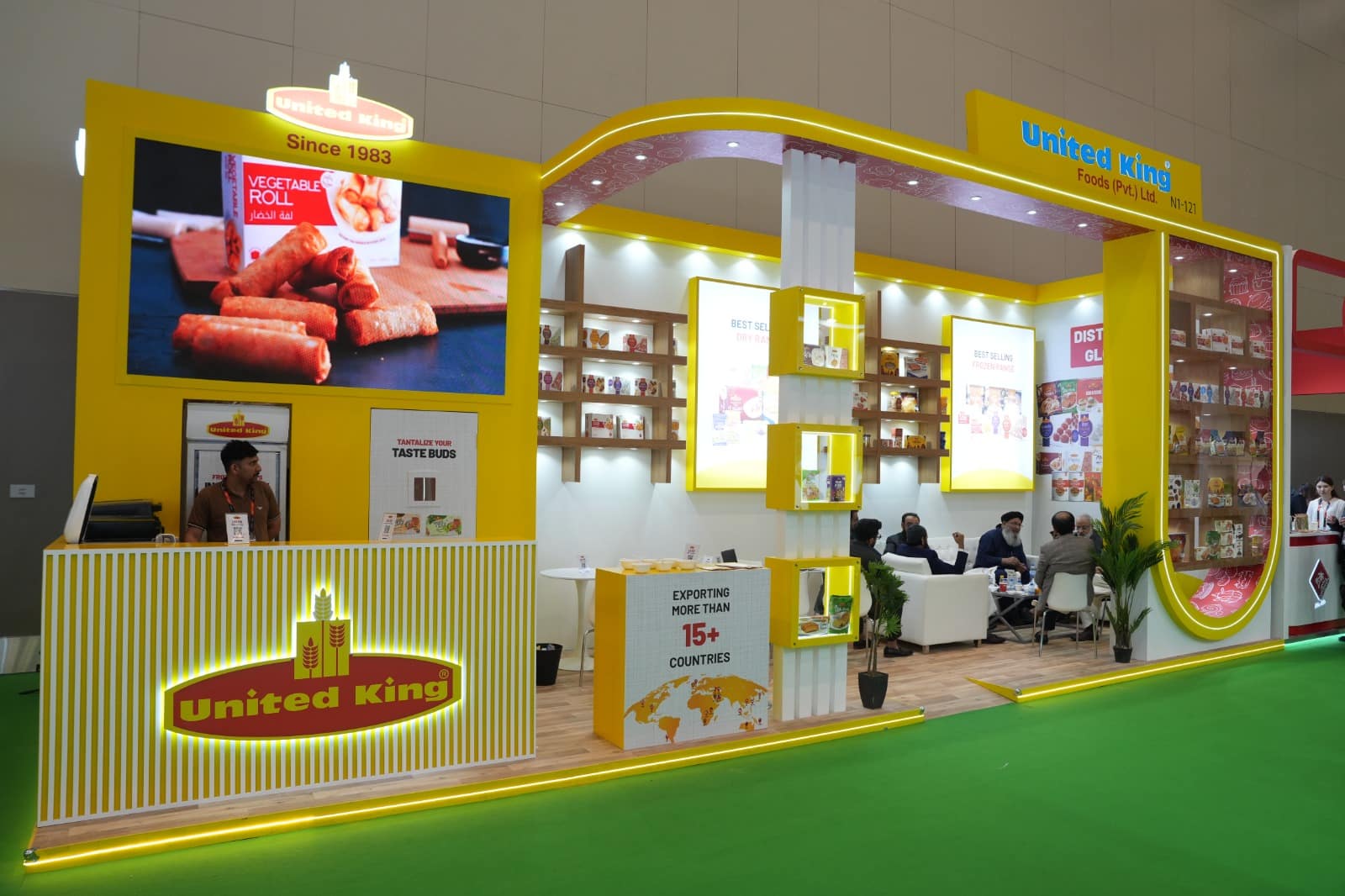
In Pakistan’s consumer food sector, most brands compete on price or novelty. Few compete on process discipline. Fewer still convert local trust into international market access. United King offers a different blueprint. Build consistency first. Scale second. Expand only when systems can carry growth.
From Neighborhood Bakery to Structured Enterprise
Founded in 1984 in Karachi, United King began as a traditional bakery serving local demand. Its transformation did not rely on rapid expansion. It relied on operational control. Standardized recipes. Controlled production environments. Repeatable retail formats. These decisions converted a product business into a system driven enterprise.
Over time, the company expanded its portfolio to more than 250 products across baked goods, confectionery, and ready to serve items. Product range created revenue diversity. Standardization protected quality across that range. The combination enabled scale without dilution.
Growth Built on Demand Signals
Many food brands expand through opportunistic location openings. United King follows a demand validation model. New branches in Karachi are selected using density, accessibility, and supply chain efficiency indicators. Expansion follows repeat purchase behavior, not speculative growth. This approach reduces operational stress and stabilizes unit performance.
For entrepreneurs, the lesson is structural. Expansion succeeds when operational capacity grows before physical footprint expands.

Export Readiness as a Capability
United King’s presence in international markets including the United States and the United Kingdom reflects operational maturity rather than branding ambition. Export markets require consistent shelf life, standardized packaging, and compliance with strict quality benchmarks. These requirements mirror the discipline needed for domestic scale.
Participation at a major Gulf food exhibition placed the company in a competitive global environment. Industry response validated product quality and supply reliability. For a Pakistani food enterprise, this recognition functions as market proof. It signals readiness to engage distributors and partners beyond regional boundaries.
Innovation as Risk Control
United King’s investments in production upgrades and food safety systems are not positioned as marketing innovation. They function as risk management. Process automation stabilizes output. Structured quality checks reduce variability. Packaging improvements protect freshness across longer distribution cycles. Each improvement lowers operational uncertainty.
Entrepreneurs often associate innovation with new products. United King demonstrates that innovation in process can be more valuable than innovation in form.
The Business Impact of Longevity
Operating for more than four decades generates brand equity. Sustaining that equity requires operational credibility. Customers reward predictability. Partners reward reliability. Markets reward consistency. Longevity alone does not produce growth. Systems convert longevity into scale.
Why the Model Matters Now
Pakistan’s food export potential remains underdeveloped relative to its production capacity. Companies that combine local trust with international compliance can bridge that gap. United King’s trajectory illustrates a practical pathway. Build repeatable processes. Align expansion with demand. Enter global markets through operational readiness rather than promotional positioning.
Founders can draw a clear operational blueprint from this case. Standardization must precede scale so growth does not erode quality or efficiency. Expansion should follow measurable demand rather than assumption driven opportunity. Quality systems must function as core growth infrastructure, not optional compliance. Export markets should be approached as performance benchmarks that test operational maturity. Above all, brand trust is sustained through disciplined processes that deliver consistent outcomes every time.
United King represents a specific kind of success. Not rapid growth. Not reinvention. Structured expansion grounded in execution. For Pakistan’s emerging consumer brands, that model offers a clear strategic direction.

