


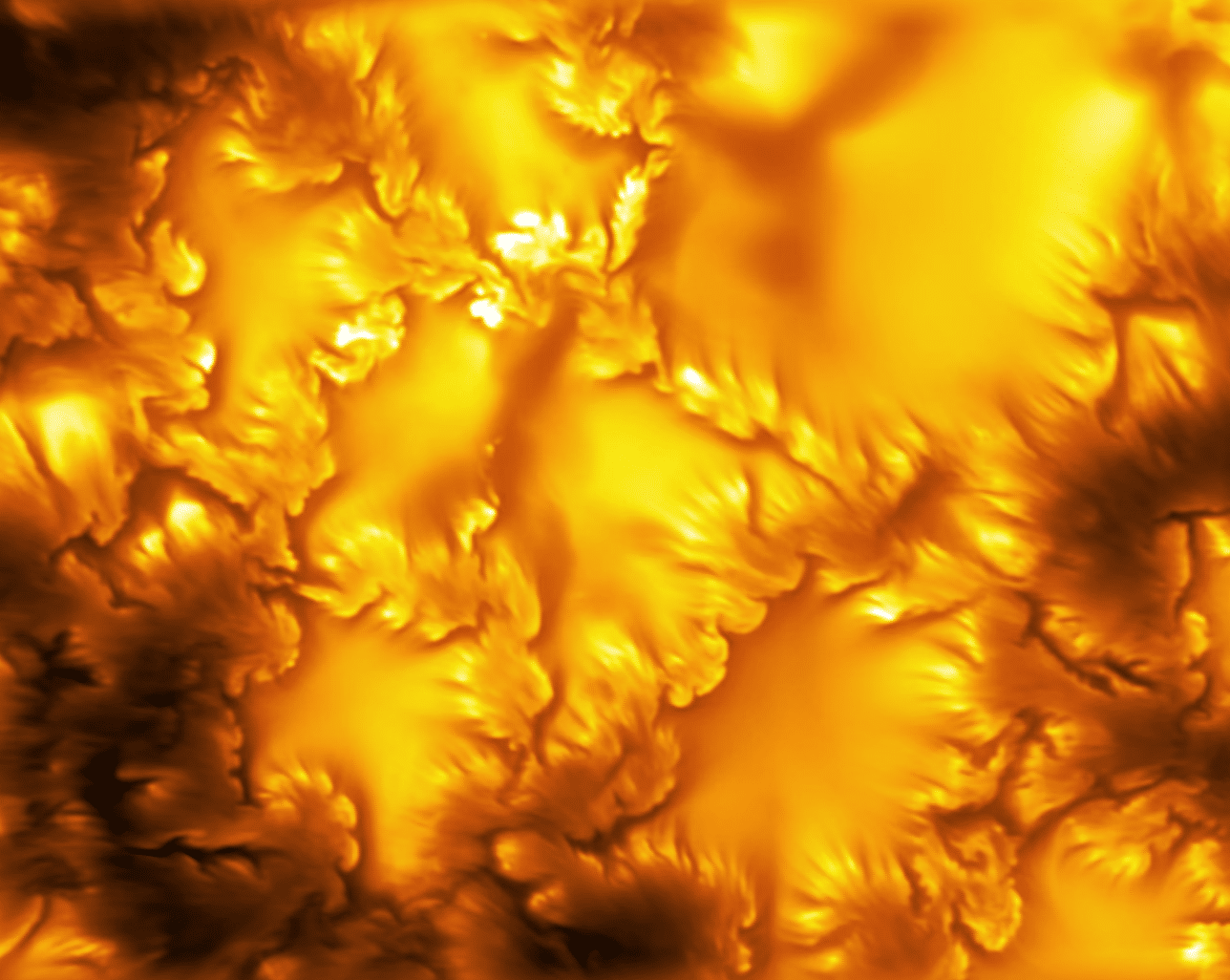
Scientists have taken the most detailed pictures ever of the Sun’s surface using the Daniel K. Inouye Solar Telescope in Hawaii. These new images show tiny swirling patterns of hot plasma and fine magnetic structures that were never seen clearly before.
The telescope, the world’s largest solar telescope, revealed small whirlpools along the edges of magnetic areas on the Sun. Researchers call these Kelvin-Helmholtz instabilities. They form when streams of plasma move past each other at different speeds, creating twisting motions.
These findings, published in the journal Nature, help explain how the Sun builds up and releases huge amounts of magnetic energy. The swirling motions may trigger solar flares and powerful eruptions that send particles into space.
The observations also offer clues to a long-standing puzzle: why the Sun’s outer atmosphere, the corona, is much hotter than its visible surface. The new details show how energy moves from the surface outward.
Scientists say the breakthrough marks a major step forward in studying our star and protecting technology that depends on stable space conditions.

