


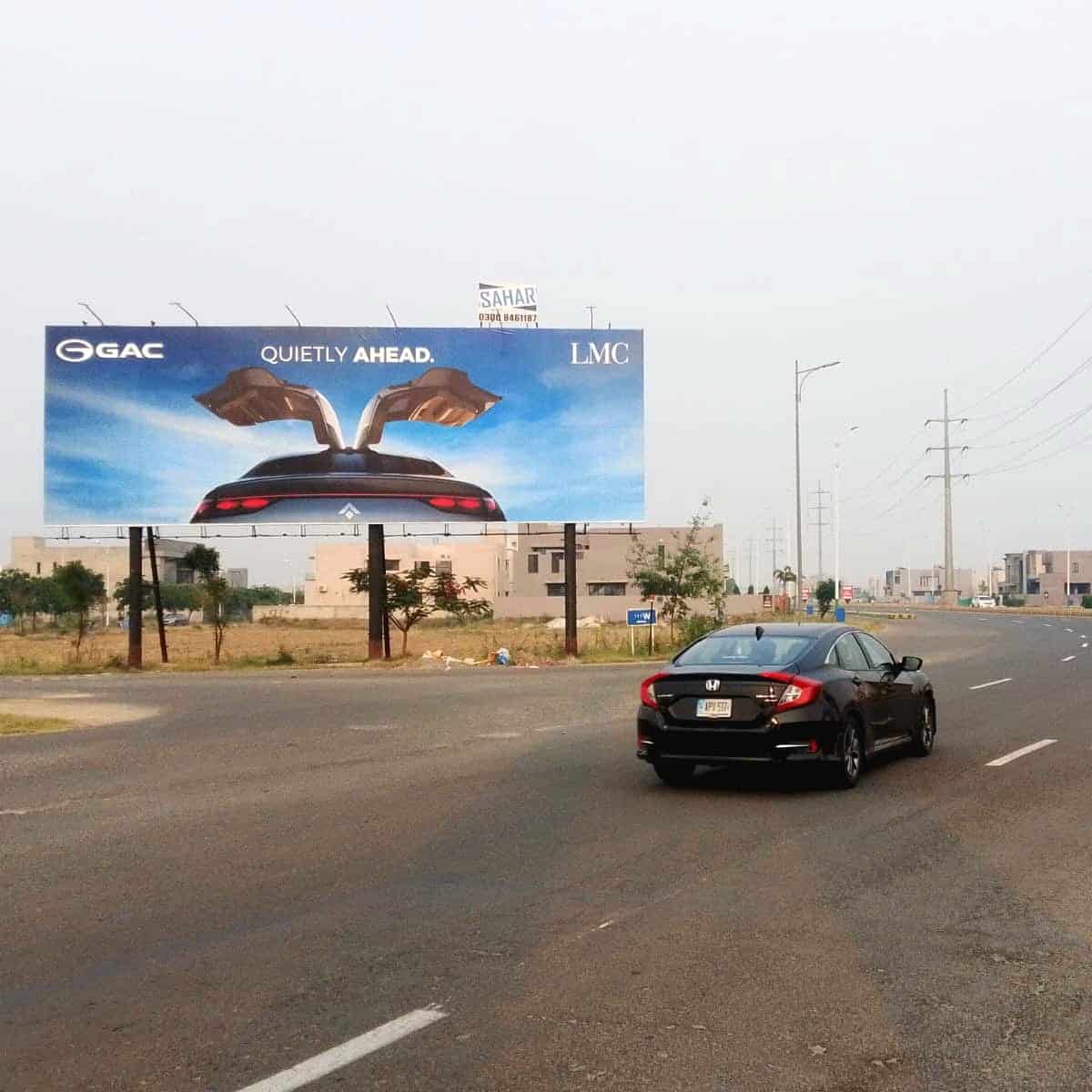
For years, Pakistan’s automotive market has operated with a familiar hierarchy. Japanese brands dominated on trust, reliability, and long term ownership confidence, while newer entrants often struggled to earn the same credibility.
GAC Motor’s arrival could begin to shift that balance.
Unlike many emerging automotive brands, GAC has spent decades building quietly in the background. Through long standing joint ventures with Toyota and Honda, the company has been deeply involved in manufacturing vehicles under some of the strictest quality and engineering standards in the industry. That experience now shapes GAC’s own products, vehicles developed with the discipline, refinement, and consistency usually associated with far more established global brands.
And the results are difficult to ignore.
GAC has ranked number one in the J.D. Power Initial Quality Study in China for eight consecutive years, a level of consistency very few automotive manufacturers can claim. The company is also part of the Fortune Global 500 and has steadily expanded its presence across international markets, building scale without relying on noise or exaggerated claims.
That approach feels particularly relevant at a time when Pakistan’s automotive industry is entering a period of transition.
Consumers today are more informed, more design conscious, and increasingly open to alternatives beyond traditional market leaders. At the same time, the shift toward electric mobility is beginning to accelerate, creating space for newer players with stronger EV expertise and long term technological investment.
While GAC has not officially confirmed its local lineup, industry expectations point toward the possible arrival of models such as the AION V electric SUV, AION ES electric sedan, AION UT hatchback, the Hyptec HT electric SUV, and the Emzoom crossover.
If introduced locally, these vehicles would not simply add variety to the market, they could raise expectations altogether.
Long waiting periods, limited innovation, and rising price premiums have become normalized within Pakistan’s automotive landscape. The arrival of a globally established manufacturer with proven engineering depth and growing EV capabilities could place meaningful pressure on the broader industry to evolve faster.
For consumers, that competition may ultimately be the biggest shift of all.

