


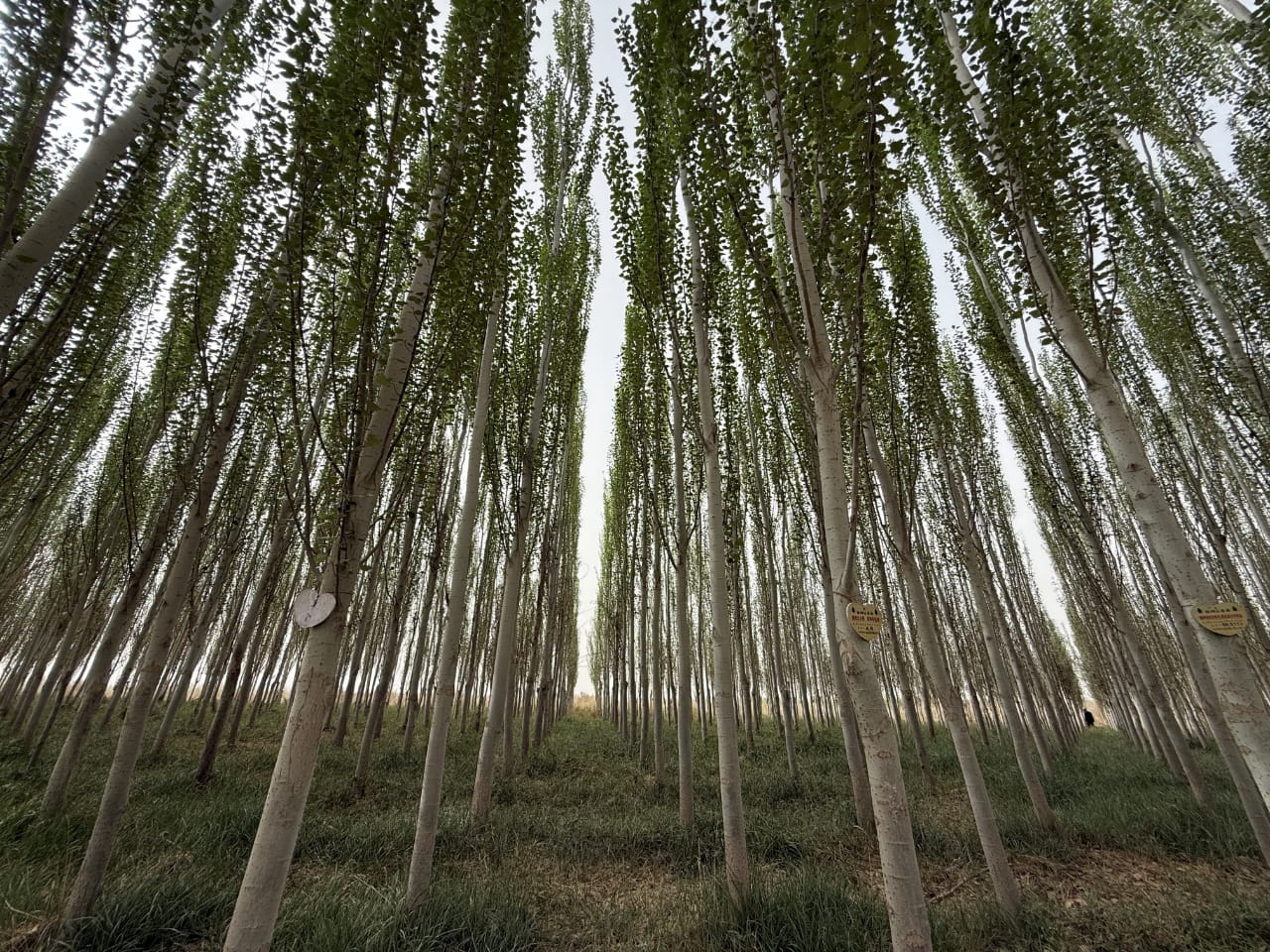
What if one of the harshest deserts on Earth could offer lessons for another?
On the southwestern edge of the Taklimakan Desert — often called the “Sea of Death” — a vast green belt is taking shape. In Maigaiti County, northwest China, local communities have spent more than a decade building a windbreak and sand-fixation forest to stop the desert from advancing.
Where there were once shifting dunes, there are now trees, stabilized land, and even pockets of economic activity.
But for a visiting Pakistani delegation, the real question was bigger:
Can this model work in the Thar Desert?
Unlike the Taklimakan, the Thar receives more rainfall and benefits from seasonal monsoons. It has supported human settlement for centuries.
Which makes the comparison striking:
If afforestation can succeed in harsher conditions, what’s holding it back in a less extreme environment?
The experience from Maigaiti offers some clues:
• Choosing the right drought-resistant species
• Using drip irrigation in extreme aridity
• Stabilizing mobile sand dunes
• Creating economic value through under-forest cultivation
These are not just technical solutions — they are part of a long-term commitment combining ecology, policy, and local participation.
The question is no longer whether it’s possible — but how it can be adapted.

