


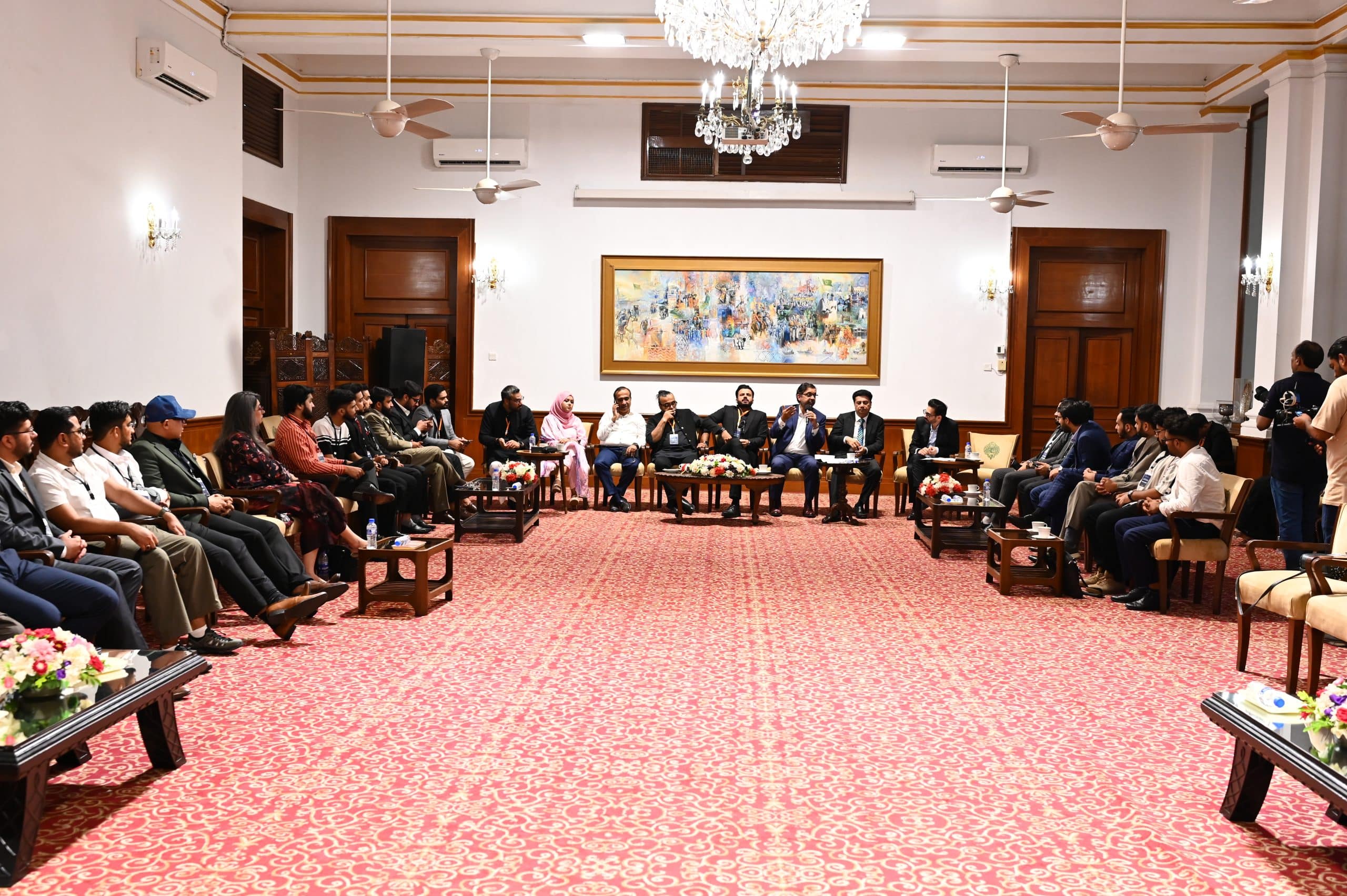
Pakistan’s freelance economy took centre stage at Governor House Sindh on 29 August 2026, where some of the country’s high performing freelancers were recognized for building successful careers in international markets and contributing foreign exchange earnings to Pakistan.
Organized by the Pakistan Freelancers Association (PAFLA), A National Recognition Ceremony: Celebrating Pakistan’s Freelancing Champions brought freelancers together with policymakers, economists, technology leaders, financial institutions and representatives of Pakistan’s digital ecosystem.
The gathering came as Pakistan’s freelance economy reached a significant milestone. Pakistani freelancers generated a record USD 1.76 billion in export earnings during fiscal year 2025 to 2026, highlighting the growing economic significance of professionals working with international clients from Pakistan.
Among those attending and addressing the gathering were Dr. Ishrat Husain, former Governor of the State Bank of Pakistan; Kheal Das Kohistani, Minister of State for Religious Affairs and Interfaith Harmony; Fahd Haroon; Fahad Shafique, Coordinator, Prime Minister’s Youth Programme Sindh; Faisal Jeddy, Chief Executive Officer of the Pakistan Software Export Board; Imran Ali Dina, Founder of GFXMentor; Irfan Malik, Founder and Chief Executive Officer of Xeven Solutions; Dr. Imran Batada, President of PAFLA; and Farheen Fatima, Chief Growth and Strategy at PAFLA.
Recognition Beyond the Numbers

The Honourable Governor of Sindh, Syed Muhammad Nehal Hashmi, who attended as Chief Guest, described freelancers as an emerging digital workforce contributing foreign exchange while helping build a positive image of Pakistan internationally.
He also spoke about the importance of equipping young Pakistanis with modern technology skills, quality education and entrepreneurial capabilities to enable them to compete in global markets.
For Ibrahim Amin, Chairman of PAFLA, the record export figure reflects how far Pakistan’s freelance community has progressed, but also raises the question of what is needed for its next stage of growth.

In his address, Amin highlighted the USD 1.76 billion generated by Pakistani freelancers during fiscal year 2025 to 2026 and said the professionals behind these earnings deserved recognition for competing internationally and bringing foreign exchange into Pakistan.
He also pointed to some of the challenges that continue to affect freelancers, including international payments, banking access, taxation, financial products and digital infrastructure.
The next opportunity, he said, lies in helping successful freelancers move beyond individual assignments and build agencies, digital products and globally competitive businesses, creating additional exports and employment in Pakistan.
From Freelancing to Entrepreneurship
The conversation extended beyond recognition to what Pakistan’s freelance economy could become.
Dr. Ishrat Husain highlighted the potential for freelancers to progress from individual professionals into entrepreneurs who build teams, businesses and employment opportunities.
Technology and artificial intelligence also featured prominently in the discussion. Imran Ali Dina and Irfan Malik spoke about the changing nature of digital work and the need for professionals to adapt to artificial intelligence while continuing to strengthen creativity, problem solving and practical expertise.
The broader question was not simply how Pakistan can produce more freelancers, but how successful freelancers can eventually become entrepreneurs, exporters and creators of intellectual property.
A Roundtable Before the Ceremony
Before the main ceremony, a roundtable brought leading freelancers into a more focused discussion about the realities of working in global digital markets.
The dialogue was led and moderated by Fahad Sheikh, Co Founder of PAFLA, and included Imran Ali Dina; Irfan Malik; Faisal Jeddy, CEO of the Pakistan Software Export Board; Dr. Imran Batada, President of PAFLA; and Farheen Fatima, Chief Growth and Strategy at PAFLA, alongside leading freelancers and digital professionals.
Rather than focusing on recognition, the conversation examined practical issues affecting freelancers, including international payment channels, foreign currency accounts, banking and financial services, access to credit, taxation, digital infrastructure, artificial intelligence and skills development.
Participants also discussed the difficulties freelancers can face when accessing financial products despite earning substantial income from international clients, as well as the need for policies and banking systems that better reflect the way digital professionals work and earn.
The discussion offered an important contrast to the ceremony that followed. While the evening celebrated what Pakistani freelancers have already achieved, the roundtable focused on the barriers that could determine how much further the sector can grow.
The Bigger Opportunity
Pakistan’s record USD 1.76 billion in freelancer export earnings suggests that freelancing is becoming increasingly relevant to the country’s export economy.
But the next phase may be less about the number of people entering freelancing and more about what happens to successful freelancers after they establish themselves internationally.
Better payment infrastructure, access to banking and credit, appropriate taxation, stronger digital infrastructure and the ability to adapt to artificial intelligence could determine whether more freelancers remain individual service providers or develop into businesses capable of employing others and generating larger export revenues.
The gathering at Governor House therefore highlighted two sides of Pakistan’s freelance story: the achievements already worth recognizing and the work still required to turn individual success into broader economic opportunity.
PAFLA’s Role in Shaping Pakistan’s Freelancing Ecosystem
The recognition ceremony was a landmark event, but certainly not the last. PAFLA’s leadership will continue to organize similar events in different cities across the country to engage with freelancers and digital workers and address their concerns.
PAFLA will continue to serve as a strong voice for the rights and interests of freelancers while working to build a more supportive and favorable ecosystem for freelancing in Pakistan.
The PAFLA will also continue to organize capacity-building seminars, workshops and awareness sessions in different cities, providing freelancers and digital workers with opportunities to enhance their skills, expand their networks and access new opportunities.
Through its active engagement, PAFLA will continue working to identify and resolve the challenges faced by freelancers and digital workers in Pakistan and connect them with opportunities in the global digital economy.
If you want to take advantage of the growing opportunities in freelancing, do not wait. Become a PAFLA member and connect with PAFLA’s social media platforms to stay updated on exciting opportunities, programmes, initiatives and exclusive offers.

