


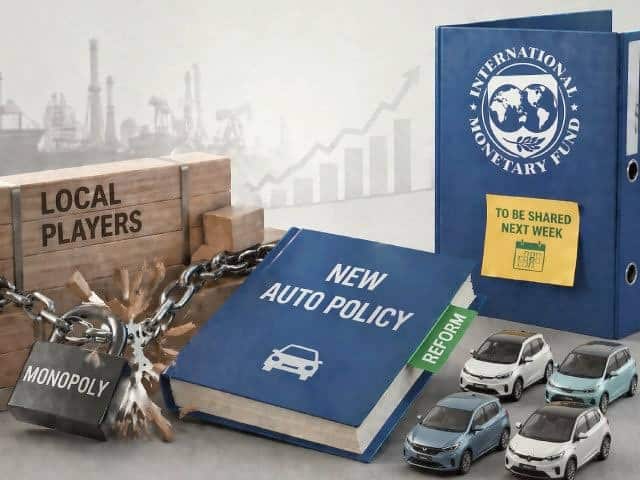
Pakistan’s Automotive Policy plays a crucial role in shaping the country’s local manufacturing industry, attracting domestic and foreign investment, improving vehicle affordability, and creating employment opportunities across the automotive supply chain.
Any changes to the policy can have a direct impact on automakers, auto parts manufacturers, suppliers, dealerships, and consumers. Therefore, policy decisions must be based on Pakistan’s economic realities, industrial priorities, and long-term development goals.
While engagement with the International Monetary Fund (IMF) remains important for maintaining financial stability and meeting broader economic commitments, it should not prevent Pakistan from independently assessing the potential consequences of proposed measures on its domestic industries.
The government must carefully evaluate how taxation, import regulations, incentives, and other policy changes could influence manufacturing costs, investment confidence, local production, and the competitiveness of Pakistani businesses.
National institutions should retain the authority to determine the direction of domestic industrial policy in line with the country’s economic interests.
A balanced approach should focus on strengthening local manufacturing, encouraging technology transfer, increasing localization, supporting employment, and reducing unnecessary dependence on imported vehicles and components.
By prioritizing sustainable industrial growth alongside financial stability, Pakistan can develop an automotive sector that contributes more effectively to economic growth, investment, and job creation.

