


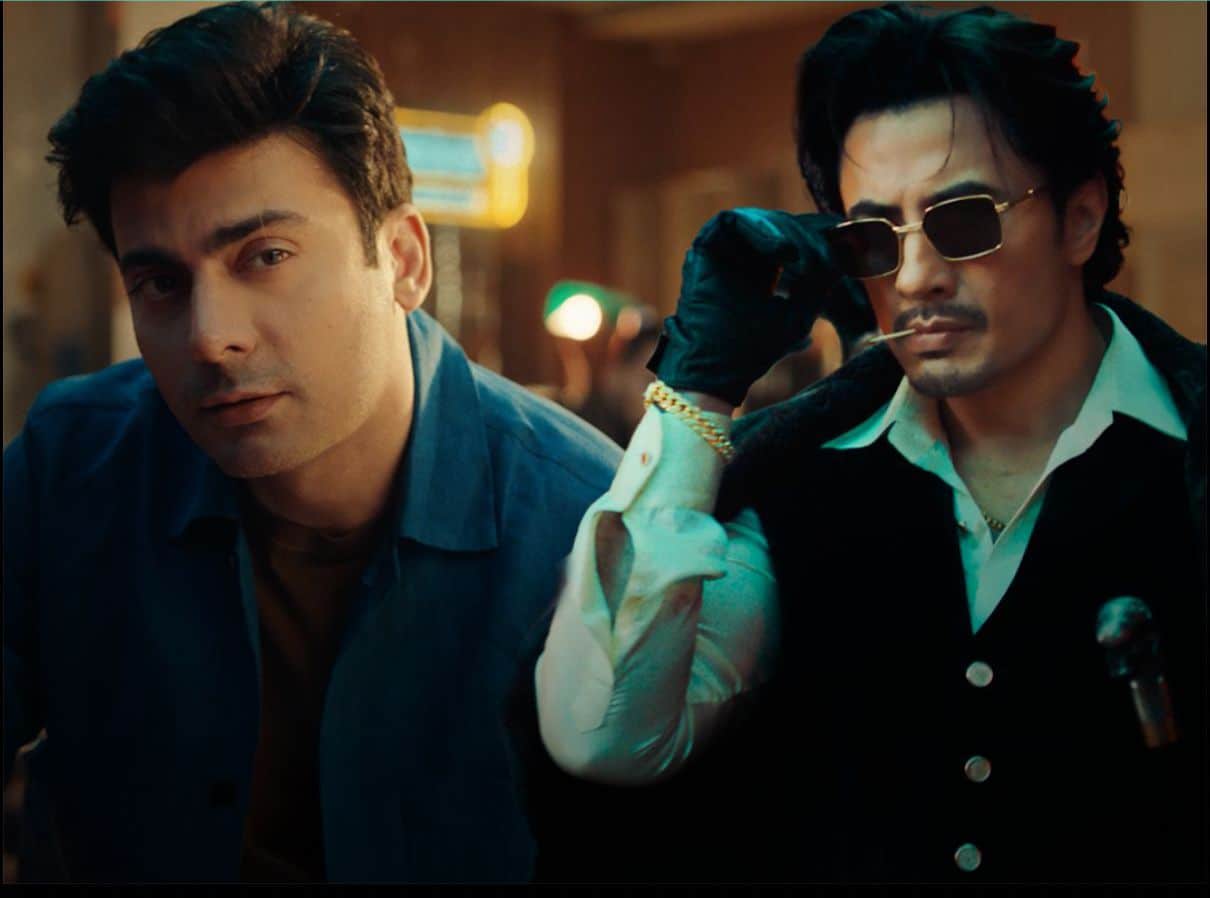
There was something unexpectedly heartwarming and cinematic about seeing Ali Zafar and Fawad Khan come together in the recent Ufone and Telenor campaign. What could have simply been another large corporate advertisement suddenly became a cultural moment, reminding audiences of the star power, charisma, and artistic legacy both men carry.
What made the campaign resonate was not just nostalgia. It was the chemistry.
Watching the two icons interact on screen felt natural, effortless, and strangely overdue. Social media instantly lit up with one recurring sentiment: why have these two never done a film together?
For many, Ali Zafar remains one of those rare polymath artists Pakistan has produced. A singer, songwriter, actor, producer, painter, performer, writer, and entertainer, his journey has been unlike anyone else’s in the industry. From creating a musical phenomenon with Channo back in 2003, to becoming one of the first Pakistani contemporary artists to successfully cross into Bollywood as a mainstream leading man with multiple blockbuster films, Ali helped pave the way for Pakistani talent internationally at a time when such crossover success seemed nearly impossible.
Over the years, he continued reinventing himself through music, live performances, PSL anthems that became national sensations, Coke Studio classics, Sufi music, pop culture moments, and cinema. His career has always reflected versatility, reinvention, and a refusal to be boxed into one category.
Fawad Khan, in his own right, has had an equally inspiring artistic evolution. Starting as a vocalist in the band Entity Paradigm (EP), he went on to become one of Pakistan’s most beloved actors, admired both locally and internationally for his understated charm, emotional depth, and screen presence. Like Ali, Fawad too became one of the prominent Pakistani faces representing the country on international platforms and in Bollywood.
What makes both their journeys special is that they represent a generation of Pakistani artists who broke barriers through talent, consistency, and individuality. Their careers became proof for countless young Pakistanis that creative ambition could travel beyond borders.
And perhaps that is why seeing them together felt bigger than advertising.
The camaraderie between them carried warmth, mutual respect, and ease. In a time where audiences are often fed rivalry narratives and manufactured controversies, seeing two major stars simply sharing screen space with grace and positivity felt refreshing.
The campaign also certainly reminded viewers how much they had missed seeing Ali Zafar on the big screen after the blockbuster success of Teefa in Trouble, and how audiences still want to see more of him in cinematic roles. His effortless screen presence, comic timing, charisma, and ease in front of the camera once again highlighted why he became one of the few Pakistani artists to successfully balance music superstardom with mainstream acting success.
At the same time, the ad also reignited excitement around Fawad Khan following the massive success and impact of The Legend of Maula Jatt. Fawad’s understated charm and commanding presence continue to make him one of the most admired actors to emerge from Pakistan in recent decades.
And perhaps that is what made the campaign feel so special. Watching two artists of this stature share screen space so naturally instantly made audiences imagine what could happen if they were brought together in a full scale feature film. Their chemistry felt effortless, cinematic, and genuinely refreshing.
At the same time, one cannot overlook the contribution of director Ahsan Rahim, whose work often shapes these moments quietly behind the scenes. Widely known for directing the blockbuster film Teefa in Trouble, as well as creating some of the most memorable Ufone commercials Pakistan has ever seen, Ahsan Rahim represents the kind of filmmaker whose storytelling instincts have consistently connected with audiences.
Too often, directors and creators working behind the camera do not receive the recognition they deserve. Yet campaigns like this are reminders of the incredible creative potential Pakistan possesses, not just in actors and musicians, but in filmmakers, writers, visual storytellers, editors, and creative teams who continue delivering world class work despite limited industry infrastructure.
In many ways, this campaign became symbolic of something larger. It showed audiences what Pakistani talent is capable of when strong performers, good direction, and meaningful presentation come together.
And perhaps it also quietly highlighted an important truth: had Pakistan developed a stronger and more consistent film and entertainment industry over the decades, artists and filmmakers of this calibre would likely have reached even greater global heights.
That is precisely why such collaborations matter. They remind people not only to celebrate artists, but also to invest in the industries, systems, and creative ecosystems that allow talent to flourish.
For a brief moment, the Ufone and Telenor campaign gave audiences more than advertising. It gave them nostalgia, pride, warmth, and a glimpse of the kind of cinematic magic Pakistan is fully capable of creating.

