


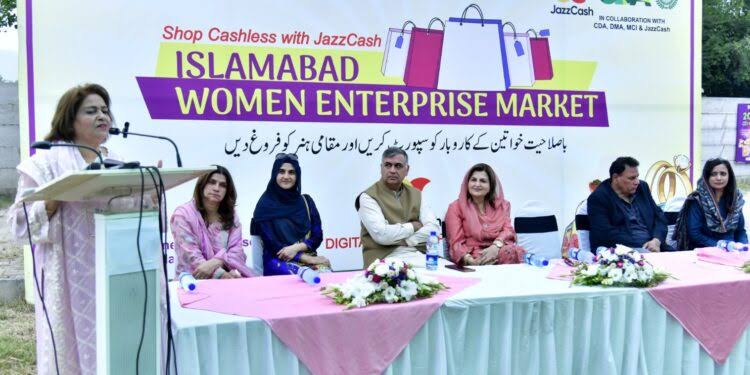
Islamabad has officially introduced its first women-only market in Sector G-11, marking an important step toward supporting female entrepreneurship and creating greater economic opportunities for women in the capital. The new market has been established as a dedicated commercial space where women can confidently showcase and sell their products while operating in a secure and supportive business environment.
The initiative is aimed at encouraging more women to participate in economic activities and helping aspiring entrepreneurs expand their businesses without facing many of the challenges often associated with traditional marketplaces. Women-owned businesses from different sectors, including clothing, handicrafts, cosmetics, food items, accessories, and home-based products, are expected to benefit from the project.
Officials stated that the market has also been developed as a modern cashless facility, promoting the use of digital payment systems and encouraging financial inclusion among women entrepreneurs. By shifting toward digital transactions, authorities hope to make business operations more transparent, efficient, and convenient for both sellers and customers. The move is also expected to help more women become part of the formal economy and gain better access to banking and financial services.
According to authorities, the women-only market is part of broader efforts to empower women economically and create safer commercial opportunities where female entrepreneurs can work independently and confidently. The project is expected to provide a strong platform for home-based business owners and small-scale entrepreneurs who often struggle to find accessible and secure retail spaces for their products.
Officials believe the initiative will play an important role in narrowing the gender gap in entrepreneurship by encouraging greater participation of women in the business sector. They added that strengthening women-led enterprises can contribute positively to household incomes, economic growth, and long-term financial stability for families.
The market is also expected to serve as a model for similar projects in other cities, as policymakers continue focusing on women’s empowerment, digital commerce, and inclusive economic development across Pakistan.

