


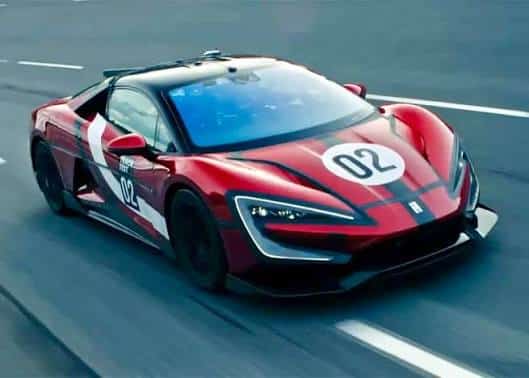
The BYD Yangwang U9 has made global headlines after reportedly achieving a remarkable top speed of 496 km/h during testing on a German track. This extraordinary performance places it among the most extreme examples of electric vehicle engineering ever seen and highlights just how quickly EV technology is advancing in the high-performance segment.
This achievement has drawn major attention because it challenges long-standing benchmarks in the hypercar world. In particular, it is said to surpass the performance territory associated with icons like the Bugatti Chiron Super Sport, a model long regarded as one of the fastest and most powerful production cars ever built. The comparison underscores a significant shift in automotive leadership, where electric powertrains are beginning to rival and even exceed traditional combustion-engine dominance in top-speed records.
More broadly, this moment reflects a turning point in automotive innovation. Electric hypercars are no longer just experimental concepts or future ambitions—they are actively redefining what performance means today. With advances in battery technology, aerodynamics, and electric drivetrain efficiency, manufacturers are pushing boundaries that once seemed impossible. The race for speed has clearly entered a new phase, driven by rapid technological progress and increasingly bold engineering goals.

