


For decades, backup power in Pakistan had a simple job.
The electricity went out. The UPS switched on. A few lights and a fan stayed running until the grid returned.
That model made sense when backup power was treated as an emergency solution. But the way Pakistanis live, work and consume electricity has changed.
Homes today contain more connected devices and more people whose work, education and entertainment depend on uninterrupted power. At the same time, rising electricity costs have pushed consumers toward solar and alternative energy systems, contributing to the rising demand for lithium batteries in Pakistan.
People are no longer asking only how to survive the next power cut. They are asking how to keep life moving regardless of when it happens.
When an Outage Means More Than Sitting in the Dark
Consider what stops when electricity disappears from a modern household.
The Wi-Fi disconnects. A work meeting is interrupted. CCTV may go offline. The air conditioner stops. Phones stop charging.
For a family, an outage creates inconvenience. For someone working remotely or running a small business from home, it can have a direct financial cost.
This is why the traditional idea of “backup” is becoming outdated. Consumers increasingly want continuity. They want more than basic grid outage backup solutions; they want an energy system that supports everyday life.

From UPS Thinking to Energy-System Thinking
Traditional backup systems were designed around a limited number of essential loads. Modern home energy systems are increasingly designed around how a household actually uses electricity.
Instead of asking only how many fans and lights a battery can run, consumers are asking different questions. Can stored solar energy be used after sunset? Can the system work with solar and the grid? How often will the battery need replacing? Can more storage be added later?
These are questions about smart energy storage technology and long-term energy management, not simply emergency backup. They are also helping drive interest in lithium batteries.
Why Battery Technology Matters More Than Before
Lead-acid batteries served Pakistan’s traditional UPS market for years and continue to have a place in certain applications. But a battery expected to become part of everyday energy use needs to be evaluated differently.
If a battery is charged using solar during the day and discharged as household demand continues into the evening, it may go through far more regular cycling than one waiting for occasional outages.
Cycle life therefore becomes particularly important. So do battery chemistry and cell quality.
The difference between buying a battery simply because it has the required capacity and choosing one designed for thousands of repeated cycles can determine how well the investment performs over time.
That shift is already visible across Pakistan’s growing battery storage market, where consumers are looking for durable and flexible energy solutions.

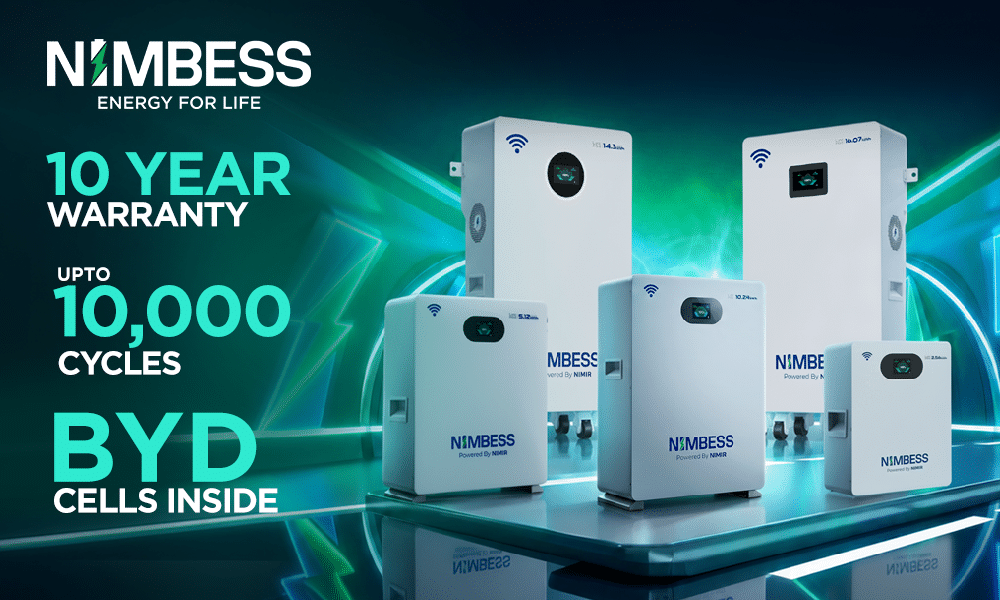
Nimbess Pro, for example, uses LiFePO₄ technology with Tier-1 cell technology, including BYD cells. Designed for frequent charging and discharging, it offers 10,000+ life cycles and a 10-year warranty, positioning Nimbess as a long-term energy storage option rather than equipment reserved only for emergencies.
The significance is what longevity allows consumers to do: use the battery regularly as part of everyday energy management.
Warranty Is Becoming Part of the Buying Decision
There was a time when the battery purchase decision was dominated almost entirely by price. That is changing too.
As consumers invest in solar and storage systems, warranty coverage, cell quality, compatibility and after-sales support become more important.
A battery intended to operate alongside solar for years should be judged on lifetime value rather than simply upfront cost. A cheaper product may look attractive initially, but frequent replacement or weaker warranty support can change the economics over time.
For Nimbess Pro, the combination of BYD cells, LiFePO₄ chemistry, 10,000+ life cycles and a 10-year warranty is designed to give homeowners greater confidence in treating storage as a long-term part of their energy setup.
The broader lesson applies regardless of brand: consumers should ask what is inside the battery, how it performs over repeated cycles and what support exists if something goes wrong.
Energy Should Fit Around Life
Pakistan’s relationship with electricity has traditionally been reactive.
When the grid failed, generators were started, UPS systems kicked in and appliances were switched off. Households adjusted their routines around the electricity available to them.
Solar began changing that relationship by allowing consumers to generate more of their own electricity. Battery storage goes further by giving households greater control over when that electricity can be used, supporting greater energy independence for households and businesses.
That shift is about something larger than batteries. It is about making energy work around everyday life rather than making everyday life work around energy.
For a student, that might mean continuing an online class. For someone working from home, it could mean finishing a meeting without interruption. For a family, it could mean keeping the house comfortable on a summer evening. For a small business, it could mean remaining productive when the surrounding market goes dark.
This is where Nimbess’ Energy for Life positioning becomes meaningful.
Instead of treating stored energy as something that matters only when the grid fails, Nimbess is positioning it as part of the infrastructure that keeps work, connectivity, comfort and everyday routines moving.

The Future of Backup Is Continuity
The future of backup power in Pakistan is unlikely to be defined only by how quickly a system responds when electricity disappears. It will increasingly be defined by how effectively households combine solar generation, battery storage and grid power into one flexible system.
For consumers, that means looking beyond “How long will my UPS last?” and asking: “How well can my energy system support the way I actually live?”
Backup power is becoming everyday energy management. As that transition continues, the category is moving from reacting to outages toward something more valuable: continuity.
That is the promise behind Energy for Life.

