


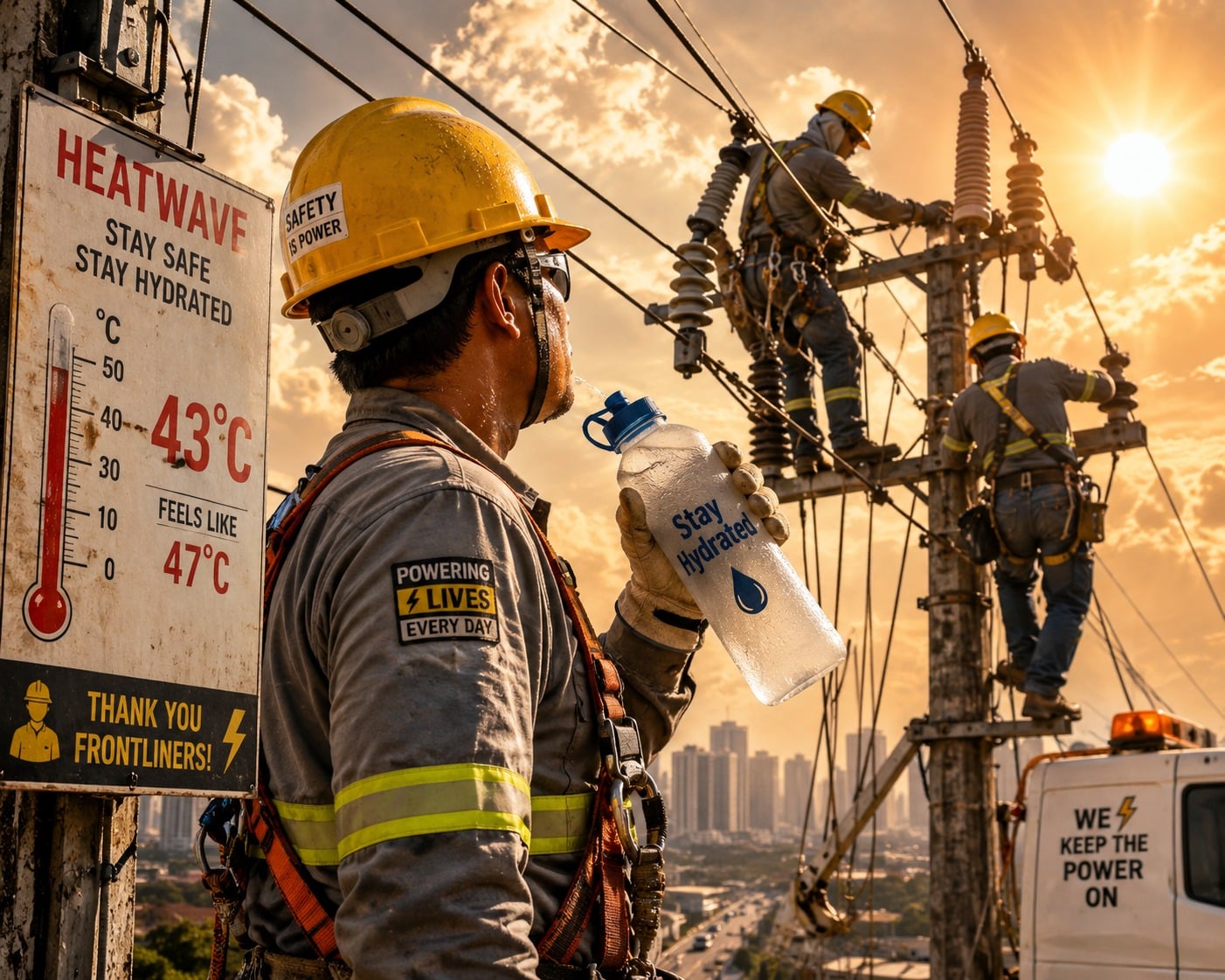
How rising temperatures are reshaping electricity demand and urban resilience
Rising temperatures and increasingly frequent heatwaves are emerging as one of the defining consequences of climate change across the world. Their impact also extend beyond public health and environmental concerns, affecting economies, cities, transportation systems, water resources, and critical infrastructure. From North America and Europe to Asia and the Middle East, utilities are navigating a new reality where climate-driven demand surges, equipment stress, and grid reliability challenges are becoming more common than ever before.
According to Pakistan Economic Survey FY26, 2025 was recorded as the 2nd warmest year in 65 years with 23.9 °C average temperature & 3% below average rainfall. Similarly according to climate data, the last decade has consistently ranked among the warmest on record. Scientists and energy experts warn that heatwaves are now occurring with greater frequency, longer duration, and higher intensity due to climate change. Extreme heat directly impacts electricity systems in two critical ways: it sharply increases electricity demand through air conditioners and cooling appliances, while simultaneously increasing pressure on operational efficiency of generation, transmission, and distribution infrastructure.
Around the world, utilities are already witnessing the consequences. In May 2026, the Philippines issued red alerts across major regions after soaring temperatures and power plant outages pushed the grid close to collapse, leading to warnings of extended power interruptions. In Europe, the 2025 heatwave caused electricity demand spikes and sharp increases in power prices as systems came under stress. Ukraine experienced emergency shutdowns during a record heatwave in 2024 after infrastructure failures increased supply shortages.
Australia’s energy market operator has similarly warned of elevated blackout risks during extreme weather conditions, prompting utilities to actively request consumers to reduce electricity usage during peak periods.
The challenge is particularly acute in dense urban centers where rising temperatures combine with rapid urbanization. Karachi, one of the world’s fastest-growing megacities, is increasingly vulnerable to these risks. Research shows that Karachi has experienced a significant rise in average temperatures over the last six decades, with urban heat island effects intensifying summer conditions across the city. Studies assessing heatwave vulnerability in Karachi describe the city among the most exposed urban localities globally in terms of heat stress.
Pakistan’s climate and disaster management agencies have repeatedly warned that Sindh, particularly lower Sindh and Karachi, is expected to face more severe and prolonged heatwave events due to climate change and urban expansion. Historical heatwaves in Karachi have already demonstrated the scale of the challenge, highlighting significant human and operational impacts also adding pressure urban systems during prolonged extreme heat.
The challenge extends beyond rising temperatures alone. Karachi’s electricity network also operates in an environment shaped by rapid urban growth, power theft, illegal connections, encroachments around utility infrastructure, unauthorized cable and internet installations, and excavation activities that can affect underground assets. These factors can place additional pressure on network reliability, particularly during periods of elevated demand, especially at night. To help address these challenges, Karachi’s utility, K-Electric, continues awareness campaigns and enforcement efforts, including anti-theft operations and kunda removal drives. In FY26 alone, more than 40,000 kunda removal drives were carried out across the city as part of broader efforts to protect the network and improve safety.
Furthermore, KE has continued infrastructure upgrades and grid enhancements over the years, and before peak demand hits the system the utility carries out preventative maintenance activities across transmission and distribution systems to improve network resilience during periods of high demand. Operational teams remain deployed across the city for timely fault response.
Globally, utilities are also recognizing that infrastructure investments alone cannot fully address peak summer demand. Increasingly, energy conservation and demand management are becoming key pillars of grid stability strategies. From the United States to Europe and Australia, utilities routinely encourage customers to reduce non-essential electricity consumption during peak hours to help stabilize the grid and reduce stress on infrastructure.
International energy agencies now advocate demand-response systems, efficient cooling mechanism throughout the city, and consumer awareness as essential climate adaptation measures. Simple actions such as setting air conditioners at optimized temperatures, avoiding simultaneous use of heavy appliances during peak hours, improving insulation, and switching off unnecessary equipment can collectively reduce peak demand significantly.
During recent heatwaves in cities such as New York, utilities urged households to delay usage of energy-intensive appliances and moderate cooling consumption to reduce pressure on the grid.
This shift reflects a broader global reality: extreme heat levels are no longer solely under control of utilities. Climate resilience increasingly depends on collective action between infrastructure providers, public institutions, civic agencies, city administrations businesses, and consumers. As temperatures continue to rise, the ability of cities to remain functional during extreme weather events will rely not only on stronger grids, but also on more responsible energy consumption patterns and coordinated urban preparedness.
For Karachi, where rising temperatures and urban expansion are converging rapidly, climate preparedness is becoming central to the city’s long-term resilience. Utilities today are not simply preparing for another season; they are adapting to a climate future where heatwaves may become more frequent, more intense, and more disruptive than ever before.

