


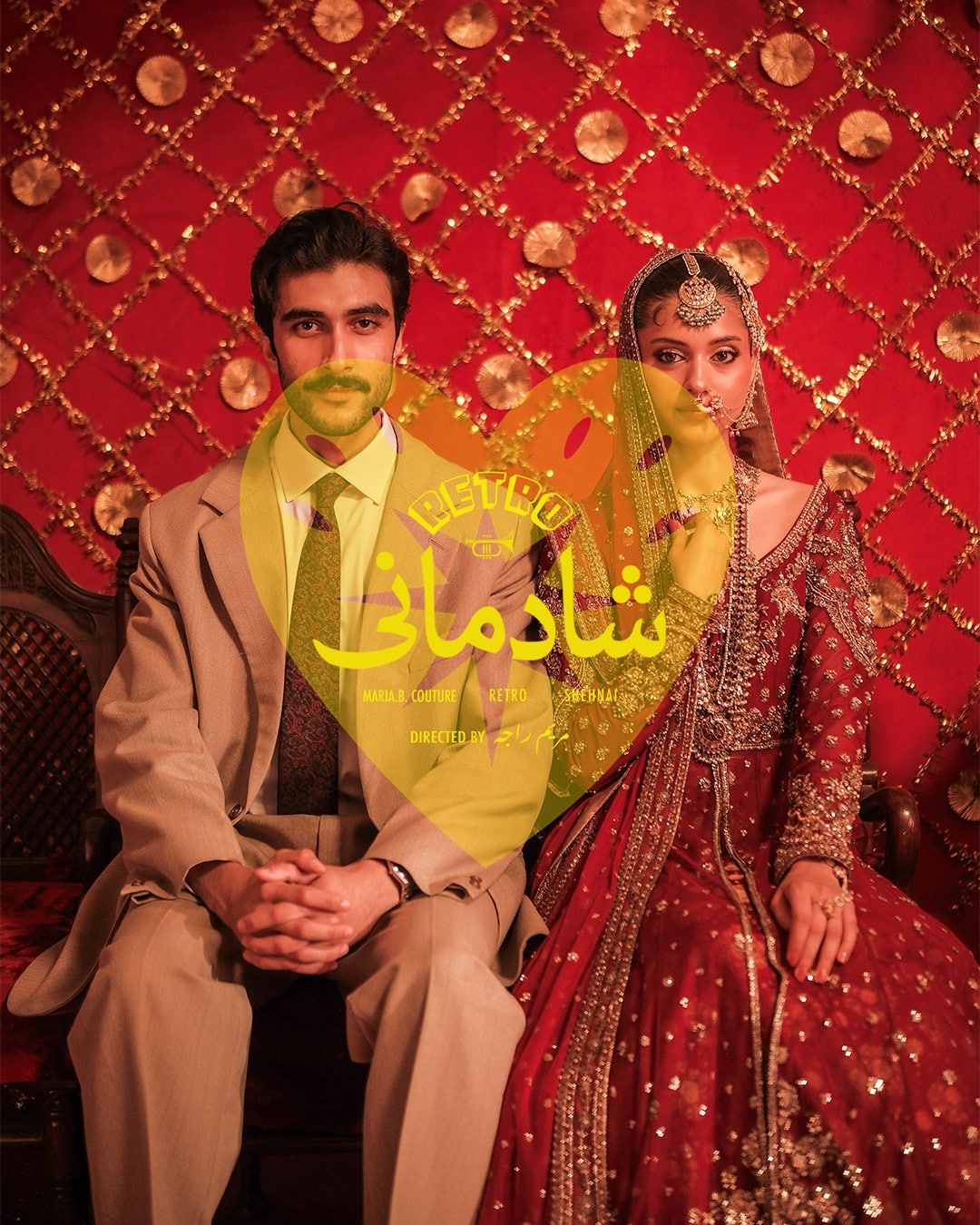
At a time when bridal fashion campaigns are increasingly leaning towards contemporary minimalism and globally inspired aesthetics, Maria B. has taken a different route altogether – one that feels deeply rooted in memory, tradition and cultural familiarity.

With the launch of Retro Shadmani, Maria B.’s latest bridal campaign, the designer steps away from modern wedding storytelling and instead embraces something Pakistani audiences instantly recognise: the vibrant, unapologetically celebratory charm of olden days Pakistani weddings.

The campaign unfolds through four of the most iconic wedding festivities that have long defined traditional South Asian celebrations, Dua-e-Khair, Mehndi, Barat and Walima, each serving as a visual chapter in a larger story that feels both nostalgic and refreshingly relevant.

But Retro Shadmani is far more than a revival of the past.

What makes the campaign particularly striking is the way it reinterprets nostalgia through a modern fashion lens. While the world around the collection is deeply inspired by the classic time, the bridal pieces themselves remain contemporary in structure, with modern silhouettes, refined tailoring and elevated styling seamlessly woven into the old-school setting.

It is this balance between heritage and modernity that gives Retro Shadmani its strongest visual identity.

From traditional wedding décor to the intricate styling choices, every frame feels intentionally curated to recreate the warmth associated with Pakistani weddings from a different era, one before hyper-curated luxury weddings and destination celebrations became the norm.

The campaign’s soundtrack further strengthens that emotional connection.

Classic songs such as Talli Da Thalay, Suhe Ve Cheere Waleya, Ladka Tumhara Kanwara Reh Jata, Ghoongate Ma Chanda, Dholki and Mera Piya Ghar Aya instantly transport viewers back to a time when weddings were defined by intimate family gatherings, overflowing dance floors, familiar traditions and a kind of chaos that somehow always felt beautiful.

Fashion campaigns today often focus exclusively on garments, but Retro Shadmani succeeds because it creates an entire world around the clothing.

The wedding setups, food details, cultural references and styling choices collectively build an immersive narrative that feels less like a conventional bridal campaign and more like a tribute to a distinctly Pakistani wedding identity, one many feel has gradually faded amid increasingly modern interpretations of celebration.

The campaign was directed by Maryam Raja, whose understanding of vintage Pakistani aesthetics brings authenticity to every frame.

Interestingly, Maria B.’s decision to collaborate with Raja reportedly came after witnessing the creative direction behind her own wedding celebrations, which carried a similar appreciation for nostalgia, making her perhaps the most fitting creative force behind a campaign so deeply tied to memory and cultural detail.

In an industry constantly chasing what feels new, Retro Shadmani feels refreshing because it looks backwards.
It reminds audiences that Pakistani weddings once carried an aesthetic language entirely their own, colourful, emotional, imperfectly beautiful, and deeply communal.

With Retro Shadmani, Maria B. does not simply present a bridal collection.
She presents a return to familiarity.
A return to cultural memory.
And perhaps most importantly, a reminder that sometimes the most powerful fashion stories are the ones rooted in where we come from.

