


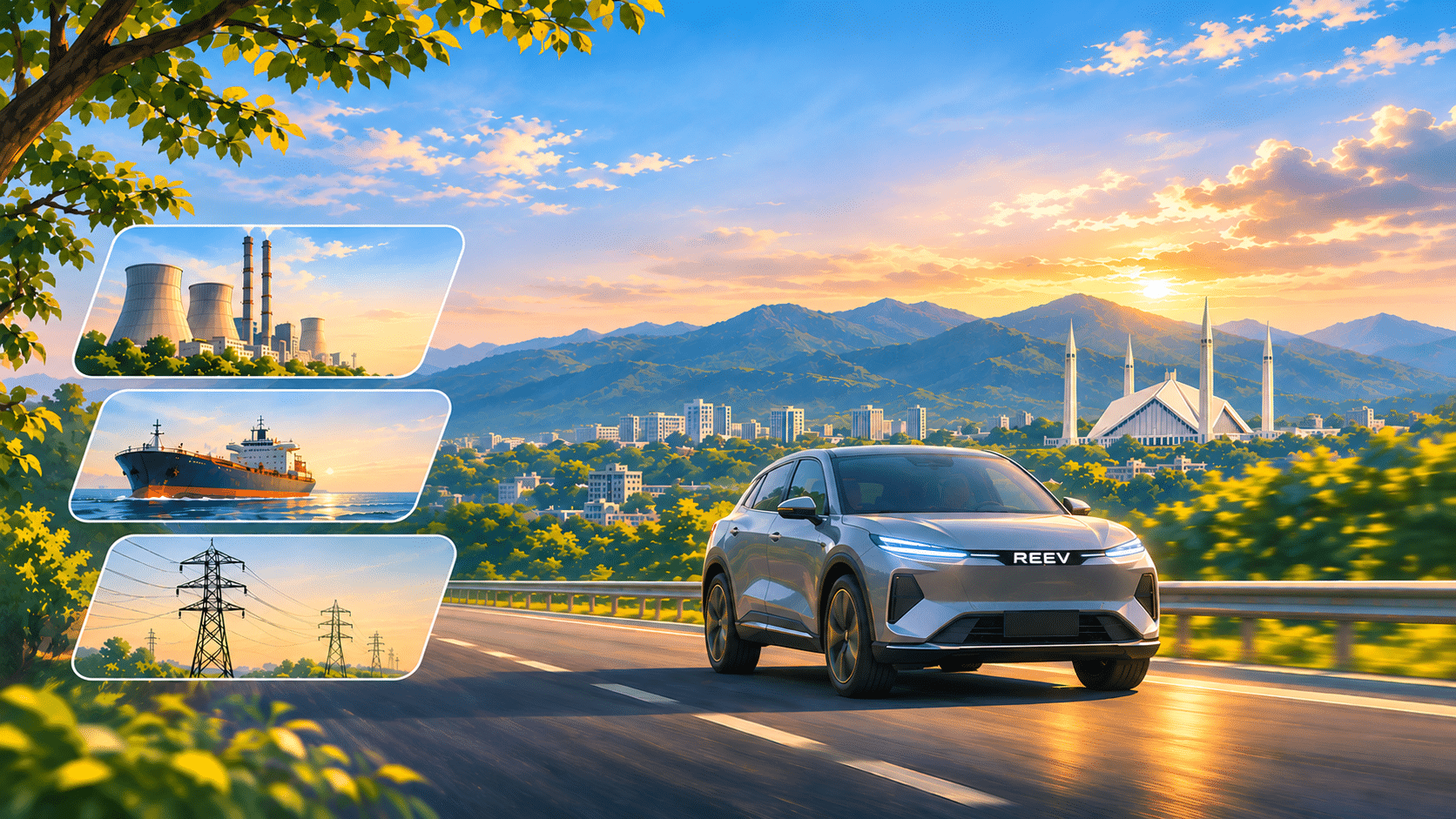
Pakistan must urgently finalise and implement the proposed Auto Policy 2026–31. Continued dependence on imported petrol drains foreign exchange, exposes consumers to global oil prices and prolongs transport pollution. Pakistan’s petroleum import bill reached US$16.86 billion in FY2025–26, according to PBS figures reported by APP. The country needs a clear policy that accelerates technologies capable of reducing this burden.
Range Extended Electric Vehicles (REEVs) offer a practical opportunity to act now. Their wheels are driven by electric motors, while an onboard petrol generator supplies electricity when additional range is required. Regular charging enables everyday journeys on electricity, with the range extender providing confidence for longer trips where charging facilities are unavailable.
The economic case is straightforward. Shifting daily travel from petrol to electricity—particularly locally generated renewable power—can reduce demand for imported fuel and ease pressure on foreign exchange. An illustrative scenario involving 30,000 additional REEVs annually could displace about 1.19 billion litres of petrol over five years, worth US$1.07 billion at an assumed import value of US$0.90 per litre. Wider adoption and consistent charging can multiply these benefits. For a country seeking greater energy security, reducing the fuel required for everyday transport should be a national priority.
Pakistan also pays for electricity generation capacity even when it remains unused. The government’s NEV policy document records just 49.8% utilisation of available generation potential in FY2023–24, leaving about half unused. Encouraging vehicle charging during periods of spare capacity could put that infrastructure to productive use and spread fixed costs across more electricity sales. Solar charging offers another opportunity to reduce petrol dependence.
The benefits reach household budgets and public health. Regular charging can lower driving costs, while battery-only operation produces zero tailpipe emissions. Avoiding 2,640 litres of petrol annually, as in the same illustrative scenario, would prevent around 6.2 tonnes of tailpipe CO₂ per vehicle. Cleaner electricity and less generator use strengthen the environmental advantage.
Regional disasters reinforce the need for climate action and resilience. Following Nepal’s 26 August 2026 flash flood, UNFPA reported 1,453 deaths and 5,285 people unaccounted for by the end of September. The full human toll remained uncertain.
Policy uncertainty risks slowing adoption and discouraging investment. The government must finalise Auto Policy 2026–31, notify clear and consistent incentives for REEVs, support progressive localisation and publish a firm implementation timetable. These measures can help translate fuel savings into wider economic benefits, including manufacturing investment and skilled employment.
Pakistan cannot afford to leave this opportunity waiting on paper. Finalising and implementing Auto Policy 2026–31 must be an urgent economic priority—with reduced fuel dependence, protected foreign exchange and cleaner mobility at its core.
Savings illustration: 36,000 km per vehicle annually; 80% electric travel; petrol car at 12 km/litre; REEV at 20 km/litre during range-extended travel; 30,000 vehicles added at each year’s start. Gross fuel and tailpipe savings exclude electricity production and manufacturing impacts. Net foreign exchange gains also depend on vehicle and component imports.

