Pakistan's minerals can be the next growth story for young talent
Data, technology and value addition are reshaping the mineral sector, opening opportunities for engineers, founders and service firms well beyond the mine site.
Data, technology and value addition are reshaping the mineral sector, opening opportunities for engineers, founders and service firms well beyond the mine site.
Mining is often seen as an old-economy industry. In practice, modern mineral exploration now runs on hyperspectral scanning, multi-element geochemistry, geophysical data, geology, 3D modelling and artificial intelligence. As Pakistan prepares to host the Pakistan Minerals Investment Forum 2026 (PMIF26) in Islamabad on 12–13 November, that shift is creating a new kind of opportunity: a minerals value chain where Pakistani startups, SMEs and young professionals can play a central role.
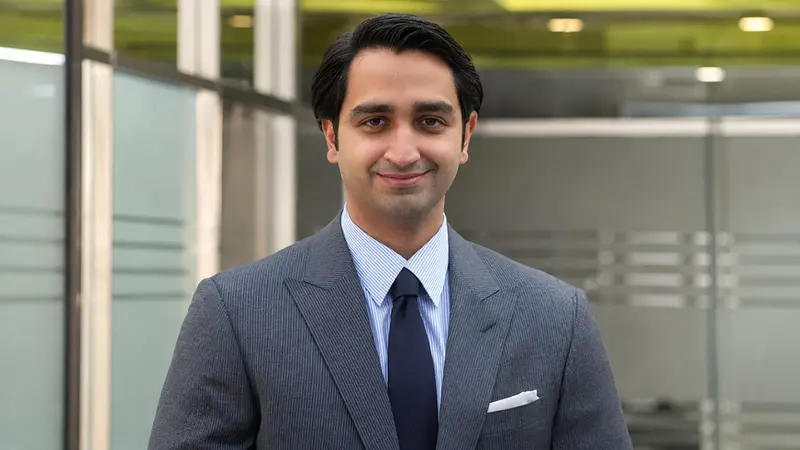
Few people embody the link between Pakistan's tech ecosystem and its mineral sector as clearly as Ali Mukhtar. He founded Fatima Ventures, which partnered with Gobi Partners in 2014 to launch Fatima Gobi Ventures, backing startups such as Tajir, Safepay, Abhi and Sasta Ticket. Today he is also CEO of Globacore Minerals, an exploration company owned by six of Pakistan's leading business groups and among the companies bringing advanced exploration technologies to the country.
"Venture capital and mineral exploration have a lot in common. In both, you back ideas early, accept that many will not work out, and stay patient with the ones that show promise. That mindset suits exploration very well," Mukhtar said.
Technology sits at the heart of that work. Globacore combines hyperspectral scanning, multi-element geochemistry, integrated geophysics and geology, working with global consultants and an international exploration team. Its VP Exploration, Nick Winer, whose teams discovered the Nuevo Chaquiro copper-gold deposit in Colombia, uses AI routines to interpret exploration and resource data.
"AI helps geologists see patterns across very large datasets, faster and more consistently. That work needs people who understand both geology and data, and Pakistan has that talent," Winer said.
The larger opportunity lies in what happens after discovery. Planning Minister Ahsan Iqbal has said Pakistan's mineral exports could reach $6–8 billion a year within this decade if the country focuses on value addition, through processing, smelting and refining, rather than raw extraction. The International Energy Agency notes that resource-rich countries worldwide are moving to retain more value from their minerals at home.
Large projects also create demand at scale. Reko Diq alone is expected to create about 7,500 jobs in Balochistan. Around such projects, mining needs drilling and laboratory services, logistics, equipment maintenance, environmental monitoring, drone surveys, software and analytics. Each is a potential market for local entrepreneurs and service firms.
The skills required are broad. Alongside geologists and mining engineers, the sector needs data scientists, environmental specialists, software developers, and finance and project professionals who can work to the international standards global investors expect.
"Every step of processing done at home keeps more value, jobs and skills in Pakistan. This is a growth story, not just a mining story, and we want to build local skills and local partners alongside our projects," Mukhtar said.
Global demand adds urgency. The IEA warns of a potential 30% shortfall in copper supply by 2035, and countries everywhere are seeking new, reliable suppliers. For Pakistan, which has identified 92 minerals but where mining still contributes less than 3% of GDP, the room for growth is considerable.
Ali Mukhtar will also be speaking on the panel "Backing the Drill Bit: Capital Deployment in Early-Stage Mineral Exploration" at PMIF26, while representing Globacore. For a generation choosing careers, his view is clear: mining is becoming one of the most promising places in Pakistan to combine science, technology and entrepreneurship, and to help power the country's economic future.
Share this story
Send it to someone who should read it.