Punjab’s Fight Against Smog Begins to Show Encouraging Results as Key Indicators Improve
A prominent decline in reported patients across five smog-related disease categories, expanding electric public transport, industrial reforms and stronger measures against crop burning point to progress in Punjab’s campaign for cleaner air.
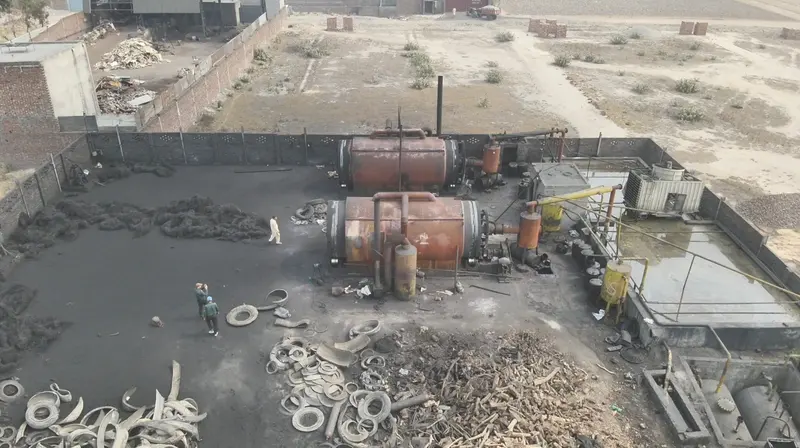
A prominent decline in reported patients across five smog-related disease categories, expanding electric public transport, industrial reforms and stronger measures against crop burning point to progress in Punjab’s campaign for cleaner air.
LAHORE: Punjab's battle against smog has entered a new phase, with the provincial government increasingly focusing on the sources of pollution rather than relying primarily on seasonal restrictions. A combination of cleaner transportation, industrial regulation, agricultural reforms and technology-driven monitoring is now shaping the province's response to one of its most persistent environmental challenges.
The scale of the challenge remains considerable. Every year, winter brings renewed concerns about deteriorating air quality, particularly in Lahore and other urban centres. Vehicle emissions, industrial smoke, agricultural residue burning and construction dust contribute to the problem, while unfavourable weather conditions can intensify pollution levels.
However, recent developments suggest that the province's efforts are beginning to produce encouraging results. Lahore recorded its cleanest October in five years in 2026, while healthcare data shows a 43 per cent decline in reported patients across five smog-related disease categories during January–October 2026 compared with the same period in 2025.
The reported number of respiratory illness outpatients has also declined by 69 per cent compared with 2023.
While these figures do not establish that the decline is solely the result of environmental interventions, they provide an important indication of improving trends and highlight the significance of sustained action against pollution.
Addressing the Sources of Pollution
One of the major difficulties in controlling smog is that it does not originate from a single source. Urban traffic, industrial activity, agricultural practices and other forms of emissions collectively contribute to poor air quality.
This means that isolated measures are unlikely to deliver lasting results.
Punjab's strategy has increasingly focused on addressing these contributing factors simultaneously. The government is working across transportation, agriculture, industry and environmental regulation, combining infrastructure development with stricter monitoring and enforcement.
The approach also reflects a shift in priorities. Instead of concentrating interventions around the winter months, the focus is on reducing emissions throughout the year so that pollution can be controlled before it reaches critical levels.
Declining Healthcare Numbers Offer Encouragement
The public-health impact of smog remains one of the strongest reasons for sustained environmental action. Exposure to polluted air can affect respiratory health and create additional risks for vulnerable populations.
According to Punjab Government healthcare data, reported patients across five smog-related disease categories declined from 12,398,948 in January–October 2025 to 7,029,291 during the corresponding period in 2026. This represents a reduction of approximately 43 per cent.
The improvement was recorded across several categories:
- Respiratory illness patients: down 44 per cent.
- Nose and throat infection patients: down 47 per cent.
- Asthma cases: down 27 per cent.
- Chronic lung disease patients: down 18 per cent.
The longer-term figures also indicate a downward trend in reported respiratory illness outpatients, declining from approximately 22.87 million in January–October 2023 to around 7 million in the same period of 2026.
The figures provide an encouraging picture, although healthcare trends can be influenced by several factors and should not be treated as conclusive evidence of a direct relationship with pollution-control measures.
Nevertheless, improving public-health indicators remain an important part of assessing the province's environmental progress. Cleaner air ultimately means better living conditions and reduced exposure to pollutants for millions of residents.
Public Transport Moves Towards Electric Mobility
The transport sector is an important area of intervention because emissions from conventional vehicles contribute to urban air pollution.
Punjab has expanded its electric public transport network, with 1,100 electric buses currently operating across 28 districts. A further 1,900 buses are planned, extending the province's transition towards cleaner mobility.
At the same time, efforts are underway to improve the environmental performance of vehicles already on the roads.
Approximately 1.2 million vehicle emission tests have been conducted through government testing mechanisms, including the Emission Testing System (ETS), Punjab Vehicle Inspection and Certification System (PVICS) and Vehicle Inspection and Certification System (VICS).
These tests help identify vehicles producing excessive emissions and encourage compliance with environmental standards.
The combination of electric public transport and stricter vehicle inspection is intended to address both present emissions and the longer-term need for cleaner transportation infrastructure.
Industries Face Stricter Emission Requirements
Controlling industrial pollution is another important part of Punjab's environmental campaign. Factories and industrial units can contribute significantly to air pollution, particularly in densely populated areas where residential and commercial activity exists alongside industrial operations.
According to the campaign's November 2026 fact sheet, more than 14,000 emission-control systems have been installed in industrial units, covering over 96 per cent of the targeted units.
The installation of these systems is an important step, but their continued operation and effectiveness will depend on regular inspections and compliance with environmental regulations.
The brick-kiln sector has also undergone a major technological change. All 8,000 brick kilns covered by the provincial initiative have been converted to zigzag technology.
The technology improves the combustion process and fuel efficiency compared with conventional kiln operations, helping reduce smoke and harmful emissions.
Given the historical contribution of traditional brick kilns to air pollution, this conversion represents an important development. Continued monitoring will be necessary to ensure that the benefits are maintained.
Agricultural Reforms Target Crop-Residue Burning
Crop-residue burning has been a recurring source of seasonal pollution in Punjab, particularly after the rice harvest. Farmers traditionally burn leftover straw to clear their fields, releasing smoke and particulate matter into the atmosphere.
Addressing the practice requires more than enforcement. Farmers also need practical and affordable alternatives.
To support this transition, more than 10,045 super seeders have been provided to farmers at a 60 per cent subsidy. The machinery helps manage leftover crop residue and prepare fields for the next cultivation cycle without relying on open burning.
The initiative has been accompanied by a reported 65 per cent decline in crop-fire incidents in 2025 compared with 2024.
The government has also established 67 Quick Response Units, comprising 750 officers, to respond to crop-burning incidents in major rice-growing districts.
According to an international Reuters report, these teams aim to reach reported incidents within approximately 10 to 15 minutes and use specialised equipment to extinguish fires.
The initiative has attracted international attention, with Reuters covering the units' operations and Arab News also carrying the report.
The combination of subsidised machinery and rapid-response teams demonstrates an approach that addresses both the reasons behind agricultural burning and the need to prevent violations.
Monitoring Pollution Through Technology
Effective environmental enforcement depends on accurate information and the ability to respond quickly to violations.
Punjab has installed 80 air-quality monitors across the province, with plans to expand the network to 103 by the end of 2026.
The monitoring network is intended to provide a clearer picture of pollution levels in different areas, identify hotspots and help authorities make informed decisions.
Technology-led surveillance is also being incorporated into environmental management. AI-enabled monitoring and digital reporting mechanisms can assist in identifying potential violations, improving coordination and supporting timely enforcement.
This is particularly relevant for Punjab, where pollution sources are spread across major cities, industrial areas, agricultural districts and expanding urban settlements.
A stronger monitoring system can help authorities move towards more consistent environmental oversight instead of relying mainly on periodic inspections or emergency interventions.
International Experience Provides a Roadmap
Punjab's efforts are also taking inspiration from countries that have faced serious air-pollution challenges and introduced long-term measures to address them.
China, South Korea, the United Kingdom, Japan and Mexico have demonstrated the importance of sustained environmental policies, stronger emission standards, investment in cleaner technologies and coordination between different sectors.
Their experiences show that improving air quality requires more than temporary restrictions. It demands long-term investment, consistent enforcement and a willingness to reform the sectors responsible for pollution.
Taking inspiration from these international approaches, the Punjab Government has introduced a 10-year Smog Mitigation Plan. The plan brings together agricultural reforms, industrial controls, cleaner transportation, environmental monitoring and stronger enforcement.
The first two years of implementation have shown a downward trend in smog indicators, according to the available figures.
Although the full impact of a decade-long programme will take time to assess, the early developments provide an indication of the direction in which the province's environmental policy is moving.
The Challenge of Maintaining Progress
Despite the encouraging figures and ongoing initiatives, Punjab continues to face significant air-quality challenges.
Smog is influenced by local emissions as well as regional pollution movement and weather conditions. Temperature, wind speed and atmospheric pressure can affect how pollutants disperse, sometimes causing air quality to deteriorate even when local control measures are being implemented.
This makes sustained enforcement essential.
Industrial emission-control systems must remain operational, brick kilns must comply with prescribed standards, agricultural burning must continue to decline and cleaner public transport must become increasingly accessible.
Public awareness and cooperation are equally important. Citizens, farmers, industrial operators and transport businesses all have a role in reducing pollution and ensuring that environmental regulations are followed.
The effectiveness of the government's strategy will ultimately depend on how consistently these measures are implemented beyond the winter season.
Cleaner Air Requires Consistent Action
Punjab's anti-smog campaign now covers a wide range of interventions, reflecting a broader effort to address pollution across the province.
The operating fleet of 1,100 electric buses, more than 14,000 industrial emission-control installations, conversion of 8,000 brick kilns to zigzag technology and distribution of over 10,045 subsidised super seeders represent substantial activity across key sectors.
The reported decline in smog-related healthcare cases adds another important dimension to the progress being recorded.
These developments are encouraging, but the objective must extend beyond achieving better figures in a single year. The real challenge is to maintain the improvements, strengthen existing systems and ensure that environmental protection becomes an integral part of governance and everyday life.
Punjab's 10-year Smog Mitigation Plan provides a framework for pursuing that objective. Its success will depend on continued investment, effective enforcement, institutional coordination and public participation.
The fight against smog is a long-term undertaking, and its success will be measured not by one cleaner month or one improved winter, but by the ability to deliver healthier air for generations to come.
Share this story
Send it to someone who should read it.