Who will shape Pakistan’s AI future? Inside the conversations at EmpowerTech Islamabad
An AI system that works remarkably well in one part of the world may struggle to understand the languages, needs and realities of another. For Pakistan, where digital ambitions are growing alongside an evolving technology industry, these considerations have important implications for how AI is…
An AI system that works remarkably well in one part of the world may struggle to understand the languages, needs and realities of another. For Pakistan, where digital ambitions are growing alongside an evolving technology industry, these considerations have important implications for how AI is developed, governed and used, and ultimately, who stands to benefit from it.
These questions will be at the centre of EmpowerTech Islamabad 2026, hosted by the APNIC Foundation on 25 November at the Mövenpick Hotel Centaurus, Islamabad. Under the theme AI and Pakistan’s digital future: Building capability, policy and infrastructure, the event will bring together policymakers, industry leaders, academia, startups and technical and community practitioners to examine the foundations Pakistan needs to make effective use of AI. The event is being held in patronage with Pakistan Telecommunication Authority (PTA), Pakistan’s National Cyber Emergency Response Team (PKCERT) and Pakistan Digital Authority (PDA).
Pakistan's digital ambitions meet a changing technological landscape
Pakistan enters this period of technological change with considerable strengths. Its IT industry has developed expertise in software development and digital services, while entrepreneurs are exploring emerging technologies. The Pakistan Economic Survey 2025–26 recorded US$3.38 billion in ICT export remittances between July 2025 and March 2026. Yet AI is changing the nature of digital work, automating certain tasks while creating demand for new skills. Sustaining the sector's growth will increasingly depend on how well businesses and workers adapt.
Pakistan has begun responding through the Digital Nation Pakistan Act 2025 and National AI Policy 2025. However, translating these ambitions into practice presents challenges. Workers need opportunities to retrain, institutions need the expertise to adopt AI effectively, and businesses and public agencies need clear safeguards for data protection, security and accountability.
Access remains another significant barrier. The World Bank's 2025 Pakistan Development Update found that fixed broadband packages cost 11.1 per cent of average monthly gross national income per capita. AI also requires reliable electricity, computing resources and quality data. Without improvements in these areas, its benefits could remain concentrated among already well-connected businesses and communities.
Pakistan's challenge, therefore, is to ensure that advances in AI are matched by progress in workforce preparedness, responsible governance and digital infrastructure. Decisions in each area will influence how widely, safely and effectively the technology can be used, making dialogue between technical experts and policymakers increasingly important.
Why technical and policy expertise must meet
AI platforms developed and hosted abroad give Pakistani organisations access to advanced technologies without having to build them from scratch. However, heavy dependence on these services means paying foreign providers, relying on their decisions about pricing and access, and potentially having sensitive data processed outside Pakistan.
Developing and hosting AI systems locally could give institutions greater control over their data and technology, but would require investment in computing infrastructure, reliable electricity, connectivity and technical expertise.
Decisions about these trade-offs require technical expertise informed by public priorities, alongside policies grounded in an understanding of what technology can realistically deliver. This relationship between technical capability, policy and infrastructure forms the basis of the discussions at EmpowerTech Islamabad.
Inside the Islamabad program
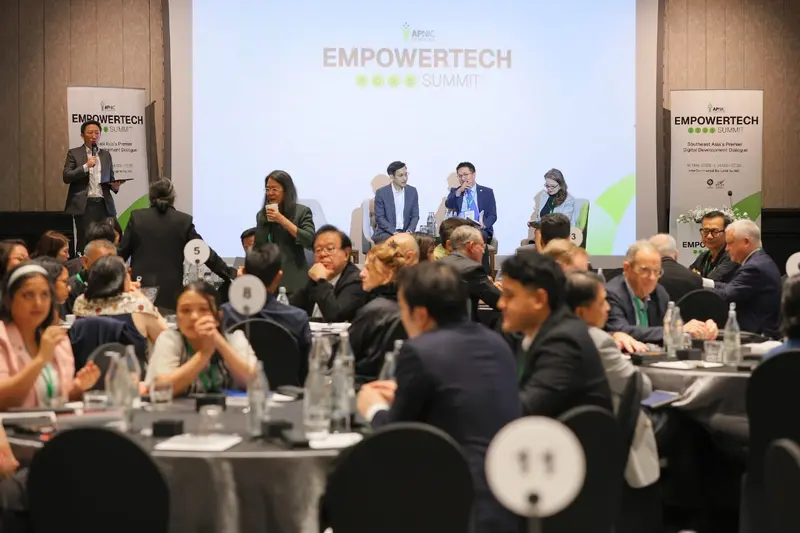
Session 1: Building AI skills and capabilities. How can Pakistan equip workers, educators and institutions to use AI effectively while responding to changing job requirements? Dr Zartash Afzal Uzmi, Professor at Lahore University of Management Sciences, will moderate. Panelists include Adnan Anjum, Country General Manager of IBM Pakistan; Dr Humaira Mumtaz, Founder and CEO of Empoweri; Dr Shakeel Ahmed Khoja, Dean of the School of Mathematics and Computer Science at IBA Karachi; and Zakir Syed, Head of AI at Ignite – National Technology Fund.
Session 2: Policy, trust and responsible AI. The discussion will examine privacy, cybersecurity, accountability, responsible use of local data and the ability of AI systems to serve Pakistan’s languages and communities. Habibullah Khan, Founder of Penumbra Digital, will moderate Dr Ammara Aftab, Founder and CEO of Pro AI Global; Dr Haider Abbas, Director General of Pakistan’s National Cyber Emergency Response Team; and Dr Sohail Munir, Chairperson of the Pakistan Digital Authority.
Session 3: Building the digital foundations for AI. Reliable networks, affordable access, local infrastructure and inclusion are the focus. Moderated by Tariq Mustafa, a pioneer of Pakistan’s commercial Internet, the panel brings together Amer Hashmi, Co-Chairman of Quantum Global Data Center; Asadullah Khan Niazi, Chief Officer, Quality Assurance and Monitoring at the Universal Service Fund; Maroof Ali Shahani, Chief Operating Officer of Cybernet; and Dr Sarmad Hussain, Senior Director for Internationalized Domain Names and Universal Acceptance Programs at ICANN.
The programme also includes the Cybersecure Pakistan Recognition Awards. In the closing discussion, From AI to digital development, Aftab A. Siddiqui, Head of Stakeholder Each session will invite audience contributions, and the closing discussion will provide an open-floor opportunity to share recommendations. The Foundation plans to capture the outcomes in an AI for All: Pakistan Priorities brief.
A regional dialogue, grounded in local realities
EmpowerTech is the APNIC Foundation’s forum for techno-policy dialogue on digital development and inclusion across Asia Pacific economies. It connects people who build and operate technology with those responsible for policy, investment, and public services. Governments, intergovernmental organisations, industry and frontline practitioners can compare evidence, identify constraints, and discuss possible responses.
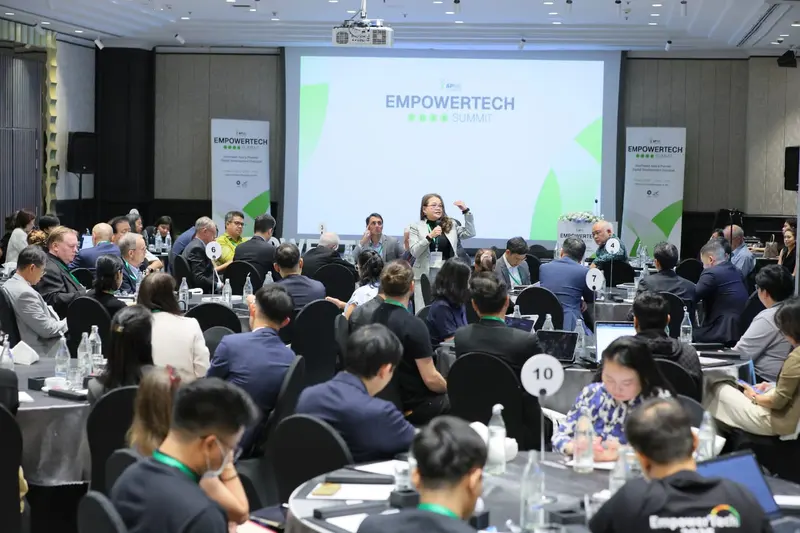
In May 2026, the Foundation convened the EmpowerTech Summit in Bangkok to examine regional digital development priorities with Southeast Asian stakeholders. In October, EmpowerTech Pacific took place in Nadi, Fiji, co-located with the Pacific Islands Telecommunication Association (PITA) Strategy Forum 2026, also known as PITA Industry Week.
About the APNIC Foundation
The APNIC Foundation works towards a more inclusive, secure and resilient Internet across the Asia Pacific through building capabilities, driving digital innovation and supporting digital transformation. Its work includes training, grants, research, and partnerships with local institutions and communities.
In 2025, the Foundation supported activities across 30 economies, capability development for more than 11,500 people, and digital inclusion initiatives reaching over 196,700 individuals. EmpowerTech reflects the importance the Foundation places on bringing practical experience into decisions that affect how technology is used.
EmpowerTech Islamabad 2026 takes place on 25 November 2026, from 10:30 am to 4:00 pm, followed by networking.
Event details: https://apnic.foundation/news-resources/empowertech/empowertech-islamabad-2026/
Share this story
Send it to someone who should read it.